


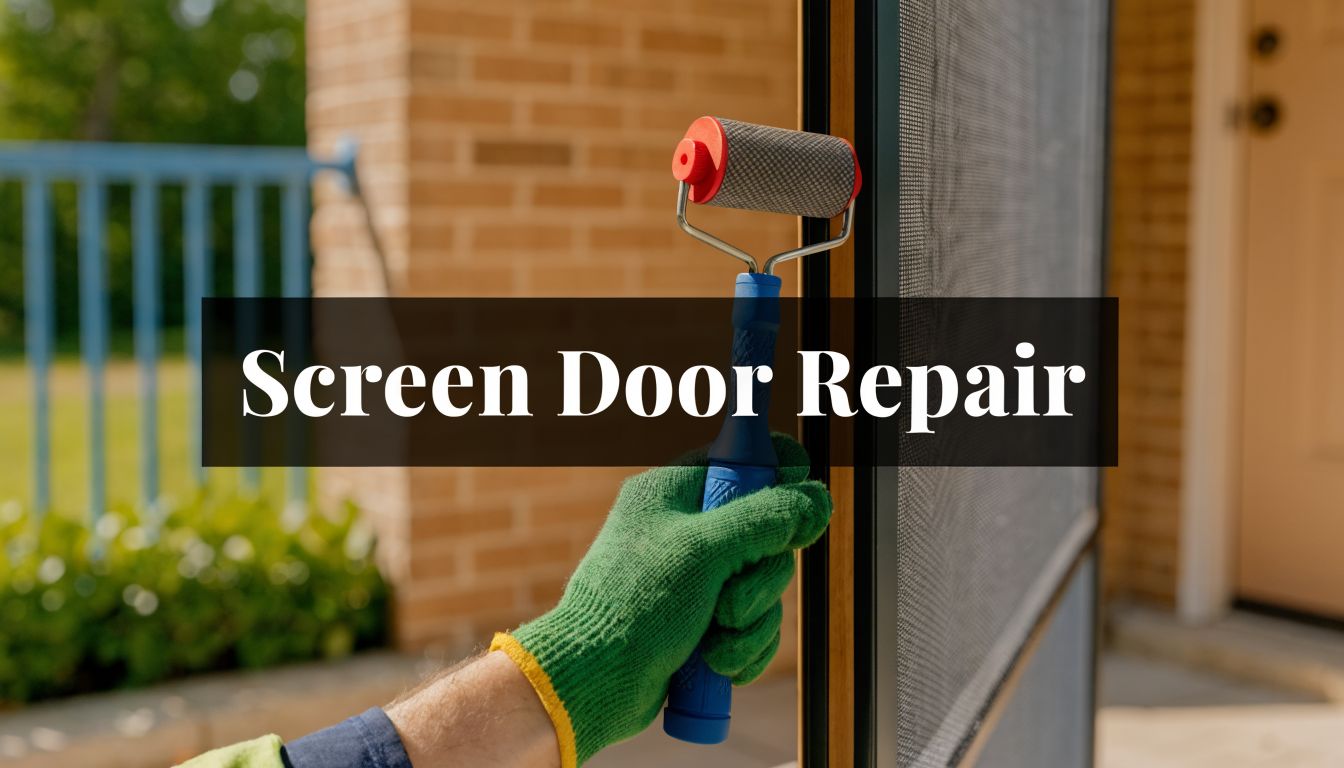

A Phoenix evening goes sideways fast when your patio screen tears open. The slider sticks, the gap widens, bugs start coming in, and now you’re deciding between sweating it out, running the AC harder, or trying a rushed repair with a cheap patch kit from the hardware store.
Most homeowners call for a screen door repair service when the problem stops being minor and starts getting annoying every single day. That’s the right move. A torn mesh, bent frame, or dragging slider doesn’t get better on its own in desert heat. It gets worse, usually at the exact moment you want the door open.
Your Local Guide to Fast Screen Door Repair
A lot of screen problems start the same way. The dog pushes through the lower corner. A gust catches the mesh. Someone forces a sticky slider one too many times. Then the whole thing becomes a daily irritation. You nudge the door with your hip, lift it to close it, or avoid using it entirely.
In Phoenix, that’s more than a small inconvenience. A bad screen means flies, mosquitoes, dust, and hot air sneaking in while you’re trying to keep the house comfortable. If the mesh is loose or the frame is bowed, you don’t need a long diagnosis. You need the right fix, fast.
That’s why speed matters more here than most generic guides admit. Homeowners in Phoenix, Scottsdale, Peoria, Mesa, and nearby areas usually aren’t shopping for a hobby project. They want someone to show up, measure correctly, repair the problem, and get the opening usable again without dragging it out for weeks.
If your issue isn’t limited to the door itself, it also helps to understand the bigger picture of Phoenix window screen service options. A lot of homes have the same wear pattern across patio doors, window screens, and sun screens. Fixing one opening while ignoring the rest usually means you’ll be dealing with the next failure soon after.
What homeowners usually need right now
- A fast quote: You shouldn’t have to wait days just to learn whether a repair makes sense.
- Same-week help: If the screen is letting pests in, next month isn’t useful.
- A real fix: Not a sloppy patch that peels off or sags after the next dust storm.
- Options for desert conditions: Standard bug mesh is one thing. Sun screens and heavier-duty materials are another.
Practical rule: If the screen door is torn, hard to slide, or pulling away from the frame, stop forcing it. Extra force usually turns a repairable problem into a replacement job.
If you need help now, text or call 623-233-0404. That’s the shortest path from “this thing is driving me crazy” to having the door working again.
Signs Your Screen Door Needs Professional Attention
Some screen door problems are obvious. Others creep up slowly until you realize you’ve been living with a bad door for months. If you’re wondering whether it’s time to call a screen door repair service, use this checklist.

Visible mesh damage
The most common sign is simple. The mesh is ripped, punctured, frayed, or pulling loose from the spline channel.
Fiberglass mesh failure is the predominant issue, and pet claws and high winds cause 70-80% of tears because fiberglass has lower tensile strength than tougher materials like polyester. Repeated impacts can also reduce mesh integrity by 50% within 2-3 years under moderate exposure, according to screen damage data on fiberglass failure and repeated impacts.
That matters in Phoenix because a small tear rarely stays small. Wind works the edge. Pets nose into it. Sun exposure makes old mesh more brittle. By the time many homeowners call, the original problem has doubled.
Sagging and loose screen material
A screen doesn’t need a hole to be failing. If the mesh looks wavy, baggy, or soft when you press it, the tension is gone. Once that happens, it stops sitting cleanly in the frame and starts rubbing, fluttering, or pulling free.
Watch for these signs:
- Loose corners: The screen starts separating near one edge or corner.
- Visible bowing: The mesh dips instead of sitting flat.
- Popping spline: The rubber spline starts backing out of the channel.
A sagging screen is a repair issue, not just a cosmetic one. It’s the stage right before detachment.
Frame problems you shouldn’t ignore
Sometimes the mesh isn’t the problem. The frame is.
If the screen door frame is bent, twisted, cracked, or pulling out of square, the mesh won’t sit right no matter what material you use. You’ll see uneven gaps, rubbing at the track, or corners that don’t line up cleanly.
A screen that keeps tearing in the same spot often points to a frame issue, not bad luck.
Common frame warnings include:
- Bent bottom rail from kicks or impact
- Warped side rails that make the door rack in the opening
- Loose handles or latch areas that flex when pulled
- Corners separating after years of use and sun exposure
Sliding problems that mean more than dirt
A lot of homeowners assume a sticking slider just needs a quick cleaning. Sometimes that’s true. Often it isn’t.
If your door drags, jumps the track, grinds, leans, or needs to be lifted to move, the rollers or track are usually worn. That’s a hardware problem. It won’t get solved with force, and it usually gets worse when people keep shoving the door open.
Sun damage and fading
Phoenix sun cooks everything. If your screen looks faded, brittle, dry, or chalky, it’s near the end of its useful life. This shows up a lot on patio screens and south- or west-facing openings.
The mesh may still be present, but it’s no longer doing its job well. Older sun screens can also stop performing the way homeowners expect once the material breaks down.
When to stop troubleshooting and make the call
Call for professional help if any of these are true:
- The tear is growing
- The slider won’t move smoothly
- The frame is bent
- The screen keeps coming loose
- You’ve already tried a patch and it failed
If you’re dealing with any two of those at once, skip the guesswork. It’s time for a proper repair.
Decoding Your Screen Repair and Replacement Options
The right fix depends on what failed. A small puncture calls for one approach. A sun-baked mesh panel, worn rollers, or a twisted frame calls for something else. Phoenix homeowners waste time and money when they treat every screen problem like a basic tear.

Four common paths
Use this as your quick filter before you spend money on the wrong fix.
| Option | Best use | Main drawback |
|---|---|---|
| Repair | Minor hardware problems or small frame issues | Does not solve worn-out mesh |
| Patching | Tiny isolated holes | Usually looks obvious and fails sooner |
| Rescreening | Torn or aged mesh on a solid frame | Does not fix bent frames or bad rollers |
| Replacement | Major frame damage or repeat failures | Costs more than a basic repair |
If you want more detail on sizing, materials, and fit, review this guide to replacement screens for screen doors before you choose.
Standard bug screens
Standard bug mesh works well for everyday insect control and airflow. For many front entries, side doors, and patio openings, that is all you need.
Choose it if your goal is simple and the opening gets normal use:
- You want airflow and insect control
- The screen does not deal with pets pushing on it
- The opening is not blasted by harsh afternoon sun
In Phoenix, basic mesh is often the wrong default. A west-facing patio door in full sun needs more than the cheapest screen on the rack.
Pet-resistant screens
Pet damage is predictable. It usually shows up low on the door, then keeps coming back because the material was never upgraded.
Pet-resistant mesh makes sense for homes with dogs that press against the screen or cats that claw at corners. If you have already fixed the same area once, stop repeating the repair and install a tougher screen.
Sun screens for desert homes
Sun screens cut glare, reduce heat gain, and make sun-exposed openings more comfortable. They are especially useful on south-facing and west-facing sides of Phoenix homes where the late-day sun is brutal.
This is one of the biggest gaps between generic screen advice and what works here. A shaded entry door and a patio opening that cooks every afternoon should not get the same recommendation. If speed matters and the heat is already a problem, high-performance sun screens deserve a serious look first.
Specialty screens competitors often ignore
Some jobs need more than standard door mesh; many companies fall short in these situations.
A few options that deserve more attention:
- Horse stall sun screens: Good for airflow, shade, and insect control in hard-use settings
- Screened-in patio remeshing: Better fit and tension for large openings
- Security door screen replacement: Requires the right insert size, attachment method, and material
These are not fringe repairs in Arizona. They are practical fixes for real heat, dust, and wear.
Sparkle Tech Screen Service handles several of these categories, including bug screens, sun screens, slider work, remeshing, and horse stall screen applications.
Sliding door hardware matters as much as mesh
A torn screen is often just the visible part of the problem. If the door scrapes, jumps, or resists every time you slide it, the mesh and frame keep taking abuse.
Rescreening a door with bad rollers is a half-fix. The new mesh may look better, but the door still operates poorly and keeps stressing the frame. Good repair service means matching the screen work with the hardware work so the door glides again.
If the door still fights you after the mesh is replaced, the job is not finished.
My recommendation
Use a patch only as a short-term stopgap for very small damage. Rescreen a door when the frame is solid and the hardware is still worth keeping. Replace the whole unit when the frame is bent, the corners are failing, or the same problems keep coming back.
In Phoenix, I recommend deciding fast and choosing the material for the opening, not just the damage. For full sun, use sun screens. For pets, use stronger mesh. For hard-use slider doors, inspect the rollers and track at the same time. That is how you solve the problem once and get back to normal quickly.
The Sparkle Tech Repair Process From Start to Finish
Homeowners usually want the same thing before booking a repair. They want to know what happens, how long it takes, and whether the process is going to be a hassle. Fair questions. A good screen door repair service should make the whole thing simple.

Step one starts with a quick description
Call or text 623-233-0404 or 800-370-3998. When you reach out, have a basic description ready. Is it a sliding patio screen door? A security door insert? A torn bug screen? A sun screen on a horse stall?
If you can send a photo, even better. A clear photo of the full door and one close-up of the damaged area helps narrow down whether you’re dealing with mesh failure, frame damage, roller problems, or more than one issue.
Step two is inspection and measurement
Once the job is scheduled, the first on-site priority is getting the measurements right and checking the whole assembly. That means the tech looks beyond the obvious rip.
The inspection usually covers:
- Mesh condition: torn, brittle, sagging, or sun-damaged
- Frame condition: bent rails, separated corners, loose hardware
- Slider operation: dragging, jumping, rubbing, leaning
- Track condition: debris, wear, alignment issues
Rushed DIY work commonly falls apart. People measure the visible opening and miss the reason the screen keeps failing.
Step three is a clear quote before work begins
You should know what’s being fixed before anybody starts. Good service means a straightforward quote based on the actual issue, the material needed, and whether the job calls for repair, rescreening, roller replacement, or a full new unit.
If you’re deciding between same-day pickup, mobile work, or a larger remeshing job, this is also when scheduling gets settled. The best companies don’t make you chase them for basic communication.
Local advice: If a company can’t explain whether your issue is mesh, frame, or roller related, keep looking.
Step four is the actual repair
This part depends on the door.
For mesh jobs, the old screen comes out, the frame is checked and cleaned, and the new material is installed with proper tension. For slider hardware jobs, the tech addresses the rollers and makes sure the door tracks cleanly instead of scraping along the channel.
For bigger or specialty jobs, same-day pickup and return can be the cleanest option. That’s especially useful for larger frames, screened-in patio panels, and sun screen remeshing where careful bench work produces a better result than a rushed parking-lot repair.
Step five is reinstall and final check
A proper finish matters. The door should move smoothly, sit square in the opening, and close without fighting you. The mesh should look tight and even, not loose on one side and over-pulled on the other.
The final check should answer three questions:
- Does it glide or swing correctly
- Does the screen sit clean and tight
- Does the opening seal and function the way it should
What makes the process worth paying for
The value isn’t just the material. It’s accuracy, speed, and not having to redo the job. In Phoenix, that matters. When a screen is down, you feel it right away.
A smooth process should leave you with a working door, a clean area, and no mystery about what was fixed.
DIY Screen Repair vs Professional Service
Some screen repairs are absolutely possible to do yourself. I’m not going to pretend otherwise. If you’ve got a tiny puncture in an otherwise solid screen and you want a temporary patch, go ahead.
But most homeowners don’t call a screen door repair service because they enjoy paying someone else. They call because the repair got bigger than expected, the slider still won’t move, or the first attempt looked rough and failed fast.
Where DIY makes sense
DIY is reasonable when the problem is limited and the stakes are low.
Good candidates for DIY:
- A very small hole in a non-critical area
- A temporary patch before guests arrive
- A spare screen frame you don’t mind learning on
If that’s your situation, fine. Just be honest about what you’re doing. You’re usually trading durability and finish quality for convenience.
Where DIY starts costing more than it saves
A lot of do-it-yourself jobs go sideways for predictable reasons:
- Wrong mesh choice: basic fiberglass where pet-resistant or sun screen material was the better fit
- Bad measurements: frame looks square until you try to reinstall it
- Uneven tension: one side tight, one side loose, center sagging
- Missed hardware problems: the mesh gets replaced, but the rollers are still shot
The broader market points in the same direction. The professional screen door repair services market is projected to reach $2.5 billion in 2025, driven by homeowners choosing maintenance and pro-grade results over the time cost and risk of DIY, according to screen door repair market projections.
That doesn’t mean DIY is impossible. It means a lot of homeowners decide their time is worth more than struggling through it.
Side-by-side comparison
| Factor | DIY Repair | Professional Service (Sparkle Tech) |
|---|---|---|
| Cost structure | Lower upfront if you already have tools | Pay for labor and material, but skip tool buying |
| Time | Can take a full afternoon or longer | Usually far faster and more predictable |
| Material selection | Easy to choose the wrong mesh | Better fit for bug, sun, pet, or specialty use |
| Finish quality | Depends on your skill and patience | Cleaner, tighter, more uniform result |
| Hardware diagnosis | Often missed | Rollers, track, and frame issues are easier to catch |
| Durability | Mixed | Usually more dependable for daily-use doors |
The hidden issue is time, not just money
For a lot of home service companies, speed depends on how quickly they answer the phone and schedule jobs. If you’ve ever wondered why some local businesses respond fast while others disappear, part of the answer is back-office support. Resources like this guide to a dedicated home service receptionist are useful if you want to understand how better call handling helps homeowners get booked faster.
That matters because a screen problem is often urgent in a practical sense, even if it’s not a plumbing flood. Bugs don’t wait for a convenient opening on next month’s calendar.
My honest recommendation
Do your own repair only if the damage is tiny, temporary, and low-risk. If the door is a daily-use patio slider, a security door insert, a sun screen, or anything with roller trouble, hire it out. You’ll save frustration, and you’re far more likely to get a result that still looks good later.
Understanding Repair Costs and Turnaround Times
Most homeowners ask two questions first. What’s this going to cost? And how fast can it get fixed? Those are the right questions.
Let’s start with cost. Screen door repair costs typically average $65 and can range from $7 to $200 per job. Professional labor rates are often $50 to $75 per hour, and full replacement can cost up to $300 or more, according to screen door repair cost ranges and labor rates. That’s why repair is often the smarter move when the frame is still usable.

What changes the price
Not every screen door repair service job lands in the same range. A small patch is one thing. A full rescreen on a patio slider with hardware issues is another.
The biggest price factors are usually:
- Type of problem: mesh tear, frame issue, roller failure, or multiple problems at once
- Material choice: standard bug screen, pet-resistant mesh, or sun screen material
- Door size and style: single hinged door, patio slider, larger specialty opening
- Labor involved: simple on-site work versus pickup, bench work, and reinstall
If you want a local breakdown, this page on screen door repair cost in Phoenix-area service situations gives you a useful starting point.
Why turnaround matters as much as price
A cheap quote isn’t helpful if the service timeline is vague. In Phoenix, a torn or missing screen can become a same-week priority fast. Pest pressure, dust, weather, and heavy patio use make delay more expensive in day-to-day comfort.
Many providers often underserve homeowners. While many companies advertise mobile service and free estimates, clear emergency or after-hours availability is much less common. One competitor that explicitly mentions around-the-clock screen repair services highlights how thin this part of the market is, as noted by Shore Screens and its around-the-clock service mention.
That gap is real. If you need same-week service or same-day pickup, ask that question first, not last.
What fast scheduling usually looks like
The best outcome is simple:
- Quick quote after text or call
- Clear scheduling window
- Same-week repair if the issue is urgent
- Same-day pickup for frames or specialty remeshing when needed
Businesses that want to move quickly usually rely on organized dispatch and scheduling systems. If you’re curious how smaller service companies keep appointments tight and avoid callback chaos, this overview of booking software for small businesses gives a practical behind-the-scenes look.
Speed has value. A usable patio door this week is worth more than a slightly cheaper repair three weeks from now.
My advice on budgeting
If the frame is solid and the problem is isolated, repair it. Don’t replace the whole door just because the mesh looks rough. If the frame is bent, the rollers are worn, and the mesh is gone, stop pouring money into a failing unit and make a cleaner decision.
The right screen door repair service should be transparent about that distinction. You shouldn’t have to guess whether you’re paying for a fix or postponing the obvious.
Frequently Asked Questions About Screen Repair Services
What areas do you serve
If your patio screen door rips on Tuesday, you want to know one thing fast. Can someone get to your home this week?
Phoenix is the main service area, with regular calls from Scottsdale, Peoria, Sun City, Surprise, Mesa, Tempe, Chandler, Queen Creek, Anthem, Carefree, Waddell, Buckeye, Ahwatukee, Prescott, Sedona, Flagstaff, and nearby communities. If you are on the edge of that map, ask directly. A quick text with your city and a photo gets you an answer faster than guessing.
Do screen repairs come with a warranty
Ask before you book. Good shops will tell you exactly what is covered on mesh, rollers, hardware, and custom rescreening, and they should explain any limits in plain language.
If a company gets vague here, keep looking.
Can you repair the mesh on a security door
Usually, yes. Security doors often use a separate screen insert, so the repair is different from a standard sliding screen door job.
The fix depends on the insert size, the way it mounts, and the type of mesh that makes sense for the door. In Phoenix, that choice matters. You want material that can handle heat, daily use, and plenty of opening and closing without failing early.
What’s the benefit of sun screens for horse stalls
They solve a real Arizona problem. Horse stall screens need to cut heat, keep airflow moving, and hold up better than light residential mesh.
A lot of screen companies skip this kind of work. That is a mistake. Desert properties, ranch setups, and larger lots often need tougher screen materials and better shade control than a basic patio door screen can provide. If you need horse stall sun screens, ask for mesh made for heavy use and strong sun exposure, not the cheapest option on the truck.
Should I patch or fully rescreen my door
Patch tiny damage only. A small puncture or one clean tear can sometimes be worth a quick repair.
If the mesh is brittle, loose at the spline, faded from sun, or torn in more than one spot, rescreen the whole panel. It looks cleaner, works better, and saves you from paying for another short-term fix in a month or two.
How do I know if my rollers are bad
You feel it right away. The door drags, jumps the track, leans, or makes you lift it just to get it moving.
Dirty tracks can slow a door down, but worn rollers usually grind, wobble, or fight you every single time. In Phoenix, dust and heat are hard on roller assemblies, so this is one of the most common repairs on older sliders.
What’s the fastest way to get started
Text or call with a photo, your city, and a short note about the problem. Say whether it is a bug screen, sun screen, patio slider, security door, or horse stall screen.
That cuts out the back-and-forth and gets you to a real quote faster.
If your screen door is torn, sticking, sagging, or worn out, get it fixed before it turns into a bigger hassle. Sparkle Tech Screen Service handles bug screens, sun screens, slider repairs, rescreening, screened-in patio work, and specialty jobs like horse stall sun screens. Text or call 623-233-0404 or 800-370-3998 to get the repair moving.


