


When your screen door gets damaged, you're probably wondering what it's going to cost to fix. Generally, you can expect a professional repair to run anywhere from $75 to $175, depending on what’s wrong. If you're handy and just need to replace the mesh, you might get away with spending only $20 to $50 on materials.
Your Quick Guide to Screen Door Repair Costs
A torn screen door is more than just an ugly rip. It's a welcome mat for every bug in the neighborhood and kills that fresh breeze you were hoping to enjoy. So, when you see a tear, a bent frame, or a door that fights you every time you try to slide it, the first thing on your mind is usually the price tag. Figuring out the potential cost is the first real step to getting it fixed.
Think of it like getting your car fixed. Patching a small hole is like changing a single tire—quick, easy, and cheap. But if the whole frame is warped or the sliding mechanism is shot, you're looking at a bigger job. That means more time, more parts, and a higher bill. The final cost really just comes down to the size of the problem.
Key Factors That Influence Price
A few key things will determine what you end up paying. It's smart to think about these before you start calling around for quotes.
- What's Broken? A tiny rip in the mesh is a simple, low-cost fix. Bent frames, busted handles, or worn-out rollers? Those are bigger headaches that require more work and specific parts.
- What's it Made Of? Your standard fiberglass mesh is the cheapest option. But if you upgrade to something tougher, like a pet-resistant or a solar screen, your material costs will go up. The trade-off is that you might save money down the road by not having to fix it again.
- What Kind of Door Is It? A basic hinged screen door is usually the simplest to repair. Sliding or retractable screen doors have more moving parts and tricky mechanisms, which often makes them more expensive to fix.
To give you a better idea, let's break down the typical costs for common repairs, looking at both DIY and professional options. This will help you know what to expect right from the start.
A quick heads-up: most professionals have a minimum service or trip charge. It’s a standard fee that covers their time and travel to come out and take a look.
Screen Door Repair Costs At a Glance
Here’s a simple table to help you visualize what you might be spending. It gives you a ballpark idea of costs for different types of repairs, whether you’re tackling it yourself or hiring a pro.
| Repair Type | Average DIY Cost | Average Professional Cost |
|---|---|---|
| Mesh Patch Kit | $5 – $15 | N/A (Usually too small for a service call) |
| Full Rescreening (Mesh Only) | $20 – $50 | $75 – $150 |
| Roller Replacement (Sliding Door) | $15 – $30 | $100 – $175 |
| Handle or Latch Repair | $20 – $40 | $80 – $160 |
| Frame Repair | $50 – $100+ | $150 – $300+ |
This quick overview gives you a solid starting point. You've got an immediate answer to your main question, and now we can dig a little deeper into what actually makes up that final bill.
Cracking the Code of Your Repair Bill: Materials vs. Labor
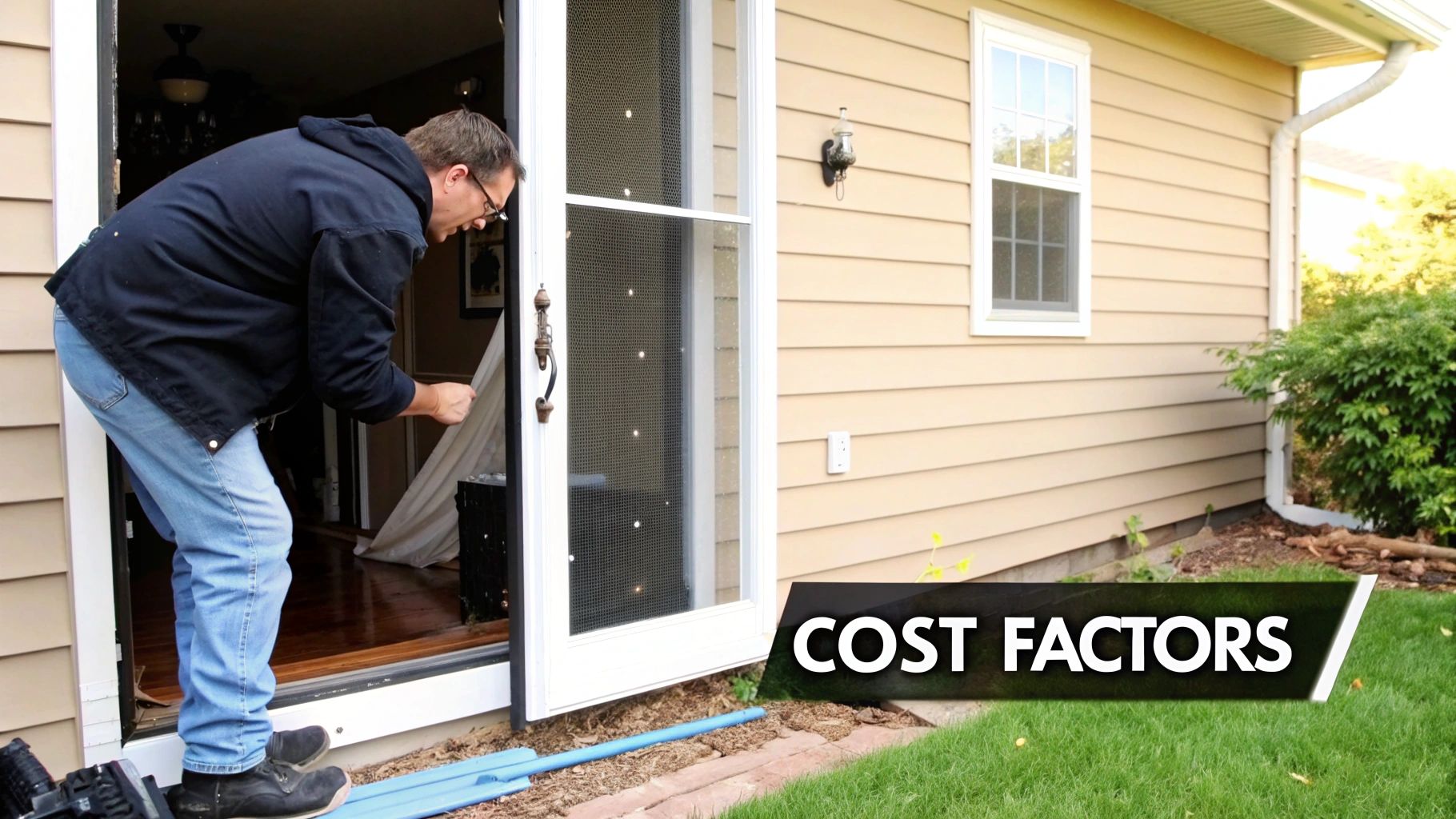
When a pro hands you a quote for a screen door repair, it looks like one single price. But that number is really made of two key ingredients: the cost of the parts and the cost of the person putting them in. Getting a handle on how these two pieces fit together is crucial. It helps you see the real value in a professional job and shows you where you can actually make choices to control the final price.
Think of it like getting a pizza. The dough, sauce, and toppings are your materials—each with its own price tag. The skill of the pizzaiolo who stretches the dough and bakes it just right? That's the labor. You need both for a great pizza, and swapping out pepperoni for prosciutto will definitely change your bill.
What Goes into the Material Costs?
The "materials" part of your bill covers every physical thing needed to get the job done, from the big roll of screen mesh down to the tiniest screws. The single biggest factor here is almost always the screen fabric you pick. Each type strikes a different balance between cost, how well you can see through it, and how tough it is.
Here's a quick rundown of the usual suspects:
- Standard Fiberglass Mesh: This is the go-to for most people. It's affordable, usually running $0.25 to $0.50 per square foot, and gets the job done. It’s light, easy to install, and won’t block your view.
- Aluminum Mesh: Want something a little sturdier? Aluminum is a good step up. It's more rigid than fiberglass, so it resists sagging, and costs a bit more at $0.50 to $0.75 per square foot.
- Pet-Resistant Screen: If you have a furry friend who loves to climb or scratch, this stuff is a lifesaver. It’s made from a super-thick, vinyl-coated polyester that's about seven times stronger than the standard stuff. Expect to pay $0.80 to $1.25 per square foot for the peace of mind.
- Solar Screen: This specialty screen is designed to block the sun's harsh UV rays and heat, which can actually help with your cooling bills. Because of its special properties, it’s the most expensive option, from $1.25 to $2.00 per square foot.
Don't forget the little things! Your bill will also include parts like the rubber spline that locks the screen into the frame, or maybe new rollers and a handle if the old ones are shot. To get a better handle on these kinds of expenses, a construction material cost predictor can be a really helpful tool.
Making Sense of Labor Charges
Now for the other half of the bill: labor. This is what you pay for the technician's time, skill, and trip to your house. It might look easy, but getting a screen perfectly tight with no wrinkles or sags is an art form that takes years of practice. That expertise is what ensures your repair looks great and lasts.
Labor isn't just the hour the technician is working. It's a bundle that includes their drive time, the specialized tools they bring, and the company's overhead like insurance and gas.
Most companies will charge for their time in one of two ways.
- By the Hour: Some repair pros charge an hourly rate, which can be anywhere from $50 to $100 per hour. This is pretty common for trickier jobs where it's hard to guess exactly how long it will take.
- A Flat Fee: More often than not, you'll get a flat-fee quote for a standard job like replacing the screen in one door. This price is based on how long the job typically takes and wraps all labor-related costs into one simple number.
You might also see a minimum service charge or a trip fee on your quote, often between $75 and $125. This just covers the basic cost of getting a qualified pro to your doorstep, even if the job only takes 15 minutes. It’s why it almost always makes sense to bundle a few small repairs into one visit. Once you see the bill as two separate parts—materials and labor—it's much easier to understand the costs and make smart choices.
The Hidden Factors Driving Your Final Cost
Ever get two quotes for what seems like the exact same job, only to find one is $75 and the other is a whopping $250? That huge gap in screen door repair cost almost always comes down to hidden factors that go way beyond just swapping out the mesh. Knowing what these variables are is the key to understanding your bill and avoiding sticker shock.
It's a bit like ordering coffee. A simple black coffee has one price, but the cost climbs fast once you start adding extra shots, oat milk, and flavored syrups. Screen door repair works the same way; the base price can jump depending on the real scope of the job, the type of door you have, and even your zip code.
The Scope of the Damage
The single biggest thing that moves the price needle is the extent of the problem. A good technician isn't just looking at the obvious tear—they're checking for underlying issues that could cause more headaches down the road. This initial diagnosis really sets the stage for the entire repair.
A tiny hole in the screen? That’s usually an easy fix, maybe a quick patch or a simple rescreening. But a bent aluminum frame is a whole different ballgame. That requires special tools and a careful hand to straighten it without cracking the metal, which means more time and skill—and a higher labor bill.
It's the mechanical parts that really add new layers to the cost.
- Worn-Out Rollers: If your sliding door grinds and sticks, the rollers are likely shot. Replacing them is a must.
- Broken Latch or Handle: This isn't just an annoyance; it's a security risk. The cost here often depends on how hard it is to find a matching part for your specific door.
- Track Misalignment: A bent or gunked-up track can make a door useless. It might need a deep clean, a serious repair, or even a full replacement.
The real cost isn't just fixing the visible tear; it's addressing the root cause. A cheap patch on a door with a warped frame is only a temporary solution to a much larger problem.
Door Type and Accessibility
Not all screen doors are built the same, and their design has a huge impact on the screen door repair cost. A standard hinged screen door is the most straightforward and can often be fixed right on the spot.
On the other hand, a retractable screen door is a complex beast with springs, tracks, and housing. Fixing one usually means taking the whole unit apart, which is a delicate and time-consuming process. Sliding screen doors can be tricky too, especially if they have to be wrestled out of their tracks—a task that can easily become a two-person job.
Don't forget about accessibility. A ground-floor patio door is a piece of cake. But a screen on a second-story balcony? Now you're talking about ladders, safety harnesses, and extra precautions. All of that adds to the labor time and, you guessed it, the final cost.
Your Geographic Location
Believe it or not, where you live can really sway your final bill. Labor rates are the big one, but material availability and local demand also play a part in what you’ll pay. A handyman in a small town simply won't have the same overhead as a specialized company in a major city with a high cost of living.
For example, data from Homewyse shows that even a standard window screen repair can vary quite a bit. For mid-2025, they estimated the average cost in major U.S. markets to be between $140 and $173, a price that bundles materials, labor, and a minimum service fee. You can learn more about how regional construction costs are calculated on Homewyse.com. This just goes to show that local labor rates are a fundamental piece of any estimate you'll get.
DIY Repair vs. Hiring a Professional
When a tear appears in your screen door, you've hit a classic homeowner's fork in the road. Do you roll up your sleeves and tackle it yourself, or do you call in a pro? The right answer really comes down to a trade-off between your time, your money, and the quality of the final result. Your budget, comfort level with home projects, and the specific problem with your door will all point you in the right direction.
Think of it like deciding between cooking a nice meal at home or going out to a restaurant. Cooking yourself is almost always cheaper, but it means you're on the hook for buying the ingredients, following the recipe, and cleaning up the mess. Dining out costs more, but you’re paying for convenience, expertise, and a guaranteed good meal without lifting a finger.
The Case for a DIY Repair
Let's be honest, the biggest win for the DIY route is the savings. Labor costs often make up over half of a professional bill, so by taking that out of the equation, you can fix many common screen door problems for a lot less. A complete rescreening job might only set you back $20 to $50 for materials, a far cry from the $75 to $150 you might pay a pro.
But going DIY isn't just about pinching pennies. For many people, there's a genuine satisfaction that comes from fixing something with their own two hands. To get that clean, professional look, though, you need the right gear. Beyond the mesh itself, having the proper window screen repair tools is non-negotiable for a smooth, frustration-free project.
Here's a quick look at what you can expect to spend on a few common DIY fixes.
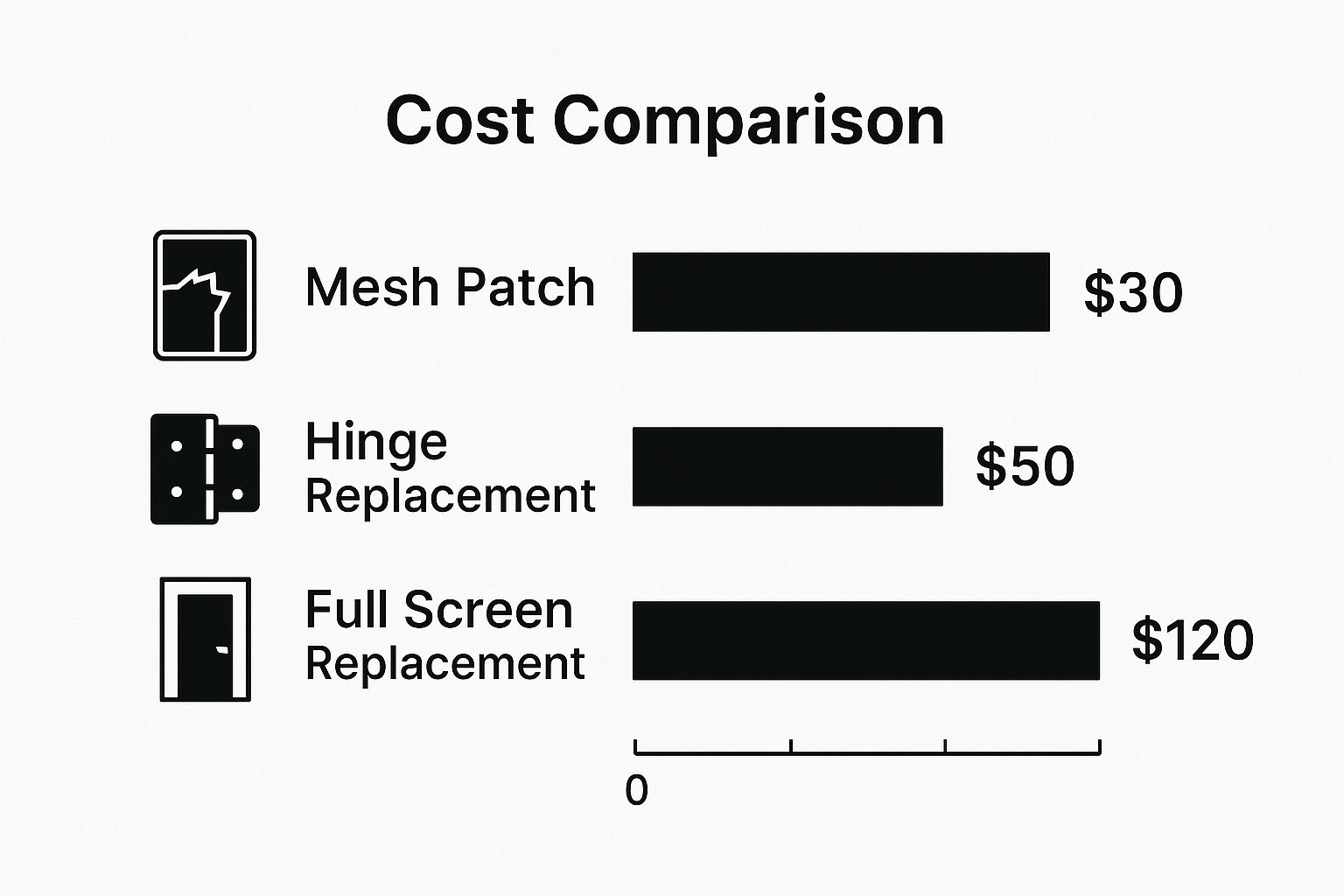
As you can see, for smaller issues, the DIY path is incredibly affordable, making it a great choice if you're watching your budget.
The Value of Hiring a Professional
So, why would anyone pay more for a pro? It really boils down to three things: experience, efficiency, and equipment. A seasoned handyman has done this hundreds of times. They can spot underlying issues you might miss, like a slightly bent frame that’s putting extra stress on the screen mesh.
That experience also means they work fast. A repair that could eat up your entire Saturday afternoon might be wrapped up by a professional in under an hour. They also come equipped with specialized tools that not only make the job easier but also deliver a better finish. Most importantly, they have the practiced skill to get the screen perfectly taut, with none of those annoying wrinkles or sags.
When you're weighing your options, it's good to know that many general handyman services can handle this kind of job. While some companies specialize in screens, a qualified handyman is often more than capable of delivering a great result.
DIY vs. Professional Repair: Which Is Right for You?
Choosing between a DIY project and hiring an expert can feel like a tough call. To help you decide, this table breaks down the key differences between the two approaches.
| Factor | DIY Repair | Professional Hire |
|---|---|---|
| Total Cost | $20 – $50. Low cost, primarily for materials. | $75 – $150+. Higher cost includes labor and expertise. |
| Time Investment | 2-4 hours. Includes a trip to the store and the actual work. | < 1 hour. The pro handles everything quickly and efficiently. |
| Required Skill | Basic to moderate. Requires patience and attention to detail. | None. You're paying for their expertise. |
| Tools Needed | You'll need to buy or borrow specific tools (spline roller, etc.). | The professional arrives with all necessary specialized tools. |
| Quality of Result | Variable. Depends on your skill; wrinkles or sags are common. | Guaranteed. A flawless, drum-tight finish is standard. |
| Best For… | Small tears, standard frames, and homeowners on a tight budget. | Bent frames, retractable doors, or when you want a perfect, hassle-free result. |
Ultimately, there's no single right answer. If the repair is straightforward, you're feeling confident, and you want to save some cash, the DIY path is a fantastic option. But for more complex problems, or if you just want a flawless result without the headache, the higher screen door repair cost of hiring a pro is a smart investment in your home and your peace of mind.
Repair or Replace? Knowing When to Call It Quits on Your Old Screen Door
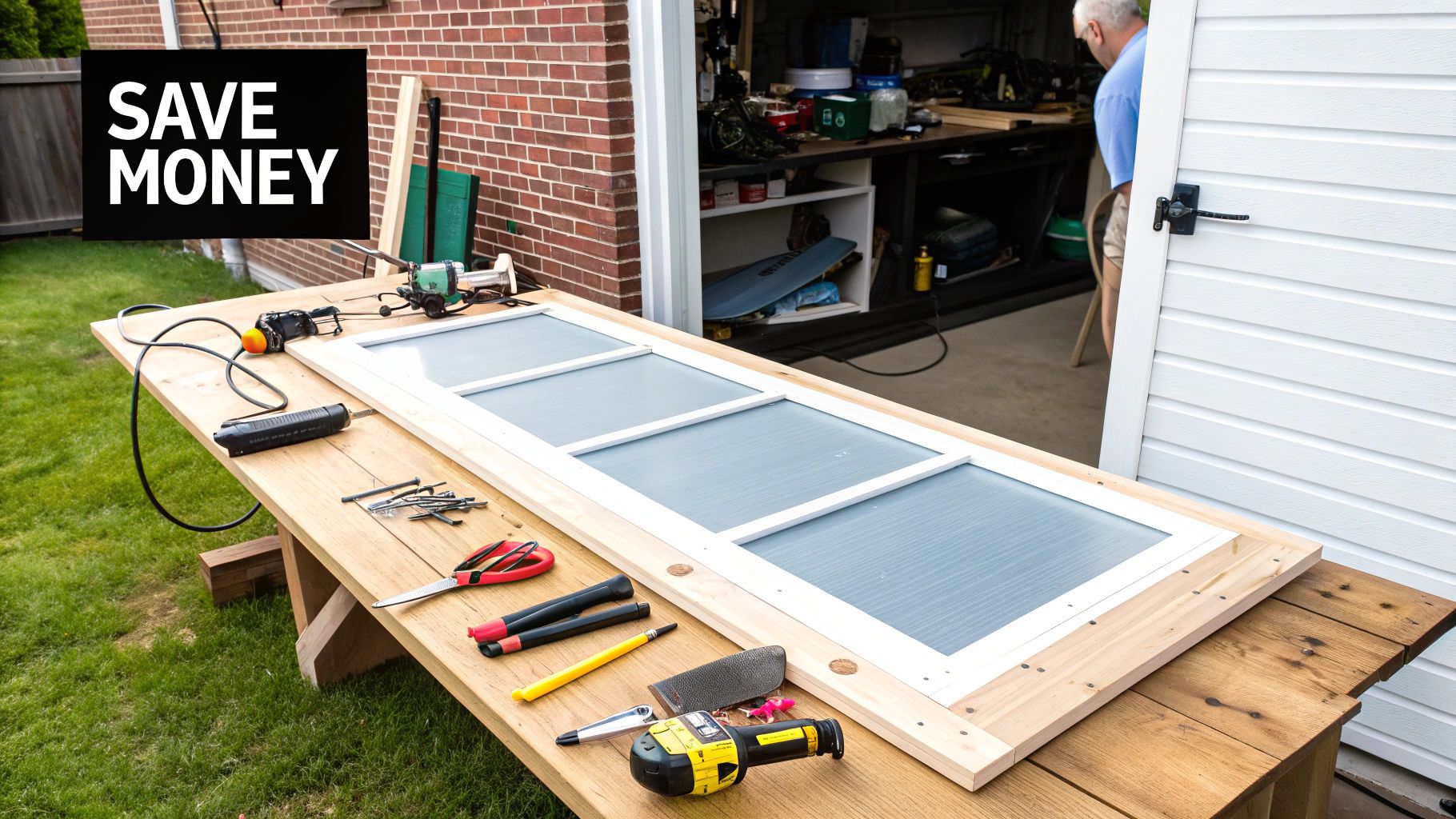
Sometimes, a quick fix is just a short-term solution for a long-term problem. When your screen door is on the fritz, you'll eventually hit a fork in the road: do you patch it up again, or is it finally time to invest in a completely new one? Knowing which path to take can save you a ton of money and frustration down the line.
Think of it like keeping an old car running. Sure, you can replace the spark plugs and change the oil, but at some point, the transmission is going to go. When major components fail, continuing with minor repairs is just throwing good money after bad. Your screen door is no different—you have to know when a simple fix isn't the smart move anymore.
Red Flags That Scream "Replace Me!"
Some problems are more than just a simple tear in the mesh; they're warning signs that the entire door is past its prime. If you’re seeing any of these issues, a full replacement is probably your best bet for a lasting solution.
- Warped or Bent Frame: Once a frame gets bent, that door will never hang, slide, or seal correctly again. Trying to straighten a metal frame is next to impossible, and even if you get close, its structural integrity is shot. You're just asking for more problems.
- Widespread Rust and Corrosion: A bit of surface rust might be manageable, but if you're seeing deep, flaky corrosion eating away at the frame, its strength is compromised. It’s a battle you won't win—the rust will always come back worse.
- Can't Find the Parts: Is the handle busted or are the rollers shot? For older doors, finding the right replacement parts can feel like a scavenger hunt with no prize at the end. You could spend weeks searching for an obscure part, only to come up empty-handed.
- Everything is Breaking at Once: A ripped screen, a broken latch, and creaky rollers? When multiple things fail at the same time, it’s a clear signal. The total screen door repair cost to fix everything can easily start creeping up toward the price of a brand-new door.
Pouring money into a door with deep structural flaws is like patching a leaky bucket. You can fix one hole, but another is bound to spring up. A replacement addresses the root of the problem for good.
The Financial Tipping Point
Ultimately, the decision often boils down to simple math. Add up what it would cost to fix everything that’s wrong with your current door and compare that to the price of a new one.
Here’s a good rule of thumb: if the repairs will cost 50% or more of what a new door would, it’s almost always smarter to just replace it. This way, you get a brand-new, fully functional product with a long life ahead of it.
So, what does a new door cost? According to a 2025 analysis on HomeGuide.com, a standard screen door installation typically runs between $175 and $500. While a fancy retractable or custom door will be more, that range gives you a solid benchmark.
When you weigh a $150-$200 repair bill against a $300 investment for a completely new door that works perfectly, the long-term value is obvious. A new door buys you reliability, smooth operation, and peace of mind. For more insights on related home repairs, check out our guide on the average window screen replacement cost. By running the numbers, you can break the cycle of endless repairs and make a choice that serves your home well for years to come.
Smart Tips to Lower Your Screen Repair Bill
Getting your screen door fixed doesn’t have to drain your wallet. With a little bit of planning and a few savvy moves, you can knock a surprising amount off the final screen door repair cost without sacrificing quality. It’s really just about being a smart homeowner and thinking a few steps ahead.
Think of it like you're shopping for groceries. You could just grab everything from the first aisle you walk down, or you could check the weekly flyer, clip a few coupons, and walk away with the same cart full of food for a lot less. Applying that same mindset to home repairs can save you a bundle.
Be Proactive with Quotes and Bundling
The best thing you can do to guarantee a fair price? Get multiple quotes. Never just hire the first person you call. Make a point to reach out to at least three different reputable pros to see what they'll charge. This simple step gives you a clear sense of the going rate and a bit of negotiating power.
Here’s another great trick: bundle your small jobs together. Most handymen and contractors have a minimum service fee just for showing up. If you only have one tiny screen patch, you’re still paying that base rate. But if you also have a small tear in a window screen or another little task on your to-do list, get it all done in one visit. This way, you get the most value out of that initial call-out fee.
Never underestimate the power of prevention. A few minutes of simple maintenance each season can save you from a hundred-dollar repair bill down the road.
Focus on Smart Maintenance and Materials
Let's be honest, preventing a problem is always cheaper than fixing one. A little bit of upkeep goes a surprisingly long way. For sliding screen doors, just taking a few minutes to clean the tracks and lubricate the rollers can stop the grinding and sticking that eventually leads to major mechanical failures.
The numbers back this up. Data from Homewyse shows that basic screen door servicing in mid-2025 is estimated to run between $106 and $128. This often covers simple things like hinge adjustments and a good cleaning, which usually fall within a standard two-hour minimum labor charge. You can check out more details on preventative service costs at Homewyse.com. That’s a whole lot cheaper than a full replacement.
Finally, think about your materials. While fancy options like solar screens are fantastic, a standard fiberglass mesh does the job perfectly well for most homes and is much easier on the budget. By getting competitive quotes, bundling jobs, and keeping up with simple maintenance, you can take control of your screen door repair cost and get the job done right, for the right price.
Common Questions About Screen Door Repair Costs
Even after breaking down all the numbers, you probably still have a few specific questions floating around. That’s perfectly normal. Let's tackle some of the most common ones we hear from homeowners every day.
Think of this as a quick-reference guide to help you nail down the final details and make a confident decision for your home.
How Much Does It Cost to Rescreen a Sliding Screen Door?
Getting a sliding screen door rescreened by a pro will usually land somewhere between $75 and $150. What pushes the price to the high or low end? It really comes down to the door's size, the screen material you pick, and what labor costs look like in your neck of the woods.
For example, opting for a heavy-duty, pet-resistant mesh will cost more than standard fiberglass. If you're feeling handy and want to do it yourself, you can get all the materials you need—mostly just the screen and a new spline—for about $20 to $50.
Is It Cheaper to Repair a Screen Door or Replace It?
Nine times out of ten, if you're just dealing with a tear in the mesh, a repair is going to be much friendlier to your wallet. A professional rescreening job might be around $100 to $175, while a whole new standard screen door could set you back $175 to $500 after you factor in installation.
The real tipping point is the frame. If your door's frame is bent, rusted out, or warped, replacement is usually the smarter long-term move. There's no sense in putting a brand-new screen on a structure that's failing.
What Is the Most Durable Type of Screen Mesh?
For homes with pets or active kids, pet-resistant screen is the hands-down winner for durability. It’s a thick, vinyl-coated polyester built to stand up to claws, scratches, and the general chaos of a busy household.
It costs a bit more upfront, but its toughness can save you a ton of money on future repairs. Another incredibly strong—though less common—choice is stainless steel mesh, which offers amazing strength and longevity against harsh weather.
Can I Just Patch a Small Hole in My Screen?
You sure can. For a tiny hole or tear, a patch is a great, wallet-friendly fix. You can grab adhesive screen patches at any hardware store for just a few bucks, and it's a job you can knock out in minutes.
Just remember, a patch is mostly a temporary fix, and you'll be able to see it. For a clean, like-new look, or for any tear bigger than a couple of inches, your best bet is to rescreen the whole panel. If you want a flawless finish, finding a quality screen repair service near you is the way to go.
For expert screen repair and replacement with same-week service, trust the professionals at Sparkle Tech Screen Service. Get a quick quote today to restore your home's comfort and curb appeal. Learn more at https://sparkletechscreenservice.com.


