


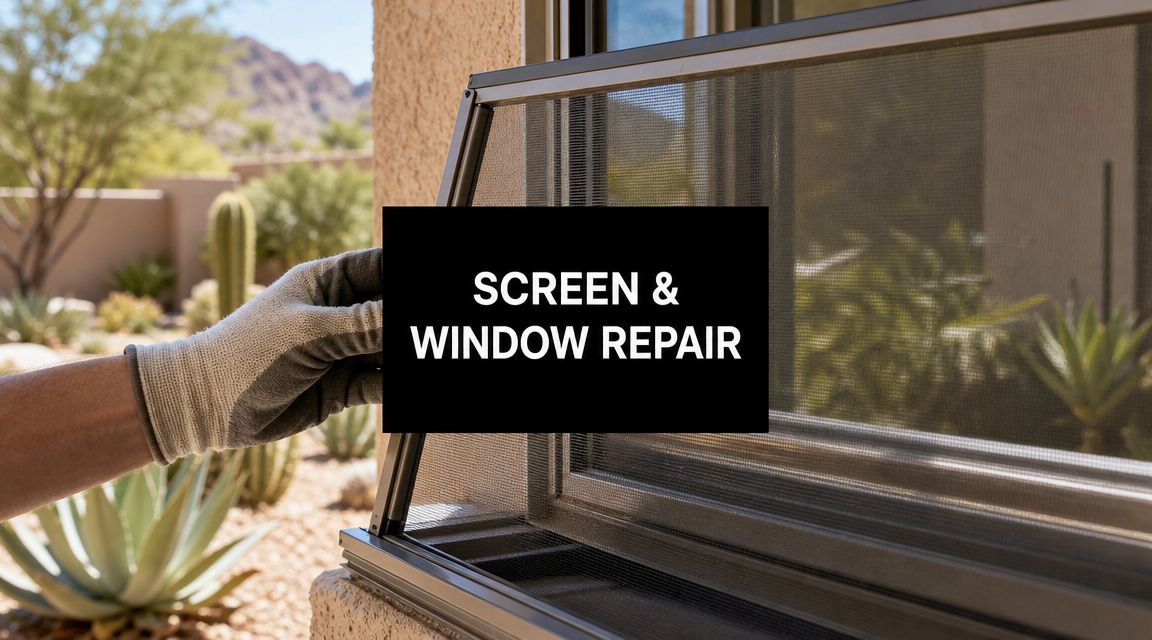

A torn patio screen in Phoenix usually shows up at the worst time. You crack the slider open for some evening air, and now the mesh is split, the frame is bowed, or the door scrapes so badly you have to shoulder it closed. Add desert dust, summer sun, and a dog that treats the screen like a gate, and a small problem gets annoying fast.
That's why people search for screen and window repair near me instead of hunting for a shop across town. In this trade, local matters because most jobs are small, specific, and easier to handle through a mobile service model. Regional providers market on-site screen repair across nearby municipalities, including service for both windows and doors, which reflects how this work is done in the field: fast trips, repeated common repairs, and short lead times rather than a big showroom process (regional on-site screen repair service coverage).
In Phoenix, that local model fits the climate. Sun bakes mesh until it gets brittle. Dust packs into tracks. Patio sliders wear out in a way homeowners notice every single day. The fix might be simple. It might also be one of those jobs that looks simple until the frame corners are loose, the spline won't hold, and the door no longer sits square.
Your Guide to Local Screen Repair in Phoenix
A lot of Valley homeowners are dealing with the same pattern. One screen goes first. Then you notice another window with loose mesh, a patio slider that hops the track, or a sun screen that faded and lost tension after too many summers. By the time you search for a local repair company, you usually want two things. A straight answer and a fast appointment.
Why near me matters in this trade
Screen repair isn't like shopping for a new appliance. Most calls involve a torn bug screen, a worn sliding screen door, a bent frame, or a rescreen job that can be handled without replacing the entire window unit. That's why local providers often work as mobile services instead of relying on one central storefront.
If you're in Phoenix, Scottsdale, Mesa, Peoria, or nearby areas, the practical advantage is simple:
- Shorter turnaround: A local route means your job can often be picked up, measured, repaired, and returned faster.
- Better diagnosis on-site: A tech can see whether the issue is just mesh, bad rollers, a bowed frame, or a track problem.
- Less wasted money: You don't want to replace a whole assembly when a proper rescreen or hardware repair will do the job.
Practical rule: If the problem is localized to mesh, rollers, tabs, corners, or one bent frame member, repair usually makes sense. If the whole unit is failing in multiple places, replacement starts to look smarter.
What Phoenix homeowners should expect
In Arizona, repairs need to match how the screen failed. Standard insect screens, sun screens, patio enclosures, and window sliders don't age the same way. A bug screen may only need new mesh. A sun screen may still look intact from the street but have fabric that has gone dry and weak from UV exposure.
The right local company should be able to tell you, without a sales pitch, whether you're looking at a quick rescreen, a frame rebuild, new rollers, or a replacement panel. That's the difference between a useful service call and a wasted one.
Whats Fixable Common Screen Problems and Solutions
Most screen problems are fixable. The question is whether the screen should be repaired, rescreened, or replaced. Homeowners lose money when they patch something that's already past its useful life, or replace something that only needed fresh mesh and a square frame.

Torn mesh and small openings
This is the most common call. In Phoenix, the cause is often a mix of sun damage and everyday use. The mesh gets brittle, someone presses on it, and now there's a split near the lower corner or center panel.
A simple rescreen is usually the right move when:
- The frame is still square: It sits correctly in the opening and doesn't rock or pop out.
- The damage is mostly in the mesh: No cracked corners, broken rails, or severe bowing.
- The spline channel still holds: New material can be rolled in tightly without slipping back out.
If the mesh is failing in several spots, patching it usually wastes time. One clean remesh gives a tighter fit and a better-looking result.
Pet damage and lower-panel failures
Cats claw. Dogs push. Patio screens take the abuse because they sit at nose and paw level. I see this constantly on sliding doors where the bottom third is shredded but the homeowner keeps trying tape patches.
Those temporary fixes almost never last in our heat. If the frame is solid, rescreening is worth doing. If the pet has bent the door frame or twisted the corner joints, you may need a replacement screen door panel instead.
A screen that keeps popping out after "repair" usually has a frame problem, not a mesh problem.
Bent frames and warped corners
Arizona heat is hard on lightweight frames, especially older ones that have been removed and reinstalled many times. Once a frame is bent, the mesh starts to sag and the unit no longer seals against the opening.
Here's the decision framework I use:
| Condition | Likely fix | When replacement makes more sense |
|---|---|---|
| Slight bend, frame still fits opening | Frame adjustment and rescreen | If the metal fatigues or won't stay square |
| Loose corners | Corner repair and rescreen | If multiple corners are cracked or separated |
| Frame badly twisted | Replacement panel or rebuilt frame | Usually the smarter path |
| Spline channel damaged | Limited repair possible | Replace if new spline won't hold tension |
Sliding screen door problems
Sliding doors are their own category. Sometimes the mesh is torn, but the bigger issue is underneath. Worn rollers, dirty tracks, and racked frames make the door drag, jump, or stick halfway.
Look for these clues:
- Door drags but mesh is intact. That's often rollers or track debris.
- Door glides badly and corner gaps show. The frame may be out of square.
- Handle side won't latch cleanly. Alignment is off, not just the screen fabric.
- Mesh is new but the door still feels awful. Rescreening alone won't solve hardware problems.
Repair versus replacement
This is the part most local service pages skip. General home-glass guidance says repair is almost always cheaper than replacement, while full window replacement can range from $100 to $750 per window (Angi home glass repair and replacement guidance). That doesn't mean every screen should be repaired forever.
Replace instead of repair when the frame has lost shape, the hardware is failing in more than one spot, or the screen material and frame are wearing out at the same time. In those cases, a low-cost fix can turn into repeat service calls and more frustration.
How Much Should Screen Repair Cost in Phoenix
Price depends on what you're fixing. That sounds obvious, but homeowners often compare a quick single-screen remesh to a sliding screen door rebuild as if they should cost the same. They don't.
A useful benchmark comes from 2026 pricing data in Exton, Pennsylvania, where average window screen repair cost runs from $298 to $458, with a broader observed range from $55 to $899 depending on the job (2026 window screen repair cost data). Phoenix pricing can differ by market and material, but that spread tells you something important. Screen repair isn't one flat-price service.
Why one quote is low and another isn't
The low end usually lines up with a straightforward repair. One panel. Standard mesh. No bad frame. Easy access. The higher end shows up when the work gets layered. Multiple screens, damaged hardware, a patio slider, custom sizes, or a frame that can't just be remeshed.
In Phoenix, these factors usually push the quote around:
- Type of screen material: Standard bug mesh and heavier sun-control materials aren't the same job.
- Frame condition: Good frame equals faster repair. Bent, cracked, or loose frames take more labor.
- Door versus window: Sliders often need hardware attention, not just new mesh.
- Access and handling: Upper windows, large patio panels, and pickup or delivery logistics add complexity.
What a good quote should tell you
A good estimate should separate the underlying issue from the visible issue. If you only ask, "How much to fix this tear?" you may miss the bent rail or worn rollers causing the repeat failure. Clear estimates matter because homeowners are often deciding between repair and full replacement under time pressure.
If you want a deeper breakdown of what affects pricing, this guide to window screen replacement cost is a useful starting point for comparing job types.
Fast quotes aren't just about convenience. They help you decide before a small repair turns into a larger replacement job.
Phoenix-specific cost pressure
Arizona homes often have a mix of standard insect screens and sun screens, and that mix changes the ticket. So does age. A ten-minute mesh fix becomes a longer visit when the frame corners are brittle, the track is packed with dust, or the panel has baked in place for years.
That's why the cheapest advertised price usually isn't the number to focus on. The better question is whether the quote accounts for the whole repair the first time.
DIY vs Hiring a Pro A Realistic Comparison
DIY screen repair can work. If you have one basic window screen, a flat work surface, the right spline, a spline roller, and some patience, you can get through it. The problem is that many homeowners don't stop at one easy screen. They start with a patio slider, warped frame, or Arizona-sun-brittle mesh and end up with a mess on the garage floor.
Where DIY goes sideways
The usual failure points aren't complicated. The mesh goes in crooked. Tension gets uneven. Corners pull out. The spline looks seated until one side loosens. On sliders, the bigger trap is assuming the torn mesh is the whole problem when the actual issue is rollers, frame alignment, or track wear.
In Phoenix, heat makes DIY less forgiving. Older mesh cracks while you're removing it. Plastic tabs snap. Aluminum frames can twist if you force them back into shape too aggressively.
DIY vs Professional Screen Repair
| Factor | DIY Repair | Professional Repair (Sparkle Tech) |
|---|---|---|
| Upfront cost | Lower if you already have tools and only one simple screen | Higher than DIY material-only cost, but includes labor and fit |
| Hidden costs | Extra mesh, wrong spline size, broken corners, wasted time | Fewer surprises when the technician identifies frame or hardware issues early |
| Time | Can take a full afternoon for a first attempt | Usually faster because the repair process is routine |
| Finish quality | Wrinkles, slack mesh, uneven edges are common | Tighter fit and cleaner finished edges |
| Hardware diagnosis | Easy to miss rollers, tabs, track issues, and alignment problems | Better suited for full repair, not just remeshing |
| Longevity | Good on simple jobs if done well | Usually better on complex or high-use screens |
When DIY makes sense
DIY is reasonable if all of these are true:
- The frame is in good shape: No twist, no cracked corners, no fit problems.
- The repair is limited to mesh: You're not dealing with rollers, latches, or damaged tracks.
- You have the tools already: A spline roller, utility knife, correct mesh, and matching spline matter.
- You can tolerate a learning curve: The first screen is rarely the neatest one.
If you're weighing that option, this walkthrough on DIY window screen repair can help you judge whether your project is simple enough to tackle.
When hiring a pro saves money
This shows up most often on patio sliders, sun screens, and any screen tied to a larger window problem. Professional repair often goes beyond replacing mesh. Work on damaged window components can help restore insulation performance and improve energy efficiency by reducing air leakage and drafts (window repair guidance on insulation and air leakage).
That matters in Phoenix. If a window is leaking air around damaged components, a cosmetic screen fix won't solve the comfort issue.
Field note: If your room still feels hot, dusty, or drafty after the screen is repaired, the problem probably wasn't just the screen.
How to Hire the Right Screen Repair Service
Most homeowners don't need a long vendor checklist. They need a few smart questions that expose whether a company knows screens or just answers phones. In this trade, speed, clarity, and diagnosis matter more than polished marketing.
Start with this checklist.

Questions worth asking before you book
- What exactly do you repair? Ask whether they handle window screens, sliding screen doors, sun screens, patio rescreens, rollers, and frame issues.
- Do you offer on-site service, pickup, or both? Convenience matters when you're dealing with multiple panels or a large slider.
- How do you quote the job? You want a company that asks about frame condition, hardware, and screen type. Not one that blurts out a generic number.
- What materials do you offer for Arizona sun? Mesh choice matters here more than it does in milder climates.
- What happens if the frame is too damaged to rescreen? A good shop will explain the threshold clearly.
Urgency matters more than most companies admit
Some repair needs can wait. Others shouldn't. A patio door that won't close right, a storm-damaged pane area, or a security issue after hours changes the timeline. Existing market examples show a gap here. Some providers advertise rapid response such as same-day repair or even 24/7 emergency window repair, while many others list standard business hours only (Glass Doctor emergency window repair availability).
That's why homeowners should ask directly:
- Can you come out the same day?
- Do you handle urgent jobs after normal hours?
- Can you pick up and return screens if needed?
- How far out are you booking?
A company that gives clear answers on scheduling is usually easier to work with from start to finish.
For a quick look at what local availability can look like, you can compare options for window screen repair service near me.
This short video also helps homeowners know what to watch for in a repair setup.
How to judge the company before they arrive
You can learn a lot from the first call or text. Do they ask good questions, or do they just push to book? Do they understand the difference between sun screen remeshing and a slider roller repair? Do they explain what might change the quote?
If you're comparing local contractors in general, not just screen pros, this article on how Silva Marketing helps contractors get calls is useful because it shows why some good service businesses are easy to find online and others aren't. Visibility isn't the same thing as skill, but it does explain why the first company in search results isn't always the one with the clearest process.
The company you want doesn't just say "we repair screens." They can tell you, before the visit, what they need to confirm on-site.
Your Phoenix Metro Solution Sparkle Tech Service Areas
Phoenix homeowners usually don't want to haul screens around the Valley, wait weeks, and guess whether the repair will hold. They want local coverage, quick scheduling, and someone who understands the difference between a routine remesh and a slider that needs real adjustment.

Sparkle Tech Screen Service handles new, rescreened, and repaired bug and sun/solar screens with window sliders, along with screened patio rescreening, same-week service, quick quotes, and same-day pickup. Service areas listed by the company include Phoenix, Scottsdale, Cave Creek, Peoria, Sun City, Surprise, Mesa, Tempe, Chandler, Maricopa, San Tan Valley, Avondale, Queen Creek, Litchfield Park, Buckeye, Anthem, Carefree, Waddell, Sunflower, Payson, Munds Park, Sedona, Flagstaff, Prescott, and Ahwatukee.
What local coverage should mean to you
A broad service map only helps if the company can move jobs through fast. In practical terms, that means:
- Window screens: New bug screens, remeshing, and repairs for damaged panels
- Sun screens: Repair or replacement for sun-baked, brittle, or faded material
- Sliders: Rescreening and repair for patio and window slider screens
- Screened patios: Rescreening for larger enclosures where one failed section often leads to more
A better way to compare your options
If you're still sorting through local providers, a regional service professionals directory can help you cross-check companies by area and category. That's useful when you want to compare local coverage before booking.
For Phoenix-area homeowners, the practical filter stays the same. Ask whether they work on the exact screen type you have, whether they can diagnose frame and hardware issues, and how quickly they can get your job done.
If your screen is torn, your slider sticks, or your sun screen has gone brittle, you don't need a vague promise. You need a clear repair path.
If you need a quote or want to book service, contact Sparkle Tech Screen Service . You can text or call 623-233-0404 or 800-370-3998 for help with bug screens, sun screens, slider repairs, and patio rescreening across the Phoenix metro area.


