


It starts with one intensely itchy, red welt. You have no idea where it came from. The next morning, there’s another one. If you're getting mysterious bites inside your own home, the culprit is almost certainly no see ums—tiny biting midges so small they can waltz right through standard window screens. Suddenly, your living room is their dining room.
The Unseen Enemy Biting You at Home

Finding no see ums in your house is a maddening experience. You can’t see them to swat them like a mosquito. They operate in stealth mode, leaving behind only the painful, itchy proof they were there. Their size—just 1-3 millimeters—is their superpower, letting them slip through the tiniest cracks and openings in your home's defenses.
Here in Arizona, from Phoenix to Scottsdale, our warm climate is a paradise for them. When the monsoon season hits, bringing humidity and standing water, their populations can explode overnight.
First, What's Drawing Them to Your Yard?
Before they ever get inside, something outside is attracting them. No see ums are weak fliers, so they almost always breed very close to where they feed. Figuring out what’s attracting them is your first move.
They’re typically looking for a few key things:
- Moisture and Standing Water: This is the big one. Female no see ums need blood to lay eggs, and they lay them in damp soil or standing water. A leaky sprinkler, a clogged gutter, or even a single overwatered potted plant is a five-star nursery for them.
- Thick Landscaping: Dense shrubs, ivy, and unkempt compost piles are perfect no see um habitats. They hold moisture and offer shelter from the sun and wind.
- You: Like most biting insects, they are drawn to the carbon dioxide you exhale and your body heat. That's why they always seem to find you when you're relaxing on the patio at dusk or sleeping in your bed.
These pests are a global problem, with over 4,000 species worldwide and about 600 in the United States. A single female can lay up to 400 eggs at once and do it several times in her short life. You can see how a small problem can become an overwhelming infestation very, very quickly.
How They're Getting Inside
Once they're swarming in your yard, getting inside is disturbingly easy for them. Your standard window and door screens, which are usually an 18×16 mesh, have openings more than big enough for a no see um to crawl right through. Your screen doesn't even need to be torn; it just needs to be… a standard screen.
But they don't stop there. They'll also use:
- Gaps around window and door frames
- Tiny cracks in your home's foundation or siding
- Unsealed openings where pipes and wires enter the house
- Dryer vents or bathroom fans that aren't properly screened
A scenario we see all the time in Arizona homes is an infestation that appears out of thin air. The homeowners are completely baffled because their screens look fine. The hard truth is, their screens were never meant to stop an insect this small.
To zero in on where they might be hiding or getting in, you need to think like a no see um. They seek out damp, dark, and sheltered spots.
The table below breaks down the most common indoor hotspots. Check these areas first in your investigation.
Common No See Um Hotspots Inside Your Home
| Indoor Location | Reason for Infestation | Primary Sign |
|---|---|---|
| Window Sills & Tracks | Gaps in frames or standard screens allow easy entry. Condensation can provide moisture. | Seeing tiny black specks (the insects) on the sill or getting bitten near windows. |
| Bathrooms | High humidity, drains, and vents create a perfect moist environment. | Bites occurring after a shower or noticing insects near sinks and floor drains. |
| Kitchens | Attracted to moisture from sinks, disposals, and even damp sponges or trash cans. | Pests congregating around the sink area, especially at dawn or dusk. |
| Indoor Potted Plants | Overwatered soil becomes an ideal breeding ground for larvae. | A cloud of tiny gnats rises when you water the plant; bites occur when near the plant. |
| Laundry Rooms | Utility sinks, floor drains, and poorly sealed vents for dryers offer moisture and entry. | Finding bugs near the washing machine or getting bitten while doing laundry. |
By methodically checking these common problem areas, you can start to connect the dots and figure out exactly how they're getting in and where they're living.
Beyond sealing up your home, simply making the indoor environment less comfortable for them can work wonders. For instance, using fans and other effective strategies to cool a room without AC creates constant airflow. No see ums are terrible fliers, so a steady breeze makes it nearly impossible for them to navigate and land a bite. This basic knowledge is key—you have to understand how your enemy operates before you can win the fight.
Finding and Sealing Every Entry Point
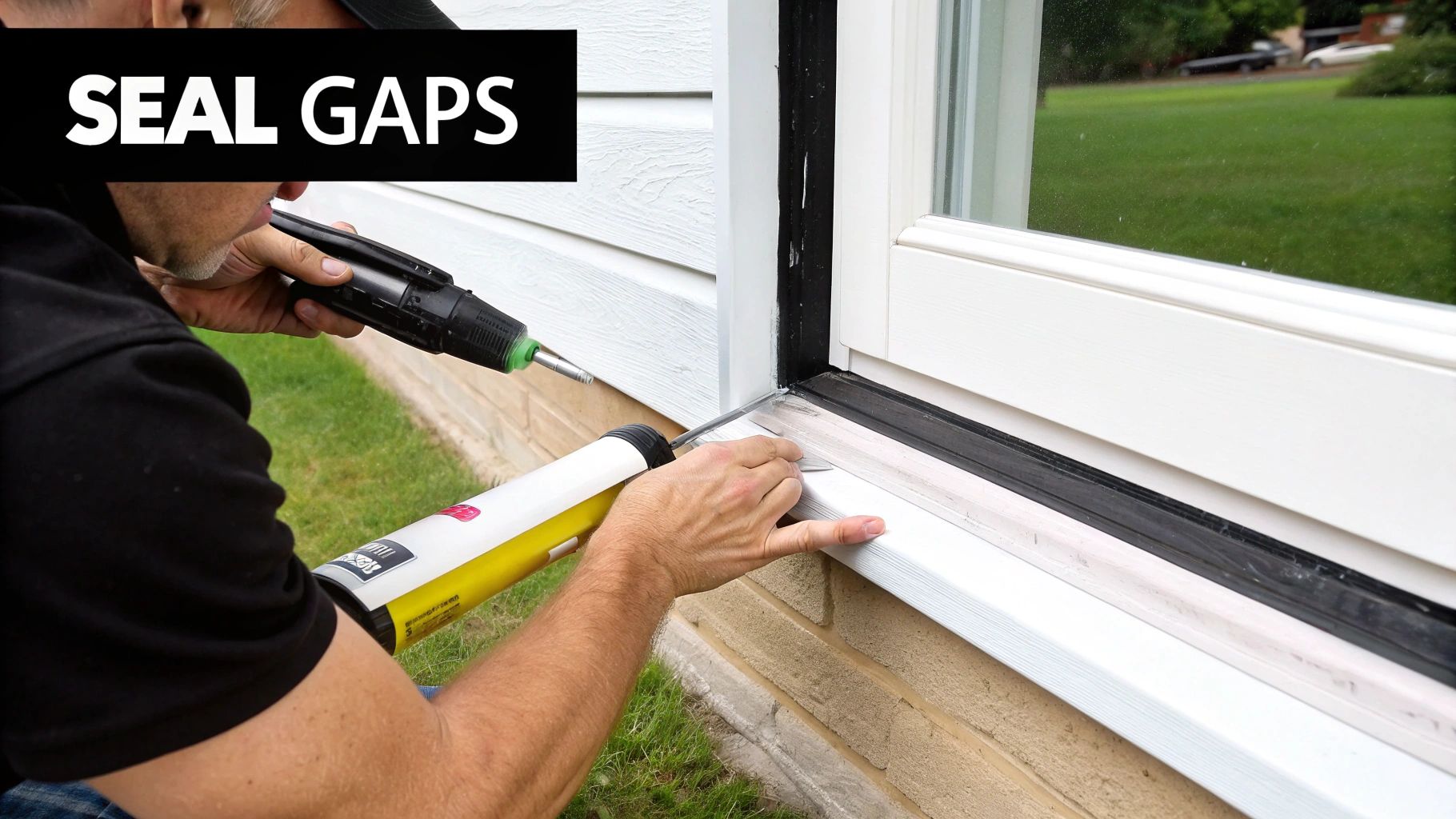
Before you can get rid of no-see-ums for good, you have to start thinking like they do. These tiny intruders are experts at exploiting weaknesses in your home’s defenses—cracks and gaps you probably don't even know exist. It’s time to play detective.
Your mission is to find and seal every single potential entry point. Think small. Incredibly small. A gap the width of a credit card might as well be a six-lane highway for these pests. This isn't just about bug-proofing; it's about reclaiming your space and your sanity.
Your Home Security Audit Checklist
The best way to tackle this is with a methodical, room-by-room inspection. I find it’s easiest to spot gaps on a bright, sunny day when the light shining through makes them obvious. You’re hunting for any unsealed crack that offers a path from the outside in.
Here are the prime suspects you need to investigate:
- Window Frames and Sills: Get up close and check where the window frame meets the wall. Old caulk often shrinks and cracks over time, creating the perfect tiny doorway.
- Door Sweeps and Weather Stripping: Close your doors completely. Do you see any daylight peeking through around the edges or underneath? That’s your problem area.
- Utility Penetrations: This is a big one that people always forget. Look where pipes, vents, and cables enter your house—think plumbing under the sink, A/C lines, and internet cables.
- Vents and Exhausts: Dryer vents, bathroom fans, and kitchen exhausts need to be checked. If the exterior covers are damaged or the flaps are stuck open, they become an open invitation.
A client in Peoria was absolutely certain no-see-ums were getting through her brand-new screens. During our inspection, we found a quarter-inch gap around the exterior water spigot pipe that went straight into her wall. We sealed that one tiny hole, and a problem that had tormented her for months was gone overnight.
Sealing the Gaps: A DIY Guide
Once you've mapped out the weak points, it's time to seal them up. The good news is that most of these are simple, inexpensive fixes you can knock out in an afternoon. You don’t need to be a contractor to make a huge difference.
Choosing Your Sealing Materials
Here’s a quick guide to what you’ll need from the hardware store.
| Material | Best Use Case | Pro Tip |
|---|---|---|
| Silicone Caulk | Perfect for gaps around window and door frames, and where pipes enter the home. It stays flexible and waterproof. | Use painter's tape to mask off the edges before you caulk. You'll get a perfectly straight, professional-looking line every time. |
| Weather Stripping | A must-have for the perimeter of doors and windows. It comes in foam, rubber, and felt versions. | Pick a thickness that compresses just a little when the door or window is shut. That’s how you know you have a tight seal. |
| Expanding Foam | Best for larger gaps, like around pipes or in foundation cracks. Use it carefully—it expands a lot! | Always grab the "low-expansion" foam for areas around windows and doors to avoid warping the frames. A little goes a long way. |
| Fine Mesh Screens | The only way to properly cover vents and exhausts. You can buy it in rolls. | Cut a piece of mesh slightly larger than the vent opening and secure it with screws or a strong, waterproof adhesive. |
Putting It All Together: A Real-World Fix
Let's walk through a common problem area: the sliding glass door.
Start by inspecting the weather stripping on the vertical edges where the two doors meet. If it’s brittle, cracked, or totally flat, it’s useless. Most types just pull out of a channel, and you can press a new strip right back in.
Next, look at the track itself. Dirt, leaves, and pet hair can build up and prevent the door from closing completely, leaving a gap. Clean it out. Finally, check the entire exterior frame where it meets your house and run a fresh bead of silicone caulk to seal any cracks.
These small, deliberate steps, repeated for every window and door, add up to make a massive difference. If you notice your window screens have holes or tears during your audit, sealing the gaps won't be enough. That's when you should look into a full replacement. You can learn more about the process of rescreening a window screen to see what's involved and ensure your first line of defense is rock-solid.
Why Your Window Screens Are Failing You
So, you’ve sealed every crack and fortified every door, but you're still waking up with those maddening, itchy bites. If you feel like you’re doing everything right and still have no see ums in the house, it’s time to look at your home’s biggest vulnerability: your window screens. They might look solid, but to a no see um, your standard screen is a wide-open door with a welcome mat.
The problem comes down to something most homeowners never think about—the mesh count. The vast majority of homes in Arizona come with standard 18×16 mesh screens. That number just means there are 18 threads per inch in one direction and 16 in the other. It’s perfectly fine for stopping mosquitoes and house flies, but it’s completely useless against no see ums.
These tiny biting midges are often smaller than 1 millimeter, which means they can wiggle right through the openings in a standard screen without a problem. It’s not that your screens are broken; they were simply never designed to stop an enemy this small.
The Critical Difference in Mesh Size
To actually block no see ums, you need a much finer mesh. The solution is to upgrade to a screen with a higher thread count, which creates significantly smaller openings. This is where getting the details right makes all the difference for your comfort and sanity.
You’ve got a couple of solid options:
- 20×20 Mesh: This is what’s commonly called "no see um screen" and it’s the go-to upgrade for most situations. It drastically reduces the size of the openings, blocking the vast majority of these pests while still allowing for good airflow.
- 30×30 Mesh: If you're dealing with a really severe infestation, a 30×30 mesh provides an even tighter weave for maximum protection. The trade-off is slightly reduced visibility and airflow, but for many people, the peace of mind is well worth it.
Here in Arizona, especially in areas like Cave Creek and Queen Creek where large screened patios and slider windows are common, a standard 18×16 mesh fails 100% of the time against no see ums. This is what leads directly to bedroom invasions and those sleepless nights. Unlike with mosquitoes, chemical repellents don't offer much help—studies show that even DEET has under 50% efficacy. That makes a physical barrier like the right screen your absolute best defense.
Professionally installed, fine-mesh screens have been shown to cut down indoor biting incidents by up to 95%. This isn't just a minor improvement; it's a game-changer. You can read more about what attracts them and how to keep no see ums out of your house on mosquitojoe.com.
To help you visualize the difference, here’s a quick breakdown of how these screen types stack up.
Screen Mesh Comparison for No See Um Protection
| Mesh Type (Threads per inch) | Effectiveness Against No See Ums | Airflow Impact | Best For |
|---|---|---|---|
| Standard 18×16 | Poor. Openings are too large. | Excellent | Basic insect control (flies, mosquitoes). Not for no see ums. |
| No See Um 20×20 | Excellent. Blocks most no see ums. | Good | The best all-around choice for most homes in Arizona. |
| Ultra-Fine 30×30 | Maximum. Virtually impenetrable. | Moderate | Homes near standing water or with severe, persistent infestations. |
Choosing the right mesh is the most important step in creating a bite-free home.
Choosing the Right Screen Material
Beyond just the mesh count, the material your screen is made from plays a huge role in its longevity and effectiveness, especially under the harsh Arizona sun.
Fiberglass Screens
This is the standard material you'll find on most new homes. It’s flexible, pretty affordable, and doesn’t crease or dent easily. The big downside, though, is its lifespan. After a few years of intense sun exposure, fiberglass can become brittle, leading to the tiny cracks and tears that no see ums will happily exploit.
Aluminum Screens
While it costs a bit more upfront, aluminum offers far superior durability and a longer lifespan. It won't sag over time and holds up much better against UV degradation. For a home in Peoria or Tempe, investing in a high-quality aluminum screen almost always makes more sense in the long run.
The material you pick is a critical part of your defense strategy. To make the best call for your home and budget, it helps to dive into the details. Our guide on selecting the best window screen material offers a thorough comparison to help you choose wisely.
A family in Tempe had a beautiful backyard pool and patio they could never use in the evenings because of no see ums. Their standard screened enclosure was doing absolutely nothing. We went in and replaced their 18×16 fiberglass panels with a 20×20 aluminum screen, and it completely transformed their outdoor living space. They went from being driven inside at dusk to hosting evening pool parties without a single bite.
This is a perfect example of how the right screen isn't just a minor upgrade; it's the most powerful tool you have. It fundamentally changes how you can live in and enjoy your home, turning a vulnerable entry point into an impenetrable fortress against these miserable pests.
Creating a Bite-Free Zone in Your Yard
If you want to win the war against no-see-ums, you have to start outside. The real battle isn't happening in your living room; it's being waged in your own backyard. By making your property less attractive to these tiny pests, you can slash their numbers before they even get a chance to sneak indoors.
This isn't about dousing your yard in harsh chemicals. It's about smart, strategic defense—taking away the things they need to breed and survive. Think of it this way: your yard is the first line of defense. Every small change you make builds up to a more peaceful, bite-free home.
Eliminate Their Breeding Grounds
No-see-ums are homebodies. They don’t travel far from where they hatch, so if you're getting swarmed on your patio, their nursery is probably just a few feet away. Female no-see-ums need damp soil or standing water to lay their eggs, which makes your primary mission simple: hunt down and dry up every bit of excess moisture.
Take a walk around your property with a critical eye. You'll likely find a few of these common problem spots:
- Poor Drainage: Look for any areas where water pools after it rains or after the sprinklers run. Those soggy patches of soil are five-star hotels for no-see-um larvae.
- Overwatered Plants: It’s easy to overdo it. Drenched soil in your flower pots and garden beds is a perfect breeding habitat. Always check the soil before you water; if it’s still damp, give it another day.
- Clogged Gutters: A gutter packed with leaves and muck is basically an elevated swamp. It’s a hidden, perfect breeding ground that no-see-ums love.
- Compost Piles: A soggy, stagnant compost pile that doesn't get turned often can quickly become a major source of pests.
Fixing these issues is usually pretty straightforward. You can aerate your lawn to improve drainage or adjust sprinkler heads to stop overwatering. For your compost, make sure you have a good mix of green and brown materials and turn it weekly to keep things from getting stagnant and swampy.
Use Landscaping to Your Advantage
Did you know your landscaping choices can either roll out the welcome mat for pests or send them packing? Dense bushes and overgrown plants, especially right up against your house, trap humidity and create the shady, damp spots that adult no-see-ums hide in during the day.
A little strategic pruning makes a huge difference. Trim back shrubs to get the air flowing and let more sunlight hit the soil. Drier soil is far less hospitable to these bugs.
A simple but effective trick is to create a small, 18-inch barrier of gravel or mulch between your foundation and your garden beds. This does two things: it makes it physically harder for pests to crawl up to your house, and it prevents moisture from getting trapped against your home’s exterior.
You can also put your garden to work for you. Certain plants are natural insect repellents because of the oils they produce. No-see-ums can't stand them. Try planting a few of these in pots near your doors or on the patio:
- Lavender
- Marigolds
- Mint
- Lemongrass
- Rosemary
To take it a step further, you can explore other natural pest control methods for your garden that will make your whole yard a less inviting place for pests.
Harness the Power of a Simple Breeze
Here’s a weakness you can easily exploit: no-see-ums are terrible fliers. They’re so tiny and lightweight that even a gentle breeze can stop them in their tracks, making it impossible for them to navigate or land a bite.
Placing a couple of outdoor or box fans on your porch creates a surprisingly effective no-fly zone. Just turn them on when you're outside, especially around dawn and dusk when no-see-ums are most active. This simple trick can be the difference between a lovely evening outdoors and a miserable, itchy one.
Of course, for homeowners with a patio, the ultimate solution is to screen it in. The right screens can transform a buggy, unusable space into a comfortable outdoor living room. You can learn more about what goes into a properly enclosed screen patio and how it provides a permanent barrier against all sorts of pests.
This infographic really drives home the difference between standard screens and the specialized mesh needed to stop no-see-ums.

As you can see, standard screens offer almost zero protection. But a fine-mesh no-see-um screen? It’s a game-changer, successfully blocking these tiny intruders almost every time.
When a Professional Screening Is Your Best Bet
So you've put in the work. You’ve sealed every crack you can find, inspected the vents, and maybe even spent a frustrating Saturday trying to replace a window screen on your own. But somehow, those infuriating no-see-ums are still getting inside.
If this sounds familiar, don't feel defeated. It’s a common story. Sometimes, the scope of the problem or the unique quirks of a house demand a level of precision that’s tough to achieve with a DIY approach. It's one thing to rescreen a small, standard bathroom window. It’s a whole different ball game when you’re dealing with an entire house, especially with custom-sized windows, second-story installations, or a sprawling screened-in lanai. When the job gets big, the chances for tiny, costly mistakes multiply. And with no-see-ums, a gap the width of a credit card is a wide-open door.
Signs It's Time to Call an Expert
Knowing when to pass the torch to a pro isn't giving up; it's making a smart call. If you find yourself nodding along with any of these situations, it's probably time to bring in an experienced team.
- You Have a Large or Complex Home: More windows simply mean more room for error. A professional crew like Sparkle Tech Screen Service can knock out a dozen windows with a perfect, consistent fit in a fraction of the time it would take most of us.
- Your Screen Frames Are Damaged: Is the aluminum frame itself bent, corroded, or pulling away from the window? Just swapping out the mesh won't fix the underlying problem. A pro can repair or completely replace the frames, ensuring a truly solid, lasting barrier.
- You Have a Large Screened-In Patio: These structures are notorious for developing subtle gaps and tears over the years. Getting every single panel perfectly tensioned and sealed is a huge job that really benefits from specialized tools and expertise.
- You Want a Guarantee: Let's be honest, your DIY project doesn't come with a warranty. When you hire a professional, you're not just buying a screen. You're investing in the peace of mind that comes with guaranteed workmanship and materials designed to withstand the harsh Arizona sun.
"A professional installation isn’t just about stretching new mesh into a frame. It’s about a full assessment—spotting the weak points a homeowner might overlook and using materials rated for our specific climate. That's the difference between a temporary patch and a real, long-term solution."
The Benefits of a Professional Installation
Bringing in a company like Sparkle Tech Screen Service offers clear advantages that go way beyond just getting your weekend back. The real payoff is in the quality, durability, and sheer effectiveness of the job.
First off, materials matter. Professionals have access to high-grade, durable screening you often can't find at the local hardware store. This includes tougher no-see-um mesh and even solar screens that do double duty, blocking pests while also helping to cut down your cooling costs.
Then there's the fit. An expert uses specialized tools to get the screen tension just right—not so tight it rips, and not so loose it sags and creates gaps along the edges. It’s this perfect, drum-tight fit that really keeps the no-see-ums out.
Finally, a professional service stands behind their work. With a range of services from installing brand new bug and sun screens to rescreening and repairs, you get a complete solution that fits your home's needs. It’s a smart investment in your comfort. When you add up the cost and frustration of failed DIY attempts, calling in a pro is often the most economical choice in the long run.
Your Questions About No-See-Ums Answered
Even after you've sealed up your home, it's normal to have a few lingering questions about these tiny terrors. Getting a handle on their habits is the secret to keeping them out for good. Let's tackle some of the most common questions we hear from homeowners dealing with no-see-ums indoors.
What Do No-See-Um Bites Look Like?
This is usually the first question people ask, mainly because the bites are the first—and often only—sign you have a problem. Forget the single welt a mosquito leaves behind. No-see-um bites almost always show up as a cluster of tiny, incredibly itchy red dots.
They don't pierce the skin like a mosquito; instead, their little saw-like mouthparts slice into you. That's why the irritation feels so much worse and sticks around longer. Within a day or so, those little red dots can puff up into angry, painful welts that might hang around for two weeks, especially if you give in to the urge to scratch. You’ll usually find them on your ankles, arms, and neck—pretty much any skin you leave exposed.
Why Are They So Hard to See?
Honestly, their name says it all. At a minuscule 1-3 millimeters long, a single no-see-um is about the size of the tip of a sharpened pencil. Their dark color and tiny frame make them virtually invisible, especially when they're flying around.
You're far more likely to feel the bite than you are to ever see the bug that did it. This is exactly why so many people think they have fleas or even bed bugs. The giveaway, though, is that no-see-um bites tend to happen during the day, especially around dawn and dusk, not just at night while you're sleeping.
One of the most common things we hear is, "I know I'm being bitten, but I can't find anything!" That right there is the classic signature of a no-see-um problem. You aren't going crazy—they are just masters of stealth.
Do No-See-Ums Lay Eggs in Your Skin?
This is a common fear, but you can relax—it's completely unfounded. No-see-ums absolutely do not lay eggs in human or animal skin.
The female needs a blood meal to help her eggs develop, but after she feeds, she's on the hunt for a completely different environment to lay them. She's looking for damp, organic spots. Think of places like:
- Moist soil in your potted plants
- Muddy or sandy patches near ponds and creeks
- Soggy leaf gunk clogging your gutters
- Stagnant compost piles
So while their bites are maddening, you don't have to worry about them setting up a nursery on your body. The real battle is getting rid of their breeding grounds around your property.
Why Do Their Bites Itch So Intensely?
That crazy, can't-stop-scratching itch is just an allergic reaction to their saliva. When a female no-see-um bites, she injects saliva packed with anticoagulants to keep your blood flowing freely. Your immune system spots this foreign substance and sounds the alarm by releasing histamines.
It's this histamine dump that causes the intense itching, redness, and swelling. Because their saliva is particularly potent, the reaction is often much stronger and lasts way longer than a mosquito bite, leaving you with days or even weeks of misery.
When Are No-See-Ums Most Active?
Knowing their daily schedule is a huge advantage. No-see-ums are most active at dawn and dusk. These are their prime feeding times, when the air is still and the temperature is just right. They tend to lay low during the hottest part of the day and can't stand a breeze—they're terrible flyers.
If you’ve got no-see-ums in the house, you'll probably notice you get bitten more in the early morning and again as the sun starts to set. This is a critical clue that helps confirm you’re dealing with them and not something else, allowing you to plan your defense.
Fighting a no-see-um invasion can feel like a losing battle, but you don't have to go it alone. If you've sealed every crack and are still getting bit, a professional fix is your best bet. Sparkle Tech Screen Service specializes in installing the kind of high-quality, fine-mesh screens needed to build an impenetrable fortress against these pests. Get a quick quote and finally reclaim your home's comfort by visiting https://sparkletechscreenservice.com today.


