


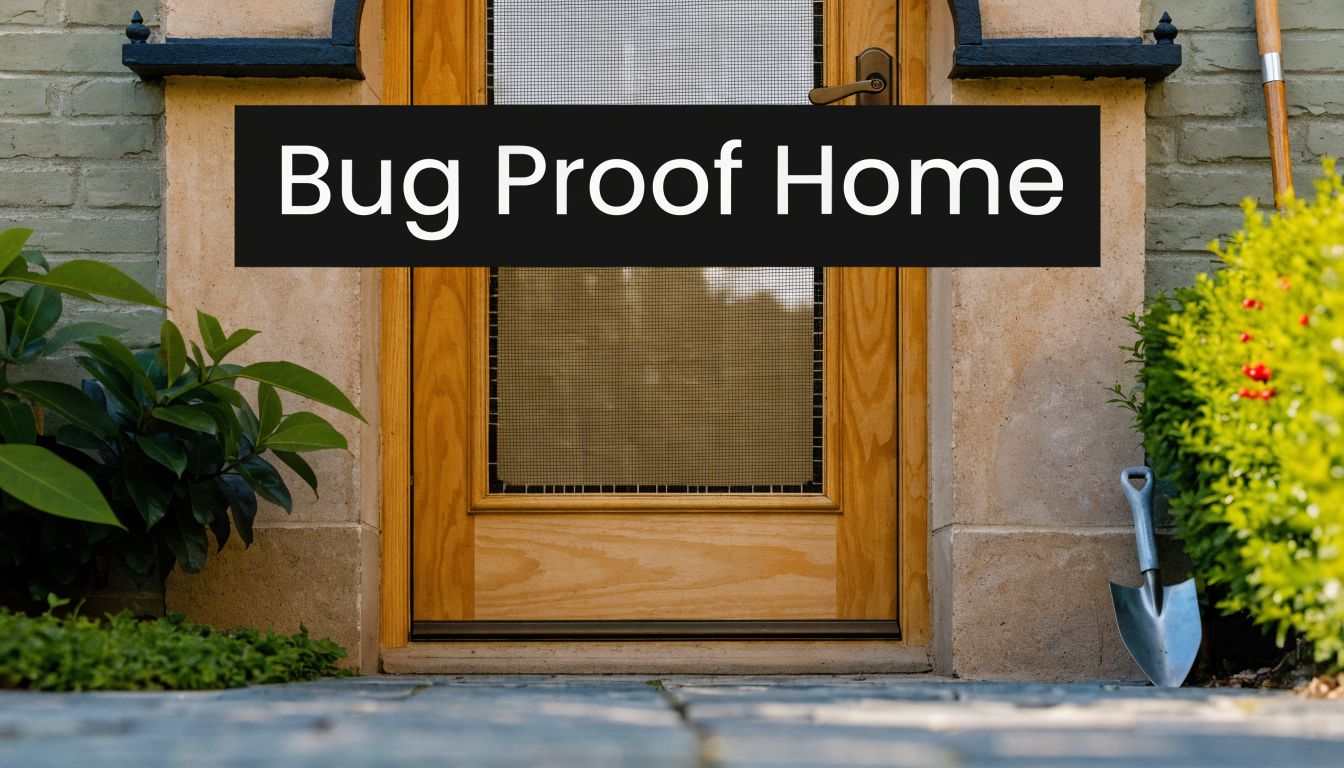

You open the back door to let the evening air in, and within minutes something unwanted has found its way inside. Maybe it's a mosquito orbiting the lamp. Maybe it's a line of ants under the baseboard. In the Southwest, sometimes it's worse. A scorpion in the laundry room changes the mood of a house fast.
That's usually when people think about pest control. I'd start one step earlier. The strongest bug strategy is prevention, not reaction. If pests can't get in, you don't have to chase them around with sprays, traps, or late-night panic.
Hot, dry climates make this more important, not less. Arizona homes deal with windblown dust, intense sun, shrinking sealants, worn weatherstripping, and screens that age faster than many homeowners expect. At the same time, the pest mix is different. You're not only thinking about flies and mosquitoes. You're also dealing with spiders, ants, scorpions, and the larger critters that take advantage of attic vents, garage gaps, and worn door seals.
Your Battle Against Bugs Begins at the Barrier
On a hot Arizona evening, bugs do not need a big opening. They need one missed tear in a screen, one slider that sits a little proud of the frame, or one gap under a side door. In scorpion country, that kind of oversight matters fast. What looks like a pest problem often starts as a barrier failure.
That mindset changes how you bug-proof a house. Start with the places pests use to enter, then work outward. Sprays and traps have their place, but they do not fix a loose screen spline, sun-cracked weatherstripping, or a warped patio door track.
Screens deserve attention early because they handle two jobs at once. They let air move through the house and block a large share of flying and crawling pests at the entry point. Bug-proofing guidance commonly recommends 20-mesh or finer screening for better exclusion, and in the Southwest, material choice matters just as much as mesh size because intense UV exposure can dry out and weaken parts faster than homeowners expect.
Practical rule: If you can see daylight through a gap that should be closed, treat it like an open entry point.
The barrier is bigger than a window screen. I see failures most often at patio enclosures, sliders, garage side doors, roof vents, and screen frames that still look decent from ten feet away but have brittle corners or loose fit once you touch them. If you use your outdoor living space after sunset, a properly sealed enclosed screen patio can turn that area from a bug draw into a space you can effectively use through the warmer months.
Insect control and rodent control overlap more than people expect. Open penetrations, unsealed wall voids, and damaged exterior materials can invite both. For that reason, a detailed homeowner's guide to rodent proof insulation pairs well with any bug-exclusion plan.
Sealing Your Home's Exterior Shell
Walk your house slowly, not casually. Start at one front corner and move all the way around the structure. Then look up and down at every stop. Most homeowners check the obvious spots and miss the openings pests use.
The goal is simple. Find every break in the exterior shell and close it with the right material. Caulk, sealant, flashing repair, and hardware cloth all have different jobs. If you use the wrong one, the gap stays vulnerable.
Start low and work upward
Begin at the foundation line and inspect for hairline cracks, utility penetrations, hose bibs, conduit entry points, and places where stucco or siding meets trim. In a hot climate, materials expand and contract hard enough to open seams that looked fine last season.
Use your inspection like a checklist:
- Foundation edges: Look for cracks, open joints, and places where soil has settled away from the slab.
- Pipe and wire penetrations: Check where cable lines, AC lines, and plumbing enter the wall. These are common shortcuts for pests.
- Door thresholds: Exterior doors often have hidden side gaps even when the slab below looks sealed.
- Garage perimeter: The corners of garage doors and side service doors are frequent weak points.
- Roofline and eaves: Look for lifted trim, broken vent covers, and open joints where insects can move upward into attic space.
If you seal only what's at eye level, you'll miss a big share of the real traffic.
Treat vents differently from windows
One of the biggest mistakes I see is homeowners assuming standard screen mesh belongs everywhere. It doesn't. For larger structural openings like attic and crawl space vents, industry guidance recommends 1/4 inch hardware cloth because it blocks birds, bats, squirrels, and rodents while still allowing ventilation, as outlined in this pest-proofing guidance for home openings.
That matters in the Southwest because vent openings often become the path of least resistance for larger pests. Standard window screen isn't the right material for that job.
A few practical notes make a big difference:
- Wear gloves with hardware cloth: The cut edges are sharp.
- Fasten it securely: A loose piece installed over a vent won't stay protective for long.
- Inspect the perimeter of the vent cover: Good material won't help if the frame has side gaps.
Focus on the overlooked transition points
Many bug entries happen where one building material meets another. Stucco to trim. Trim to masonry. Flashing to siding. These are the boring spots that rarely get attention until pests start showing up indoors.
Pay close attention to:
- Behind AC units and line sets
- At hose bib plates
- Where garage framing meets slab
- Under exterior light fixtures
- At roof penetrations and service entries
If you live in a different climate and also worry about wood-destroying pests, regional guidance can matter. Homeowners in the Southeast, for example, may find this Barefoot Organics guide for Georgia homeowners useful because the structural risk profile is different from the desert.
Fortifying Your Windows and Doors
At 9 p.m. in a Phoenix summer, the house cools down, the patio door starts sliding open and shut, and that is when weak window screens, worn sweeps, and loose sliders get tested. In desert homes, these openings take more abuse than almost anything else on the exterior. Heat bakes the seals, UV weakens the mesh, and fine gaps that look minor in daylight can be enough for insects and even scorpions to get a foothold.
Start with a simple inspection that takes five minutes. Close each window and door, then look for daylight at the edges, corners, and bottom sweep. Run a hand along the frame and track. If the opening shifts, rattles, or fails to close tight, the screen alone is not the problem.

Tighten the seals first
A new screen installed in a sloppy opening still leaves entry points. Fix the operating parts before spending money on new mesh.
Check these components in order:
- Door sweeps: Replace sweeps that are torn, flattened, or no longer touch the threshold across the full width.
- Weatherstripping: Desert heat dries foam and rubber fast. Once it loses compression, bugs get a consistent gap.
- Latch alignment: A door that latches out of square often leaves a hidden opening at the top corner or strike side.
- Slider tracks and rollers: A wobbling screen door rarely seals well. If it rides high or skips in the track, insects can pass around the frame.
- Frame caulking: Cracked trim caulk around windows does not always look dramatic, but it creates reliable little access points.
For homeowners doing basic screen repairs themselves, this guide on how to install screens properly covers fit, spline seating, and mesh handling.
Choose the right screen for your climate
National bug-proofing advice usually treats screen mesh like a one-size-fits-all product. Southwest homes are harder on materials. Full sun on west-facing windows can wear out screen cloth long before the frame looks bad.
In arid Southwest markets like Phoenix, UV degradation can reduce a screen's mesh integrity by 40% in just 2 to 3 years, according to this Southwest bug-proofing article from Fischer's Pest Control. That lines up with what I see in hot climates. Mesh gets brittle, corners loosen, and screens that still look decent from the street start failing under light pressure.
The same Fischer's article notes that standard 18×16 mesh is common, that 20×20 mesh can help in scorpion-prone areas, and that durable solar screens can block 65 to 90% of UV rays. That creates a real trade-off. Finer or heavier materials can improve pest control and cut heat gain, but they may also reduce airflow and darken the view more than a standard insect screen.
| Feature | Standard Bug Screen | Solar Screen |
|---|---|---|
| Primary job | Keeps common insects out while maintaining airflow | Reduces sun exposure while also acting as a pest barrier |
| Mesh choice | Often standard mesh, with finer options like 20×20 in tougher pest conditions | Built more for sun control and durability |
| Visibility | Usually offers a clearer outward view | Often darkens the view more noticeably |
| Airflow feel | Typically feels more open | Can feel more restrictive depending on material |
| Heat and glare control | Limited | Better for harsh sun exposure |
| Best fit | Homes focused mainly on insect exclusion | Homes balancing bug control with intense solar load |
What works and what doesn't
Some fixes hold up in desert conditions. Some are temporary at best.
What works
- Replacing brittle or sun-baked mesh instead of trying to force another summer out of it
- Using finer mesh where tiny pests or scorpions are a recurring issue
- Replacing warped slider frames that no longer sit square in the opening
- Adding self-closing hardware on doors that get left open during everyday traffic
- Repairing small holes right away before they spread at the corners or spline line
What doesn't work well
- Leaving corner separation alone because the rest of the screen still looks intact
- Using indoor tape as a long-term repair on an exterior screen
- Assuming every mesh type will survive the same amount of full sun
- Replacing mesh while ignoring bent frames, worn rollers, or bad latch alignment
A quick visual walkthrough can help you spot the weak points before you start buying materials:
A screen is only as good as the frame holding it and the opening surrounding it.
On homes with hard afternoon exposure, the better question is not just whether the mesh has a hole. Ask whether that opening has the right material for its location and use. A shaded bedroom window, a west-facing living room, a patio slider, and a side garage door often need different solutions if you want bug control that lasts through desert heat.
The Inside Job Eliminating Pest Invitations
A sealed exterior helps, but bugs still test the inside of your home for food, water, and shelter. If they find all three, a stray intruder can turn into a recurring problem.
That's why how to bug proof your home isn't only about barriers. It's also about removing the reasons pests want to stay once they get in.

Cut off food and water
Kitchens and bathrooms do most of the inviting. Not because they're dirty, necessarily, but because they're moist and full of small residues people stop noticing.
Use this indoor checklist:
- Store dry goods tightly: Flour, cereal, sugar, rice, nuts, and pet food belong in sealed containers, not soft bags folded over in the pantry.
- Empty sink strainers: Food scraps left overnight attract more than one type of pest.
- Wipe under small appliances: The toaster corner and coffee station collect crumbs fast.
- Check under sinks: Even a slow drip creates a reliable water source.
- Look behind toilets and near tub valves: Small leaks can hide for a long time.
If you have a disposal, run it clean. If you have floor drains or little-used guest baths, keep them clean and monitored so they don't become neglected problem zones.
Remove hiding places
Indoor clutter gives pests a place to settle before you ever notice them. Cardboard stacks, overfilled laundry rooms, crowded utility closets, and storage touching exterior walls all make inspection harder.
A few good habits help:
- Rotate stored items off the floor when possible.
- Don't let paper bags pile up in the pantry.
- Keep pet feeding areas swept and dry.
- Check houseplants for gnats, aphids, and damp soil conditions.
Indoor bug control gets easier when every room is simple to inspect with a flashlight in a few minutes.
Watch the quiet rooms
The rooms people use least often can become the most pest-friendly. Guest rooms, laundry spaces, garages, and storage corners don't get daily traffic, so problems build without being noticed.
Make a habit of checking:
- Baseboards behind furniture
- Garage corners near stored boxes
- Laundry hookups
- Window sills in unused rooms
These aren't glamorous chores, but they work. A house that stays dry, orderly, and easy to inspect is harder for pests to claim.
Creating a Pest-Free Zone in Your Yard
The yard either supports your bug-proofing plan or works against it. A lot of homeowners focus on what touches the house and ignore what's happening five or ten feet away. That outer zone matters because it shapes how many pests reach the walls in the first place.
If shrubs are touching stucco, groundcover is packed against the slab, and porch lights pull insects in every night, the house stays under constant pressure. A tighter yard layout reduces that pressure before any bug reaches a door or screen.

Break the bridges to the house
Plants shouldn't become ladders and tunnels for pests. Bushes against the wall trap moisture, hide cracks, and give insects cover as they move toward entry points.
The yard fixes that matter most are usually simple:
- Trim shrubs and vines back from exterior walls
- Keep tree limbs from rubbing the roofline
- Clear leaf buildup from corners and decorative planters
- Move stacked materials away from the house
- Store firewood off the ground and away from exterior walls
Ground-level clutter is especially useful to scorpions, spiders, and crawling insects because it creates shade and cover in a hot climate.
Control water and night lighting
Desert homeowners sometimes underestimate water because the climate feels dry. But small water sources become even more valuable to pests when the surrounding environment is harsh.
Walk the yard and check for:
- irrigation overspray hitting the foundation
- clogged drainage spots
- pet bowls left out overnight
- plant saucers holding water
- hose leaks near side yards
Lighting matters too. Bright white exterior bulbs attract insect activity around entry points. A warmer or yellow-toned LED setup often creates less bug traffic at porches, patios, and garage doors. That won't replace sealing work, but it can reduce the nightly swarm around doors people use most.
Keep the patio usable
Outdoor living is a big part of life in the Southwest, but patios become frustrating fast if the surrounding yard is unmanaged. If you want a comfortable evening space, the surroundings of the patio has to support it.
That means less dense planting right against the screen line, fewer hidden damp corners, and cleaner transitions from yard to slab. The best bug-resistant patio spaces usually look a little more open than lush. That's not a design failure. It's part of the defense.
DIY Fixes vs Calling a Screen Professional
Some bug-proofing jobs are perfect DIY work. Others waste your weekend if the underlying issue is frame fit, sun damage, or a screen system that's already past patching.
A good rule is this. DIY makes sense when the fix is small, reachable, and clearly visible. Once the problem involves multiple openings, warped frames, slider issues, or material selection for harsh sun, professional help usually saves time and repeat work.
Jobs most homeowners can handle
If you're reasonably handy, these are good first-pass projects:
- Caulking small exterior cracks
- Replacing a worn door sweep
- Refreshing weatherstripping
- Patching a tiny screen hole
- Cleaning slider tracks and checking roller movement
- Trimming vegetation back from the house
These repairs are straightforward because you can usually see the problem and confirm the result right away.
Jobs that tend to justify a pro
Professional help becomes more useful when the problem is less about effort and more about fit, access, and longevity.
Call for help when:
- The screen frame is bent or loose
- You need multiple windows rescreened at once
- A patio enclosure has torn or sun-damaged mesh
- The slider won't track or seal correctly
- You're choosing between bug mesh and solar screen for different exposures
- Upper-story or hard-to-reach openings need repair
For homeowners comparing treatment options more broadly, it can also help to Compare local exterminator prices so you understand when spending on exclusion and screening may be more practical than relying only on recurring pest service.
Small holes are DIY work. Repeated failures usually point to a bigger fit or material problem.
In the Phoenix area, full rescreening often makes more sense than repeated patching because the sun is so hard on mesh and spline over time. If you need custom-fit replacement or new installation, screen installation services are one route for windows, sliders, and patio applications. Sparkle Tech Screen Service handles new and repaired bug screens, sun screens, slider screens, and patio rescreening for homeowners who want a climate-appropriate solution rather than another temporary patch.
The key is knowing what kind of problem you have. If one corner is nicked, fix it. If the mesh is brittle, the frame is tired, and several openings show the same wear, treat it like a system issue and solve it once.
If your home in Phoenix, Scottsdale, or the surrounding area needs new bug screens, solar screens, slider repair, or patio rescreening, Sparkle Tech Screen Service offers practical help with quick quotes and same-week service. A solid screen system won't solve every pest issue by itself, but it's one of the smartest upgrades you can make when you want fresh air without inviting the desert in.


