


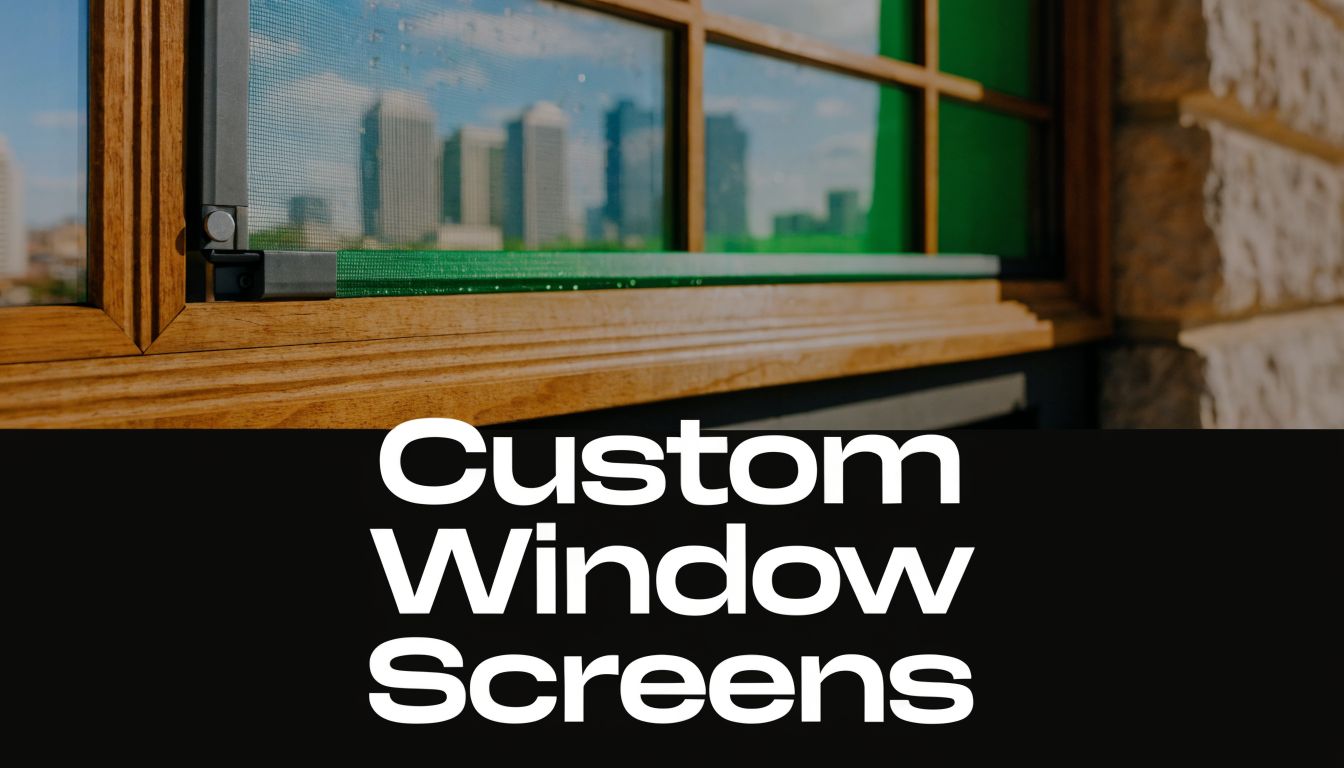

If you're in Phoenix and you're opening windows in the morning to catch a little fresh air before the heat builds, you already know how quickly a bad screen becomes obvious. The mesh is torn, the frame rattles, the corners don't sit flush, and somehow bugs still get in even though the screen looks "mostly fine." On west-facing windows, the problem gets worse fast because the sun punishes weak materials and loose installs.
Custom window screens fix that because they aren't guessed at. They're built for the actual opening, the actual frame, and the actual conditions the screen has to survive. In the Valley, that matters more than most homeowners realize.
Why Custom Screens Are a Smart Home Upgrade
A lot of homeowners call after trying to live with one of two problems. The first is comfort. A room gets blasted every afternoon, so the blinds stay shut and the window never gets used. The second is fit. The screen technically covers the opening, but it shifts, bows, or leaves enough gap at the edge that insects still find a way in.
That's where custom window screens earn their keep. A proper screen should sit tight, stay square, and do its job without becoming another maintenance problem. If the fit is off, the mesh quality won't save it.
There's also a practical reason screens have stayed a standard home upgrade for so long. The modern window screen industry emerged during the American Civil War, when companies such as Gilbert and Bennett commercialized painted wire mesh as a durable replacement for cheesecloth, and by 1874 screens were being sold by the square foot, a pricing model still used today, according to this history of window and door screens. That long history tells you something simple. Screens aren't decorative extras. They're basic equipment for livable homes.
Why Phoenix homes benefit more from custom fit
In this climate, a loose or cheap screen usually fails in predictable ways:
- Frames loosen up because heat exposes weak corners and poor sizing.
- Mesh wears out faster when it faces direct sun day after day.
- Open windows become less usable if you don't trust the screen to keep pests out.
- Curb appeal drops when bent frames and patched mesh are visible from the street.
Practical rule: If a screen looks close enough but doesn't seat cleanly into the channel, it isn't close enough.
Custom work also helps you make the right call on the window itself. If you're dealing with sticking sashes, failed seals, or other broader window issues, these common indicators for new window installation are worth reviewing before you spend money on screens alone.
For homeowners who only need the screens addressed, a dedicated Phoenix window screen service makes more sense than trying to adapt store-bought sizes that were never built for your frames.
Choosing Your Perfect Screen Type
Homeowners often start by saying they need "new screens," but that can mean very different things. Some homes need basic bug protection. Others need sun control on large west-facing windows. Some properties need stronger screens around pets, patio enclosures, or horse facilities. The right choice depends on the job the screen has to do.

Screens for everyday airflow and insect control
A standard insect screen is still the right answer for a lot of Phoenix homes. If your main goal is to open windows in the morning, get ventilation, and keep pests out, this is the straightforward option. It keeps the window usable without darkening the room too much.
This type works well on bedrooms, bathrooms, laundry rooms, and shaded sides of the house where heat control isn't the top priority.
Screens for sun exposure and heat control
A solar screen earns its value on the side of the house that gets hammered by sun. In Phoenix, that usually means west-facing and sometimes south-facing windows. These screens are chosen to reduce glare and solar load while still letting the window function as a screened opening.
They aren't the right fit for every opening. Some homeowners want the brightest possible view out, and solar fabrics can reduce that open feel. But when the room overheats every afternoon, visibility usually isn't the main problem. Comfort is.
Screens for pets, privacy, and harder use
A pet screen uses heavier-duty mesh where claws, pressure, or repeated contact would destroy standard material. This makes sense near lower windows, sliders, and patio doors where animals push against the screen.
A privacy screen can help where homeowners want more daytime privacy without fully blocking natural light. This works well on street-facing windows or homes with tighter lot spacing.
Specialty work most guides skip
Most online advice stays focused on standard residential windows. It rarely helps when the project involves a large patio enclosure, a commercial opening, or an equestrian property. That gap matters in Arizona because properties here often need solutions beyond the usual tract-home screen replacement.
A guide to screen types and applications is useful if you're comparing basic categories, but specialty projects need closer evaluation.
According to this discussion of content gaps around specialty screening, detailed guidance for agricultural and equestrian facilities is often missing, especially around mesh choice, dust filtration, and UV protection for horse stable sun screens in Arizona conditions: specialized screening applications are frequently overlooked.
Horse stalls, screened patios, and oversized enclosures don't behave like a bedroom window. The mesh, frame strength, and attachment method have to match the way the space is used.
A quick way to decide
If you're choosing between options, this is the practical shortcut:
- Choose insect screens if airflow and bug control are the whole job.
- Choose solar screens if direct sun is making rooms harder to use.
- Choose pet-resistant mesh if the screen gets pushed, scratched, or bumped.
- Choose specialty patio or stable screening if the opening is oversized or the environment is harsher than a normal window.
The mistake is picking by name alone. The better approach is to match the screen to the opening, exposure, and daily use.
Understanding Screen Materials and Mesh Options
Screen type defines the intended use. Material and mesh determine how the screen will perform. Many custom window screens either hold up well or become disappointing a few months later based on these factors.
The two decisions that matter most are the mesh composition and the mesh specification. In Phoenix, both have to be judged against sun, dust, airflow, and daily wear.
Common materials and where they fit
Some materials are easier to work with. Some stay more rigid. Some handle abuse better. There isn't one perfect answer for every opening.
| Material | Key Benefit | Best For | Durability | Cost |
|---|---|---|---|---|
| Fiberglass | Good visibility and flexibility | Standard residential bug screens | Moderate | Lower |
| Aluminum | More rigid feel | Openings where sag resistance matters | High | Moderate |
| Pet-resistant mesh | Better tear and puncture resistance | Homes with dogs or cats, lower openings | High | Higher |
| Solar screen fabric | Sun and glare control | West-facing and sun-exposed windows | High in the right application | Higher |
A homeowner in a shaded bedroom usually doesn't need the same mesh that makes sense on a west-facing family room window. A patio enclosure also has different demands than a small bathroom screen because the total span and wind exposure change the way the material behaves.
For a closer look at residential options, this page on types of window screen mesh is a useful reference point.
Mesh count and what it changes
Mesh count is not just a product label. It affects what gets through the screen and how the opening feels when the window is open.
According to this guide to screen mesh specifications, screen mesh counts such as 17×14 and 20×20 refer to the number of strands per square inch. A higher count improves insect exclusion, but it can reduce airflow and visibility. That same source notes that wire diameter also matters in Arizona because thicker wires provide more durability against UV degradation and help screens maintain structural integrity in temperatures that can exceed 120°F.
That trade-off is real in the field. Tighter mesh can be the smarter call where pest control matters most, but it can also make a window feel less open. On the other hand, a looser-feeling screen may breathe better, but it won't always offer the same filtering performance.
What works in Phoenix and what usually doesn't
Here's where practical selection beats guesswork:
- For general residential bug screens, balanced airflow and pest control usually matter more than chasing the tightest weave available.
- For intense sun exposure, durability and UV resistance should drive the decision before appearance does.
- For patio and large screened spaces, the wrong mesh can make the enclosure feel stuffy or look cloudy from inside.
- For stable or agricultural use, you need to think beyond insects and consider dust, wear, and prolonged sun exposure.
A mesh that looks fine on a sample card can feel completely different once it's stretched across a large opening in full afternoon sun.
The best results come from matching mesh count, wire thickness, and material to the specific opening. That's why one-size-fits-all advice usually falls apart in Arizona.
The Custom Process From Measurement to Installation
Custom means more than ordering a rectangle in the rough size of your window. The screen has to fit the opening, the frame profile, and the hardware system that holds it in place. If any of those are wrong, you get rattle, gaps, or a screen that never seats properly.

Measuring the opening the right way
A pro doesn't measure one point and call it done. Openings can vary slightly from top to bottom, especially in older homes or after years of movement and heat. The frame has to be sized to the smallest usable dimension so the finished screen can seat correctly.
That's one reason off-the-shelf screens disappoint so often. They may be close in width or height, but "close" still leaves room for pests, dust, and frame movement.
Why frame thickness changes everything
According to this custom screen frame reference, standard frame thicknesses include 5/16", 3/8", and 7/16", typically matched to vinyl, aluminum, and wood window setups. That same guidance notes that hardware choice changes with the frame and installation style, including tension springs, Jiffy hangers, and EZ Brick Clips, and those hardware decisions affect final measurements needed for a gap-free fit.
That matters because the frame isn't just a border around the mesh. It determines how the screen sits in the channel and what hardware can hold it securely.
Hardware is part of the fit
A proper install has to account for the retaining method, not just the frame dimensions.
- Tension spring setups work when the opening and frame style are built for that kind of compression fit.
- Jiffy hangers are commonly used where the frame and mounting style call for a more secure attachment.
- EZ Brick Clips can change the final build dimensions because the mounting approach changes how the screen clears the opening.
When someone says a screen "almost fits," this is usually where the problem started. The person measured the opening but not the actual installation condition.
A short visual walkthrough helps if you want to see how pros approach fit and handling during screen work:
Where DIY goes wrong
DIY rescreening can work if the frame is still square, the hardware is intact, and the original fit was correct. But custom fabrication is less forgiving. Common problems include:
- Wrong frame profile so the screen won't seat fully
- Bad corner tension that twists the frame
- Inaccurate deductions for hardware clearance
- Misread window style leading to the wrong retention method
If the frame and hardware don't match the window, even a perfectly stretched mesh won't perform the way it should.
For homeowners weighing options, services such as Sparkle Tech Screen Service handle new screens, rescreening, slider work, and solar screen fabrication. The value is in getting the fit, frame, and install method aligned on the first try.
Costs Lead Times and What to Expect
The price of custom window screens depends on the opening, the material, and how complex the frame build is. A basic bug screen for a standard window is usually simpler than a solar screen for a large west-facing opening, and both are much simpler than a patio enclosure panel or a stable screen.
What affects the final cost
The biggest pricing factors are usually:
- Screen size because larger openings require more material and often more frame support
- Mesh choice because standard insect mesh, solar fabric, and heavier-duty options don't cost the same
- Frame style since not every window uses the same profile or hardware
- Project quantity because replacing one screen is different from outfitting a full house
- Installation difficulty when windows are hard to access or the openings are irregular
If you're comparing quotes, make sure you're comparing the same thing. One price may cover remeshing an existing frame. Another may include a completely new frame, new corners, and new hardware.
Lead times in the real world
Expectations matter in this context. Some jobs move quickly, especially if the frame style and mesh are straightforward. Others take longer because the materials, measurements, or installation conditions are more specialized.
A fast quote is useful, but the better question is whether the provider has enough information to quote the correct build. Rushed estimating without confirming frame type often leads to rework.
Good screen work feels simple to the homeowner. Behind that simplicity is careful measuring, correct material selection, and a build that matches the actual window.
For Phoenix-area homeowners, it helps to ask two direct questions before approving the job: Are you building a new frame or rescreening my existing one, and what hardware does my window require?
Screen Care and Maintenance for a Longer Lifespan
Arizona dust and sun don't give screens much mercy. If you want custom window screens to last, basic maintenance makes a difference. The good news is that screen care doesn't need to be complicated.

A simple cleaning routine
Most homeowners do fine with a light, regular cleaning approach:
- Remove loose dust first with a soft brush, microfiber cloth, or gentle vacuum attachment.
- Wash with mild soap and water rather than harsh cleaners.
- Rinse lightly so residue doesn't stay in the mesh.
- Let the screen dry fully before reinstalling if you've removed it.
The main thing to avoid is aggressive cleaning. Hard scrubbing can distort mesh, and high-pressure water can damage both mesh and frame.
What to inspect seasonally
A quick inspection is often more valuable than deep cleaning. Look for:
- Corner separation where the frame no longer sits square
- Small tears that can turn into bigger failures
- Bent frame sections that create edge gaps
- Loose spline or sagging mesh on older rescreened panels
If the frame is still solid, rescreening can be a cost-effective fix. If the frame is bent, loose, or no longer fits tightly, replacement usually makes more sense than trying to save bad structure.
For homeowners comparing service pricing in other home ventilation and retrofit categories, it can be useful to check our installation fees style pages from adjacent trades just to understand how labor, hardware, and access can affect total job cost. The exact service is different, but the pricing logic is similar.
Frequently Asked Questions About Custom Screens
Can custom window screens fit older or unusual windows
Yes, if the opening can be measured accurately and the right frame profile is available. Older homes often have minor variations that make stock screens frustrating. Custom fabrication is usually the cleaner answer because it accounts for the actual opening instead of the nominal size.
How long do screens last in Phoenix
It depends on sun exposure, mesh type, frame condition, and maintenance. A shaded screen can age very differently from one that faces punishing afternoon sun every day. In this climate, the first signs of failure are often fading, brittleness, frame looseness, or mesh that no longer stays taut.
Is rescreening better than full replacement
Sometimes. If the frame is square, the corners are tight, and the hardware still works, rescreening can be the smart value move. If the frame is warped, rattles in the channel, or was never the right fit to begin with, replacing only the mesh doesn't solve the actual problem.
Replace mesh when the structure is still good. Replace the whole screen when the structure is the reason it's failing.
Are solar screens the same as window tint
No. They solve related problems in different ways. Window tint is applied directly to the glass. Solar screens sit outside the glass as a separate screen system. In practice, solar screens also change how the opening functions because they remain part of the removable screen assembly.
What about large patio enclosures
Large openings need more planning than standard windows. The frame span, attachment method, and mesh behavior all matter more as the opening gets larger. A panel that works fine on a small bathroom window can perform poorly on a big patio section if the frame or mesh choice isn't scaled to the application.
Do horse stable screens need different materials
Usually, yes. Stable environments are harder on screens than normal residential openings. Dust, contact, sun exposure, and the way the opening is used all change the recommendation. That's why stable and agricultural screening shouldn't be treated like ordinary house window work.
Will tighter mesh always be better
Not always. Tighter mesh can improve insect exclusion, but it can also reduce airflow and visibility. The better choice depends on what matters more for that opening. A kitchen window, patio screen, and horse stall opening may all need different answers.
Why do some new screens still let bugs in
Most of the time, it's a fit issue, not a mesh issue. If the frame doesn't sit snugly in the opening, insects will use the gap at the edge instead of trying to get through the mesh. That's why accurate measuring and proper hardware matter as much as the material itself.
Get Your Quick Quote from Sparkle Tech Screen Service
Phoenix homes ask more from screens than homes in milder climates. The right custom build needs to handle heat, dust, sun exposure, and daily use without rattling loose or wearing out early. That's why fit, frame selection, and mesh choice all matter.
If you need new bug screens, new solar screens, patio rescreening, slider repair, or horse stable sun screens, it helps to work with a local team that understands Phoenix, Scottsdale, Peoria, Mesa, Sun City, and the surrounding service areas. Fast response also matters when a torn screen or failed slider is making a room hard to use.
Text or call today for a fast, free quote at 623-233-0404. Same-week service and same-day pickup for qualifying screen work can make a big difference when you don't want to wait around for a simple problem to drag on.
If you need custom window screens, rescreening, slider screen repair, or solar screen work in the Phoenix area, contact Sparkle Tech Screen Service for a quick quote and straightforward help with the right fit for your home.


