


So, you've got a ripped or faded window screen and you're wondering what it'll cost to fix. Generally, you can expect to pay somewhere between $35 and $150 per screen to have it rescreened. This price range typically covers the new mesh and the labor to install it into your existing, perfectly good frame.
What Goes Into the Cost of Rescreening a Window?
Before you start budgeting, it’s good to know what actually makes up that final price tag. The total cost isn't just one flat fee; it's a mix of a few key things. Think of it like getting a custom paint job for your car—the basic color is one price, but metallic flakes or a custom design will change the final bill.
Here are the main factors that will influence what you end up paying:
- The Screen Mesh: Basic fiberglass mesh is your most budget-friendly option. If you need something tougher, like a pet-resistant screen or a solar screen to block UV rays, the price will go up.
- Labor Costs: What a pro charges can vary quite a bit depending on where you live and how tricky the job is. A simple pop-out screen is a quick job, but a second-story window that’s hard to reach might cost more.
- Window Size: It’s a simple one—bigger windows need more mesh and more time, which adds to the cost.
- Frame Health: Rescreening only works if the frame itself is in good shape. If your frames are bent, cracked, or broken, you’re looking at a full replacement, not just a rescreen.
While rescreening is usually the cheaper route, it helps to see how it stacks up against other home projects. Looking into what professional window replacement and door replacement services cost can give you a better sense of where this small repair fits into your overall home maintenance budget.
If your frames are shot and you need a whole new unit, the price obviously jumps. As of mid-2025, a complete window screen replacement usually runs between $140 and $173 per screen. That price covers building a new frame, installing the mesh, and all the little parts needed to get it done right.
To get a feel for how these two options compare side-by-side, here’s a quick breakdown.
Quick Cost Overview: Rescreening vs. Full Replacement
| Service Type | Average Cost Per Screen | Best For |
|---|---|---|
| Rescreening | $35 – $150 | Torn, faded, or damaged mesh in an otherwise solid frame. |
| Full Replacement | $140 – $173 | Bent, cracked, or completely broken screen frames. |
This table should give you a clearer picture of whether you need a simple repair or a brand-new screen.
Getting a handle on these different pieces of the puzzle will help you make a smart call. For an even deeper dive into the numbers, you can check out our complete guide on window screen installation cost to see a full breakdown.
Key Factors That Influence Your Rescreening Costs
Trying to pin down the cost to rescreen window screens is a bit like getting a quote for a new set of tires. You know the basics, but the final price tag can swing wildly depending on whether you choose a standard all-season model or a high-performance one. Several key variables will shape your final bill.
It all starts with the screen material itself. Standard fiberglass is the go-to for most people—it's affordable and gets the job done. But if you've got a cat who loves to climb or you want to block out the harsh afternoon sun, you'll be looking at specialty options. Upgrading to a durable, pet-resistant screen or a solar screen designed to lower your energy bills will definitely bump up the price per window.
Material Choice And Window Size
Of course, the size of your windows makes a huge difference. A huge picture window in the living room is going to require a lot more material and time than that tiny window up in the attic. This directly impacts your cost. The same goes for any oddly shaped windows, like arches or circles. Those require custom cuts and a lot more finesse from the installer, which you’ll see reflected in the quote.
Don't forget to check the condition of your existing frames. If they’re bent, warped, or damaged, they'll need to be repaired or replaced before a new screen can even be installed. That’s an extra cost you'll want to budget for.
This breakdown shows just how much the material choice can affect the average cost.
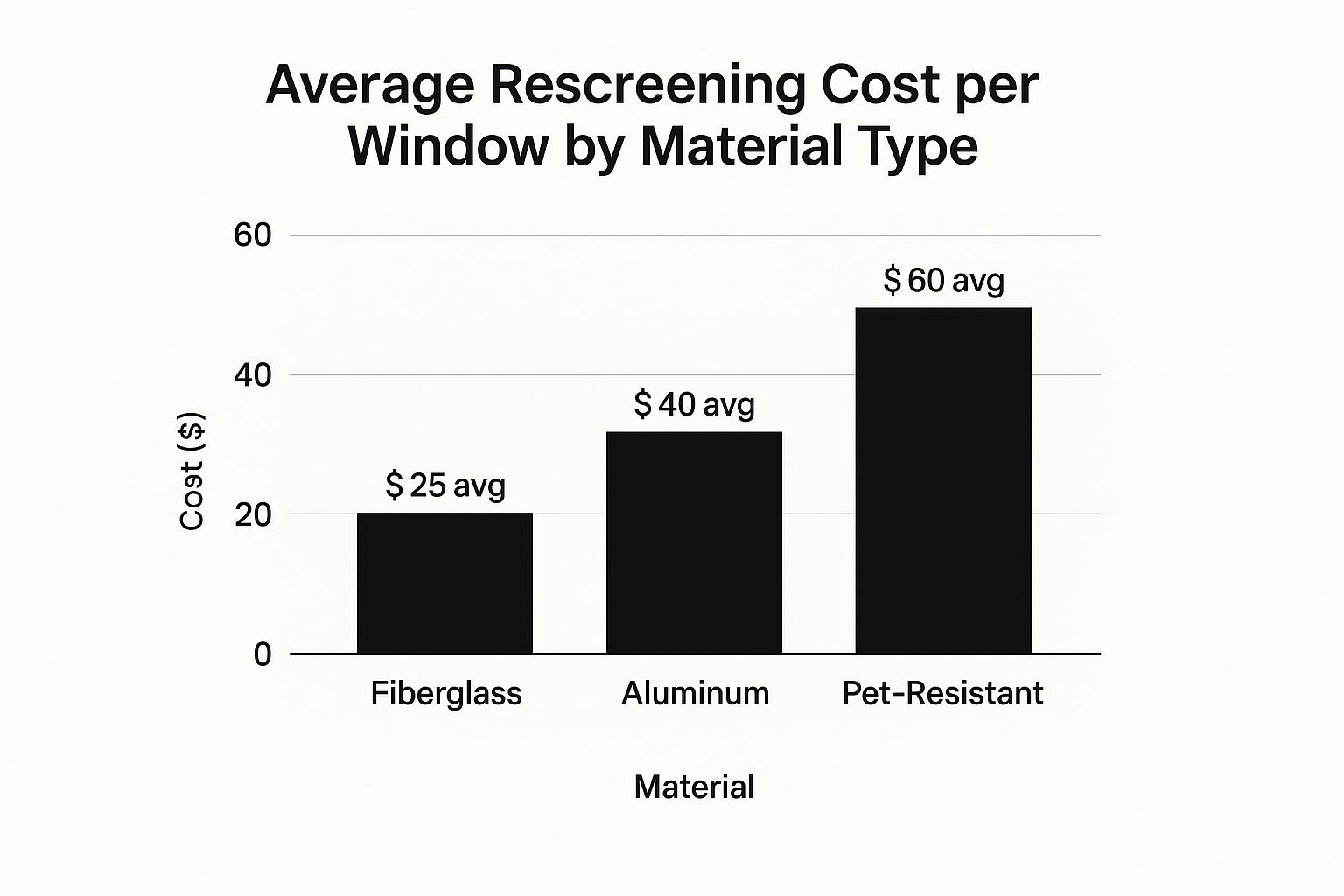
As you can see, jumping from basic fiberglass to something tough enough for a pet can easily double your material costs.
Location And Project Scope
Finally, where you are on the map matters. Labor rates can vary quite a bit from one city to the next. A rescreening job in a major metro area will almost always cost more than the exact same project in a small, rural town. That's why the national average for a single screen replacement can range anywhere from $100 to $400.
Key Takeaway: Your final rescreening cost is a unique recipe of material, window size, frame condition, and local labor rates. The only way to know for sure is to get a few different quotes.
Getting comfortable with how different factors stack up to create a final project price is a great skill for any homeowner. For a different look at how project expenses are broken down, you might find this guide on decoding artificial grass installation costs pretty insightful.
Choosing The Right Screen Material For Your Budget
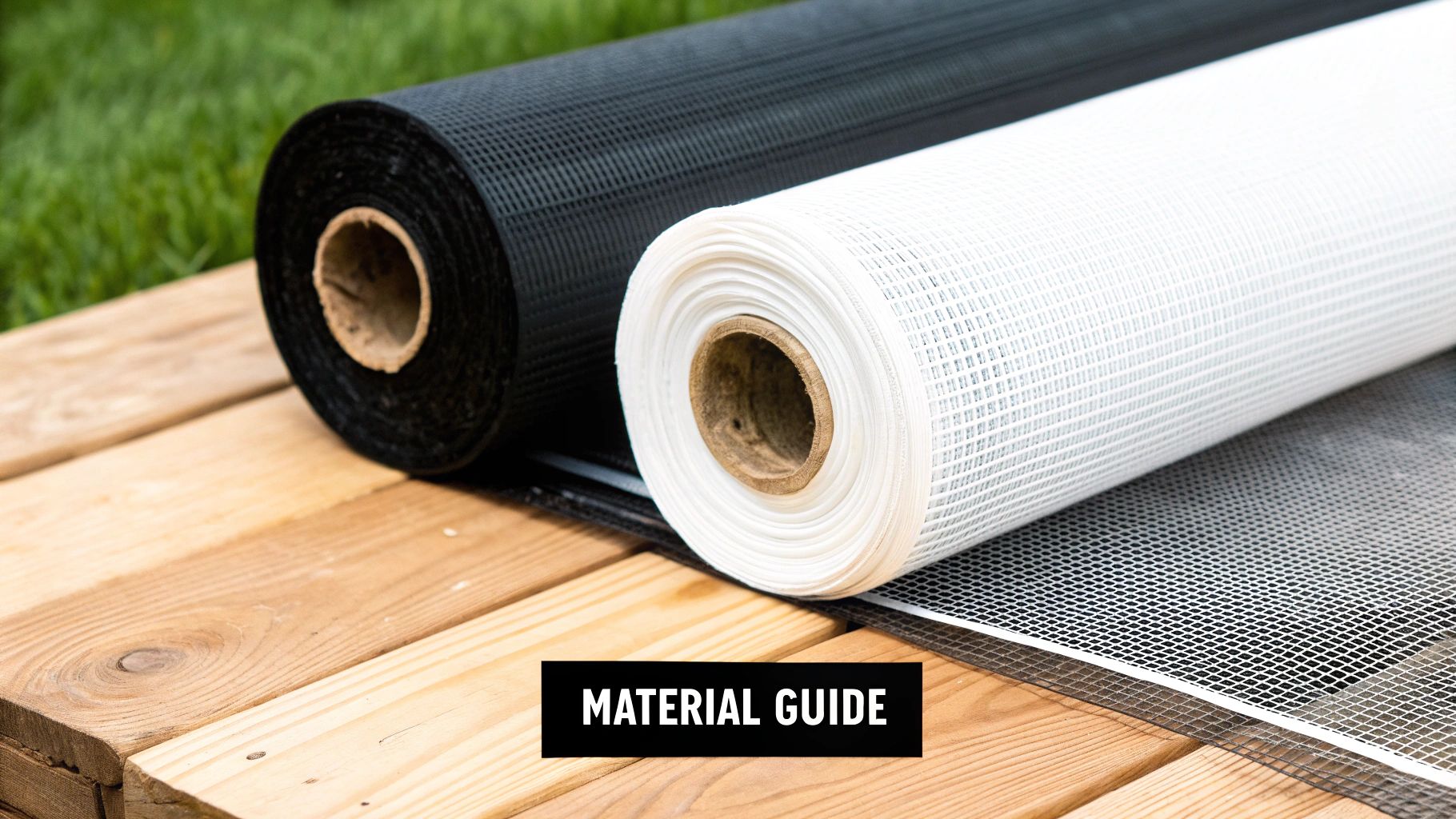
The screen mesh you pick is, without a doubt, the biggest driver of your final cost to rescreen window screens. It's a lot like choosing tires for your car—you can go with a basic, all-season option or invest in something specialized for performance or durability. Each choice comes with a different price tag.
You’re really balancing your immediate budget against your long-term goals. Are you just looking for simple insect protection, or do you need to defend against pet claws, intense sun, or even tiny no-see-ums?
Fiberglass: The Budget-Friendly Standard
For most homeowners, fiberglass is the go-to material, and for good reason. It’s the most affordable option, usually running between $0.20 to $0.40 per square foot. It's also flexible and forgiving to work with, meaning it won't crease or dent like metal screens can during installation.
The trade-off is durability. Fiberglass is more susceptible to tearing than its tougher counterparts and can get brittle after 5-10 years of sun exposure. Still, it's a solid choice for windows that don't see a lot of wear and tear, especially when cost is the main priority.
Aluminum: A Step Up In Strength
If you're looking for something more robust without breaking the bank, aluminum is a fantastic middle-of-the-road option. At around $0.50 to $0.70 per square foot, it delivers much better strength and a longer lifespan than fiberglass. Plus, it provides a crisp, clear view and won't sag over time.
The only real watch-out? Aluminum can dent if something hits it, and it might corrode if you live in a salty, coastal climate. For most homes, though, it’s a worthy upgrade for a clearer, more durable screen.
Specialty Screens For Specific Needs
Sometimes, a standard screen just doesn’t cut it. This is where specialty materials shine, each engineered to solve a very specific problem.
- Pet-Resistant Screens: Made from a tough, vinyl-coated polyester, this stuff is a lifesaver for pet owners. It’s about 7 times stronger than standard fiberglass and resists tearing from claws and paws. It’s pricier at $0.90 to $1.20 per square foot, but it can save you from constant repairs.
- Solar Screens: Think of these as sunglasses for your windows. They are designed to block a significant amount of solar heat and damaging UV rays, which can help lower your cooling bills. They are darker, which reduces visibility a bit, but they also add excellent daytime privacy. Expect to pay $1.00 to $1.50 per square foot for this energy-saving mesh.
Choosing the right screen is all about weighing these factors against your home's unique needs. To give you a clearer picture, here's a quick breakdown.
Comparing Window Screen Materials Cost vs Benefits
| Material Type | Average Cost Per Sq Ft | Key Benefit | Best For |
|---|---|---|---|
| Fiberglass | $0.20 – $0.40 | Most affordable & flexible | Standard windows in low-traffic areas and budget-focused projects. |
| Aluminum | $0.50 – $0.70 | Durability & excellent visibility | Homes needing a long-lasting screen that won't sag over time. |
| Pet-Resistant | $0.90 – $1.20 | 7x stronger than fiberglass | Households with cats or dogs that scratch at windows or doors. |
| Solar Screen | $1.00 – $1.50 | Blocks solar heat & UV rays | Hot climates or south-facing windows where energy efficiency is key. |
Key Insight: While the upfront cost is higher, durable materials like pet-resistant or solar screens often save money over time through fewer repairs or lower energy bills, making them a worthwhile long-term investment for many homes.
Every material has its place, and the "best" one really depends on you. If you want to dig even deeper, our guide on the best window screen material offers a more detailed comparison to help you make the perfect choice.
Comparing Professional and DIY Rescreening Costs
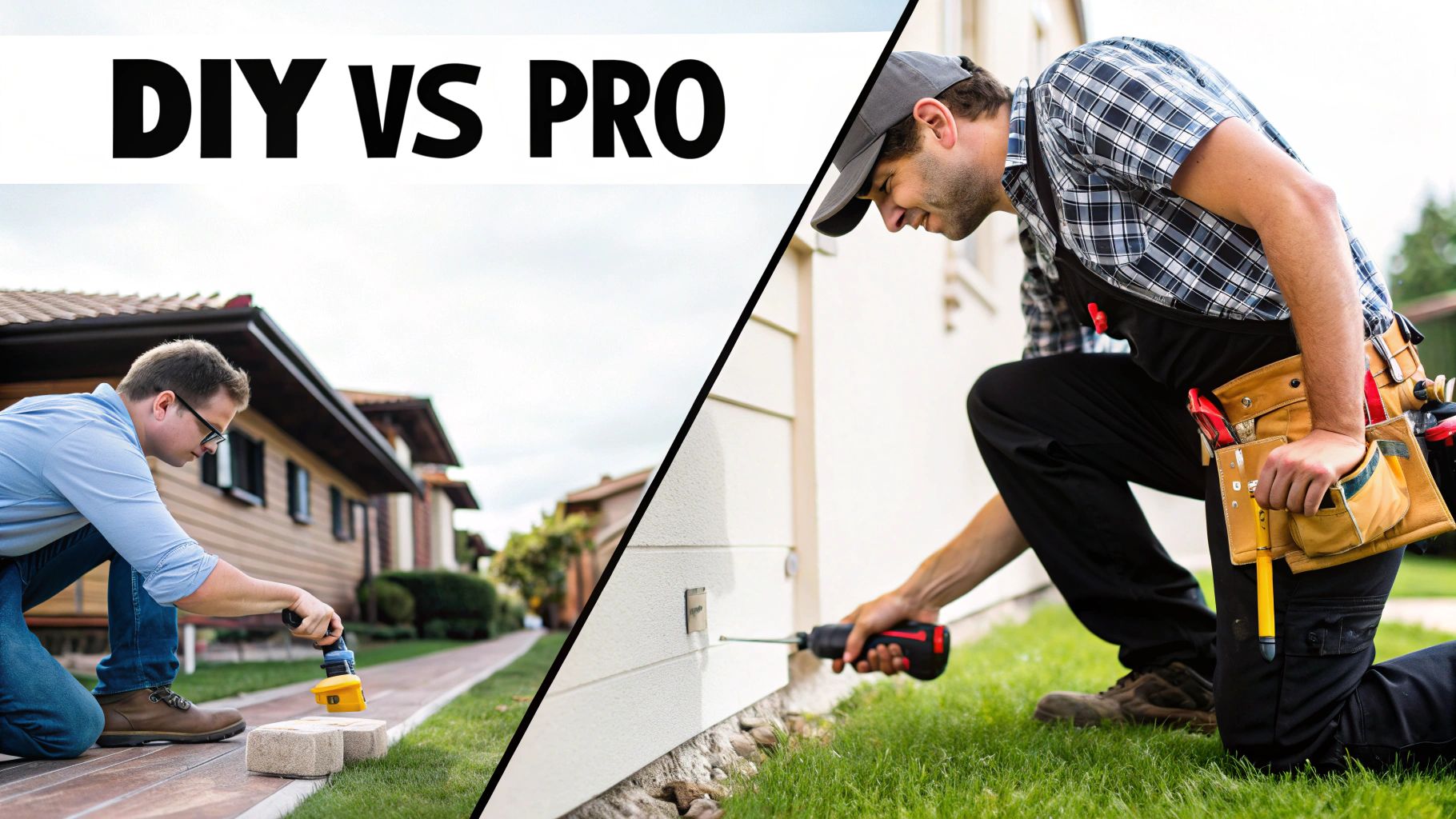
So, should you hire a pro or rescreen your windows yourself? It’s the classic homeowner’s dilemma, pitting your budget against your weekend. Both approaches can get the job done, but the real difference comes down to cost, time, and your tolerance for a little hands-on work. Let's break down the numbers to help you decide.
The Professional Approach
When you call in a professional, you're buying peace of mind along with a new screen. Their fee covers not just the materials, but their expertise, specialized tools, and the convenience of having it all done for you—quickly and correctly.
Most services will charge somewhere between $45 and $80 per screen. That price typically includes standard materials and the labor needed to get that perfect, drum-tight finish. Honestly, for tricky second-story windows or oddly shaped custom frames, letting an expert handle it is often money well spent.
Key Takeaway: While hiring a pro costs more upfront, it saves you a ton of time and potential headaches. It guarantees a quality result, which can be a smart investment for more challenging jobs.
The DIY Approach
If you're willing to roll up your sleeves, the DIY route can save you a significant amount of cash, especially if you have a few screens that need attention. The main cost is just buying the tools and materials for the first time.
Here's a quick look at what your shopping list might include:
- Spline Roller Tool: This is the one non-negotiable tool you'll need. It'll run you about $8-$12.
- Screen Mesh: You can get a roll of standard fiberglass mesh for $15-$25, which is usually enough to do a few windows.
- Screen Spline: This is the rubbery cord that holds the mesh in place. A roll costs about $5-$10.
All in, you could be looking at an initial investment of under $40. Let's put that into perspective: repairing four screens yourself might cost you that initial $40 total. A professional, on the other hand, could easily charge over $180 for the same job. The savings are pretty hard to ignore.
Ready to give it a shot? Our complete guide on rescreening a window screen will walk you through every step.
Budgeting for Large-Scale Screening Projects
https://www.youtube.com/embed/8zFzPA5-f9A
While tackling a single window screen is a pretty straightforward job, the game changes entirely when you're looking at a large-scale project. Rescreening an entire porch, a patio enclosure, or a sunroom is a whole different beast, involving way more material, specialized systems, and often a lot more labor.
Think of it like buying groceries. A single apple is just a few cents. But buying apples by the crate for a big event? The cost-per-apple might be lower, but your total bill is going to be significantly higher. It's the same principle here. You might get a better deal buying screen mesh in a giant roll, but the sheer square footage you need to cover drives up the total investment.
These bigger jobs also go beyond a simple roll of mesh and a spline tool. They often require specific screening systems designed to cover wide openings without sagging over time, which naturally adds to the material costs.
Understanding the Financial Scope
When you take on a whole porch, you're really shifting from a simple repair to a minor renovation project, and the price tag reflects that. A single window might run you under a hundred dollars, but enclosing a full patio is a much more substantial investment.
For example, the average national cost to rescreen a porch in 2025 lands around $3,974. That number can swing from as low as $866 for a small, simple job to over $7,081 for a large, complex enclosure using premium materials. You can explore a detailed breakdown of large-scale screening project costs to get a clearer picture of what to expect.
This shows just how much things like the existing structure and the type of screening system you choose can impact the final price. When you're budgeting for a project this size, you have to look at the whole picture—not just the screen fabric—to avoid any sticker shock.
Answering Your Top Questions About Rescreening Costs
Even after breaking down the numbers, you probably still have a few questions about what it costs to rescreen your windows. Let's tackle some of the most common ones so you can feel confident about your project.
Is It Cheaper to Rescreen or Replace the Entire Window Screen?
Hands down, it's almost always cheaper to just rescreen an existing frame. The only time you should consider a full replacement is if the frame itself is badly bent, cracked, or otherwise damaged beyond saving.
Think of it like this: rescreening is like putting new treads on a good tire. A full replacement is buying a whole new wheel and tire combo. When you rescreen, you're only paying for the mesh and the thin spline that holds it in place, not the expensive aluminum or vinyl frame.
How Can I Save Money on My Window Rescreening Project?
You absolutely can trim the costs without cutting corners on quality. A bit of smart planning, especially if you have a bunch of screens to do, can save you a surprising amount of cash.
Here are a few proven ways to keep more money in your wallet:
- DIY It: If you're handy with simple tools, doing the job yourself is the biggest money-saver, period.
- Buy Materials in Bulk: For multiple windows, buying screen mesh in a large roll is far more cost-effective than getting individual pre-cut kits.
- Stick with Standard Fiberglass: Choosing standard fiberglass mesh is a great way to keep your budget in check, as it’s the most affordable material that still gets the job done well.
- Shop Around: Always get quotes from at least three different local pros. You'll be surprised how much labor rates can vary.
Do Specialty Screens Like Solar or Pet-Resistant Screens Actually Work?
They sure do. They cost more upfront, but specialty screens really deliver on their promises and often pay for themselves over time. Solar screens are fantastic at blocking UV rays and heat, which can make a real dent in your air conditioning bills if you live in a sunny area.
Similarly, pet-resistant screens are made from a much tougher, thicker material that truly stands up to claws and teeth. That extra durability means you won't be patching or replacing them every few months, making them a wise investment for any pet owner.
Key Insight: Specialty screens aren't just a gimmick; they're a functional upgrade. The higher initial price is often balanced out by long-term savings, whether it's through lower energy bills or fewer repair jobs.
How Often Should Window Screens Be Rescreened?
How long a screen lasts really comes down to the material, how much sun it gets, and your local weather. On average, standard fiberglass screens hold up for about 5-10 years before they get brittle and start to tear.
Tougher materials like aluminum or vinyl-coated polyester can easily last 10-15 years, sometimes even longer. The best rule of thumb is to replace the mesh when you see obvious holes, it starts to sag, or the material feels stiff and crunchy when you touch it.
For professional results without the hassle, trust the experts at Sparkle Tech Screen Service. We offer fast, reliable rescreening with same-week service to get your home looking its best. Get your quick quote today at https://sparkletechscreenservice.com.


