


What's the best screen for a porch? Honestly, it’s not a one-size-fits-all answer. The right choice really comes down to what you need it to do. If you just want to keep mosquitoes out, standard fiberglass mesh is a fantastic and budget-friendly option. But if you've got a dog that loves to scratch at the door, you'll need something tougher like a pet-resistant screen.
Finding the Right Screen for Your Porch
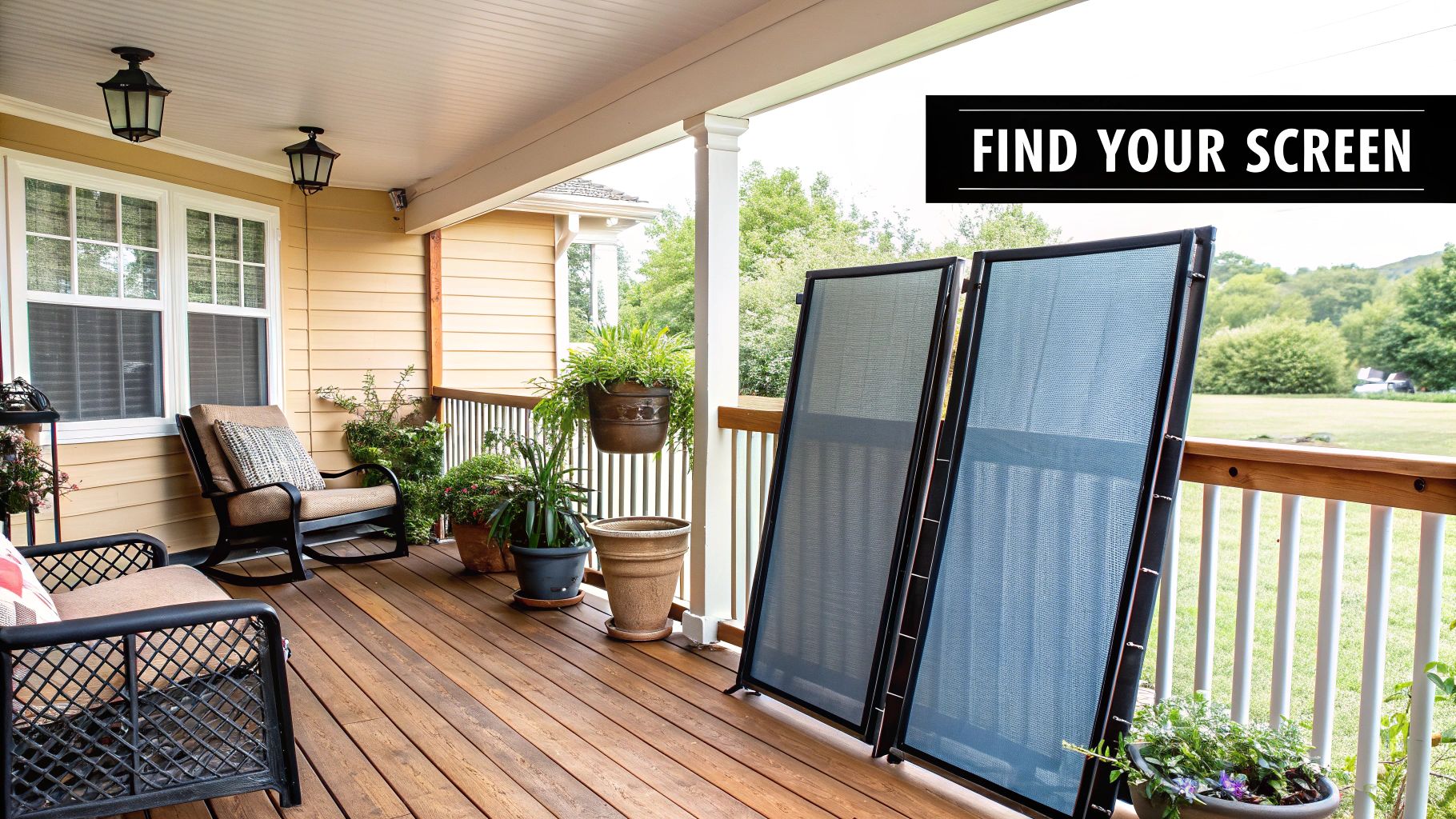
Choosing the perfect screen for your porch is less about finding a single "best" product and more about matching the material to your lifestyle and home. Think of it like picking tires for a car—you wouldn’t put slick racing tires on a truck you take off-roading. It’s the same idea here. The ideal screen depends entirely on whether your biggest battle is with tiny no-see-ums, the harsh afternoon sun, or a curious cat's claws.
This guide will walk you through the main types of porch screens and what each one does best, so you can make a choice you’ll be happy with for years to come.
Defining Your Porch Priorities
Before you even start looking at material samples, take a minute to think about what you really want from your screened-in porch. Pinpointing your main goal makes the whole decision-making process so much easier.
Are you looking for:
- Pest Control? This is the classic reason. Creating a bug-free oasis is priority number one for most people.
- Sun and UV Protection? If your porch turns into an oven every afternoon, a solar screen can cool things down and keep your patio furniture from fading.
- Durability and Strength? For homes with active kids or pets, a screen that can handle some rough-and-tumble action without ripping is a must.
- Seclusion and Privacy? Sometimes you just want to enjoy your coffee outside without feeling like you’re on display for the whole neighborhood.
Once you know your top priority, you can quickly narrow down the options. As you plan the project, remember that the installation is just as important as the screen itself, so take the time for hiring the right contractor.
The right screen transforms a simple porch into a functional outdoor living room. The key is aligning the screen’s features with your daily life—whether that involves quiet morning coffees, lively family gatherings, or a durable barrier against rambunctious pets.
To help you get started, this table gives you a quick snapshot of how different screen types match up with common goals.
At-a-Glance Guide to Porch Screen Types
| Screen Type | Primary Purpose | Key Benefit | Best For |
|---|---|---|---|
| Fiberglass Mesh | General Pest Control | Affordable & great visibility | Basic insect protection in low-traffic areas. |
| Solar Screen | Sun & UV Blocking | Cools the porch & prevents furniture fading | Porches with intense, direct sun exposure. |
| Pet-Resistant | Durability | Resists tears from claws & paws | Homeowners with dogs, cats, or small children. |
| Privacy Screen | Seclusion | Obscures the view from outside | Porches close to neighbors or public walkways. |
This chart is a great starting point. It helps you quickly zero in on the category that makes the most sense for you before we dive into the specific details of each material.
A Practical Guide to Porch Screen Types
Picking the right screen for your porch isn't about grabbing the first roll you see at the hardware store. It's about matching the screen's real-world performance to what you actually need for your outdoor space. Let’s cut through the jargon and look at what each of the main options really does.
The Foundation: Standard Bug Screens
Standard bug screens are the old faithful of the porch world, usually made from either fiberglass or aluminum. Their job is straightforward but critical: keep the bugs out. Think of them as the bouncers for your porch, letting the breeze in while telling pests they’re not on the list.
But here's where a little knowledge goes a long way. The key detail is the mesh count—basically, how many tiny holes are in one square inch of screen. A standard 18×16 mesh is great for stopping bigger annoyances like flies and mosquitoes. If you live somewhere with those tiny, infuriating no-see-ums, you’ll want to step up to a tighter 20×20 mesh to keep them out.
The trade-off is simple: a tighter weave blocks more bugs, but it can also cut down on airflow and slightly dim your view. It's a balancing act between total pest defense and enjoying that perfect cross-breeze.
Taming the Sun: Solar Screens
Solar screens are much more than just a darker bug screen. These are high-performance materials engineered to absorb and block a huge chunk of the sun's heat and glare before it ever bakes your porch. This can make a massive difference, turning a sweltering, unusable space into a comfortable retreat even on the hottest days.
The benefits go well beyond just feeling cooler.
- UV Protection: A good solar screen blocks up to 90% of damaging UV rays. This is huge for protecting your outdoor furniture, rugs, and pillows from fading into a pale, sad version of their former selves.
- Energy Savings: By stopping heat at the porch, you’re also stopping it from seeping into your house through nearby windows and doors. This can genuinely lower your air conditioning bills in the summer.
- Glare Reduction: They make it so much easier to read a book, use a laptop, or just relax without squinting. It just makes the space more functional.
Think of a solar screen as a great pair of sunglasses for your house. It cuts the harsh light and protects what’s behind it, making everything more pleasant. Choosing the right screens for your patio often means weighing these benefits against how much natural light you want to let in.
A well-chosen solar screen doesn’t just make shade; it actively manages your home’s climate. It’s a smart investment in comfort, energy efficiency, and protecting your stuff.
Built Tough: Pet-Resistant Screens
If you have dogs, cats, or even young kids, you know a standard screen doesn't stand a chance. That’s exactly why pet-resistant screens exist. They are built from the ground up to handle the reality of claws, paws, and general chaos.
These screens are made from a heavy-duty, vinyl-coated polyester that is an incredible seven times stronger than the typical fiberglass mesh. This stuff is incredibly resilient, resisting tears and punctures from a dog jumping up or a cat trying to climb. It’s like the difference between a paper plate and a ceramic one—they both do the job, but one is built for the long haul.
That extra toughness comes from a thicker weave, which means visibility and airflow are slightly reduced compared to a standard bug screen. But for any pet owner, it’s a tiny price to pay for the peace of mind that your screen will actually last.
Your Private Escape: Privacy Screens
Sometimes, keeping prying eyes out is just as important as keeping bugs out. Privacy screens are cleverly designed to give you a sense of seclusion without feeling like you’re sitting in a box. They work on a simple principle of angled light; from inside your porch, you can see out just fine, but it’s much harder for people outside to see in.
This is a game-changer for porches that face a busy street, a close neighbor, or a public path. You can finally enjoy your morning coffee in your pajamas without feeling like you’re on display. It’s no surprise that more and more people are looking for ways to create these private outdoor escapes.
In fact, the global market for outdoor privacy screens was valued at USD 2.98 billion in 2024 and is expected to hit USD 5.16 billion by 2033. That growth says it all: we want our outdoor spaces to feel like our own. The trick is finding a screen that gives you that seclusion without making your porch feel dark and closed-in.
How to Select the Perfect Screen Material
Choosing the right screen for your porch isn't just about picking a product off a shelf; it's a balancing act. Think of it like adjusting the settings on a camera—crank up the brightness, and you might lose some contrast. In the same way, a screen designed for maximum durability might not give you that crystal-clear view you're dreaming of.
This is where you go from just buying a screen to making a smart investment for your home. Once you get a feel for the trade-offs between the key performance factors, you can pick a material that truly fits your lifestyle. Let's walk through the four most important things to consider.
A quick look at how these materials perform in the real world can make all the difference.
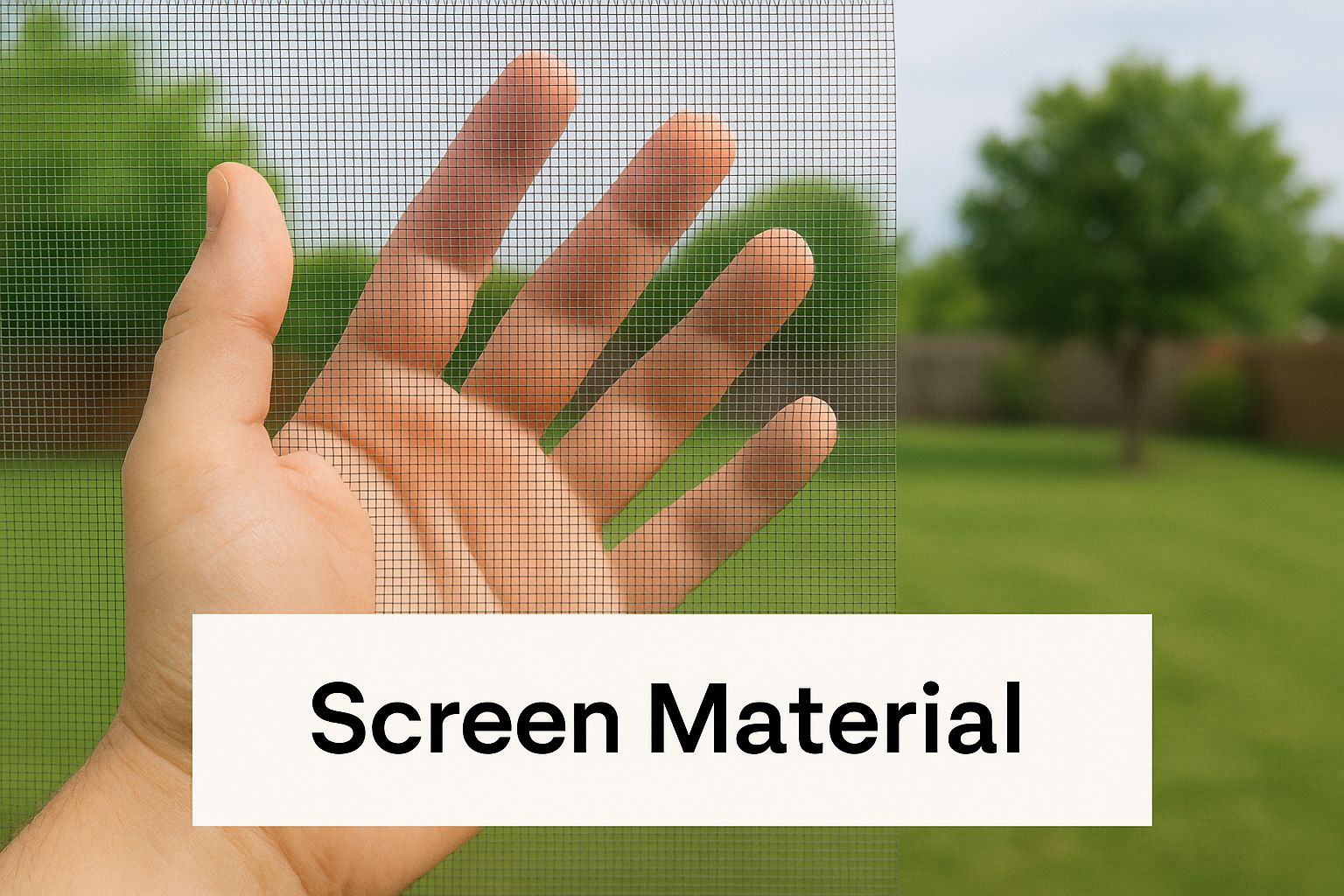
This image captures the end goal perfectly: a beautiful, functional porch that seamlessly blends with the outdoors, all thanks to making the right choice on these key elements.
The Durability Dilemma
Let's be honest, durability is usually at the top of everyone's list, especially if you have pets, kids, or live where the weather can get a little wild. We're talking about a screen's real-world ability to stand up to rips, tears, and everyday life.
When it comes to toughness, the undisputed champion is pet-resistant screen. Made from a tough vinyl-coated polyester, this stuff is engineered to be up to seven times stronger than standard fiberglass. It can take on claws, paws, and even a stray soccer ball without flinching. On the flip side, your basic fiberglass screen offers decent resilience but is much more likely to get damaged by sharp objects or a direct hit.
The trade-off is pretty straightforward: more strength usually means a thicker, more noticeable weave. So while a super-durable screen gives you peace of mind, it will likely compromise a bit of your view and airflow compared to a finer mesh.
The Visibility Factor
How important is that perfect, unobstructed view of your backyard? Visibility is all about the crispness and clarity you see through the screen. A good high-visibility screen practically disappears, making you feel completely connected to the outdoors.
The top performers here are specialty screens with a finer, thinner thread, often found in certain fiberglass or aluminum options. They’re designed to let in the most light and create the least obstruction possible, giving you a pristine, almost invisible barrier.
But that level of clarity comes with its own set of compromises.
- Thinner threads are naturally less durable and more susceptible to damage.
- Wider mesh openings are great for visibility but might let in tiny pests like no-see-ums.
- Privacy screens, by their very nature, are designed to obscure the view from the outside, so clarity is intentionally sacrificed.
You have to decide: is a picture-perfect view worth more to you than maximum toughness or keeping out every last bug?
Airflow and Comfort
Feeling a cool breeze on a warm afternoon is one of the simple joys of a screened-in porch. How well a screen lets that breeze through comes down to its mesh count and the thickness of its threads. A screen with a lower mesh count (like the common 18×16) has larger openings between the threads, which means better air circulation.
On the other hand, a tighter weave—like a 20×20 mesh needed for no-see-ums—or the thicker material of a solar screen will naturally restrict airflow. It's kind of like the difference between breathing through a thin cotton sheet versus a heavy blanket. Both let some air pass, but one is a lot more breathable than the other.
When you're making your choice, really think about your local climate. If you count on natural breezes to keep your porch cool and comfortable, you’ll want to make airflow a top priority. A screen that blocks too much wind can make your space feel hot and stuffy on a perfect day.
UV Protection and Glare Reduction
This is where solar screens really shine. They are the specialists, designed to block a huge portion of the sun's harsh UV rays—often up to 90%. This does more than just keep your porch cooler; it also protects your furniture, rugs, and outdoor decor from fading over time.
The trade-off for this incredible protection is less natural light and a slightly diminished view. Solar screens have a much denser weave and are usually darker in color to absorb all that solar energy. While they are fantastic at cutting down on blinding glare, they will definitely make your porch feel shadier than a standard screen would. For a deeper look at specific materials, our guide on the best window screen material offers some great additional insights.
Porch Screen Performance Comparison
To help you see how these trade-offs stack up, we've put together a simple comparison chart. This table gives you a quick, at-a-glance look at how the different screen types perform across these key areas.
| Screen Type | Durability Rating | Visibility Level | Airflow | UV Protection |
|---|---|---|---|---|
| Fiberglass Mesh | Standard | High | High | Low |
| Solar Screen | High | Low | Medium | Excellent |
| Pet-Resistant | Excellent | Medium | Medium | Low |
| Privacy Screen | High | Low (One-Way) | Medium | Moderate |
Seeing it all laid out like this can make the decision-making process much clearer. You can easily weigh what matters most to you—whether it's an indestructible screen for your pets or a perfectly clear view of the garden.
Budgeting for Your Screened-In Porch
Let's talk about the bottom line. Getting a handle on the costs is the first step to making your screened-in porch a reality without any last-minute financial stress. The final price isn't just about the screen you pick; it's a mix of materials, the size of your porch, and the hands that put it all together.
Think of it like choosing tires for your car. You can get a basic, reliable set that gets the job done, or you can opt for high-performance tires built for specific conditions. Porch screens are similar. A standard fiberglass mesh is your all-season tire—affordable and effective. But if you need something tougher, like a heavy-duty pet screen or a specialized solar screen, you're looking at a higher-end investment.
Every project has its own unique set of variables, and understanding them will help you put together a realistic budget right from the get-go.
Breaking Down the Costs
When you start getting quotes, you'll see a pretty wide price range, and that's completely normal. A simple, ground-floor porch with straight lines is a much different job than a second-story porch full of tricky angles and custom-sized openings.
On average, screening an existing porch in the U.S. will likely run you somewhere between $2,000 and $5,800. That breaks down to roughly $10 to $25 per square foot. Where you land in that range really depends on the screen material you choose and what labor costs look like in your area. You can even find more detailed cost breakdowns to see how prices shift from one region to another.
Here are the main things that will influence your final bill:
- Porch Size and Complexity: It's simple math—a bigger porch with a more complicated layout needs more material and takes more time to complete.
- Material Choice: As we covered, high-end materials like pet screens and solar screens can easily cost two to three times more per roll than standard fiberglass.
- Labor Rates: The cost of professional installation is a big variable. It depends on where you live and the experience of the crew you hire.
- Frame Condition: If your existing porch frame is rotted or needs repairs before the screens can go up, you’ll need to factor that extra work into your budget.
DIY Installation vs. Hiring a Professional
One of the biggest forks in the road for your budget is deciding whether to tackle this yourself or bring in a pro. This really boils down to a classic trade-off: saving money versus saving time, hassle, and potential headaches.
Going the DIY route can definitely slash your costs, since labor often makes up about half the total price of the project. But it's not a walk in the park. It demands a decent skill set, the right equipment, and a healthy dose of patience.
Choosing to DIY can be a rewarding way to save money, but a poorly installed screen can lead to sagging, wrinkles, and gaps that let bugs in—potentially costing more to fix in the long run.
Before you clear your weekend schedule, think about what the job actually entails.
DIY Installation Essentials:
- Required Tools: At a minimum, you'll need a spline roller, a sharp utility knife, and a measuring tape. Clamps and a power drill will likely come in handy, too.
- Necessary Skills: This isn't a job for guesswork. It requires precise measurements, a steady hand for cutting, and enough strength to pull the screen perfectly taut for that smooth, professional finish.
- Time Commitment: If you've never done this before, plan on dedicating a full weekend to a standard-sized porch.
Benefits of Professional Installation:
- Expertise and Efficiency: A pro has seen it all. They know how to handle odd angles and will get the screen drum-tight. What might take you two days, they can often knock out in one.
- Guaranteed Quality: Most reputable installers back up their work with a warranty. That peace of mind is worth a lot.
- Proper Tools: They show up with everything needed for a flawless installation, so there are no surprise trips to the hardware store.
Ultimately, the right choice depends on how confident you are in your handyman skills and how much you value your time. If you’re a seasoned DIYer, you can get fantastic results. If not, paying for a professional is often an investment in getting the job done right the first time.
Keeping Your Porch Screen Looking New

You’ve made a great choice by investing in a screened porch. It’s an upgrade that pays off in comfort and home value. But to keep it looking and feeling like new, a little maintenance is key. Think of it this way: your screen is constantly fighting off dust, pollen, and grime. A bit of care keeps it looking pristine and actually extends its lifespan, putting off costly replacements for years.
The trend toward creating beautiful outdoor living spaces isn't slowing down. In fact, the market for these structures was valued at USD 2.47 billion in 2025 and is projected to hit USD 3.35 billion by 2030. You can read more about the growth of outdoor living structures to see how valuable these home additions have become. A simple upkeep routine is all it takes to protect your piece of that investment.
Simple Cleaning for Lasting Results
When it comes to cleaning porch screens, gentle is the name of the game. You want to avoid harsh chemicals or high-pressure power washing, which can easily stretch, warp, or tear the delicate mesh. All you really need is a simple, mild solution.
Just mix a little bit of mild dish soap into a bucket of warm water. Grab a soft-bristled brush or a microfiber cloth and gently scrub the screen from top to bottom. This simple approach is surprisingly effective at lifting away dirt without causing any damage.
After scrubbing, rinse everything thoroughly with a garden hose on a gentle setting. Let it air dry, and you'll be rewarded with a clear, streak-free view. For a more detailed guide, check out our post on how to clean window screens like a pro; the same great tips apply here!
Pro Tip: Try to clean your screens twice a year. A spring cleaning gets rid of winter buildup, and a fall cleaning removes summer dust and pollen. This simple habit prevents grime from caking on and keeps your view crystal clear.
Handling Minor Repairs Yourself
Life happens. Even the toughest screens can get a small tear or a loose edge. The great thing is, you don't always need to call in a pro. Many minor issues are perfect DIY projects that can save you money and stop a small problem from turning into a big one.
Here’s how to tackle a couple of common repairs:
- Small Tears and Holes: If you spot a tiny puncture in a fiberglass screen, a dab of clear nail polish or super glue can work wonders to seal it up. For a slightly larger hole, screen repair patch kits from the local hardware store are a quick, durable fix.
- Loose Spline: That rubber cord holding the screen in place is called the spline. Sometimes, a section can pop out of its channel. Don't worry—just grab a cheap spline roller tool and gently press it back into the frame. It’s a surprisingly easy and satisfying fix.
Got Questions About Porch Screens? We've Got Answers.
Choosing the right screen for your porch can feel like a big decision. You're balancing looks, function, and budget. To help you get it right the first time, let's walk through some of the questions we hear most often from homeowners just like you.
What’s the Toughest Porch Screen Out There?
If you've got pets or active kids, this one's easy. Hands down, the most durable option is pet-resistant screen.
This isn't your average mesh. It's a seriously tough, vinyl-coated polyester that's up to seven times stronger than the standard fiberglass stuff. It’s built from the ground up to handle claws, paws, and the occasional stray soccer ball without tearing or puncturing. You might lose a tiny bit of crystal-clear visibility, but the trade-off is total peace of mind.
Can I Really Install Porch Screens Myself?
For the handy homeowner, absolutely. A DIY screen installation can be a great weekend project, especially with systems like Screen Tight that are designed for simplicity. They use a straightforward base and cap system that snaps together, so you don't need a workshop full of specialized tools.
The big win with DIY is the savings—you can easily cut your labor costs by 50% or more. The catch? It takes patience. Getting that tight, drum-like finish without any sags or wrinkles is all about precise measurements and taking your time.
If you’re looking at a large, multi-story porch or just aren't comfortable with the work, calling a pro is a smart move. They'll get it done quickly, correctly, and will usually guarantee their work.
How Do I Make My Porch More Private?
You can definitely create a secluded outdoor space without turning it into a dark cave. The answer is privacy screen mesh.
It’s woven in a special way that blocks the view from the outside looking in, but from the inside, you can still see out pretty clearly. It's a clever design that also keeps air flowing and cuts down on direct sunlight.
If privacy is a top priority, you have a few great choices:
- Dedicated Privacy Screen: This is your best bet for porches right next to a busy sidewalk or a close neighbor.
- Solar Screens: Their primary job is to block heat and UV rays, but their dark, dense weave offers a fantastic amount of daytime privacy as a bonus.
- Creative Landscaping: Don't forget the natural route! A few well-placed shrubs or tall ornamental grasses can work wonders to create a living privacy wall.
Thinking through these common points will help you land on the perfect screen—one that fits your home, your family, and how you want to enjoy your outdoor space for years to come.
For a professional installation that guarantees a flawless finish, trust the experts at Sparkle Tech Screen Service. We offer fast, reliable service for new screens, rescreening, and repairs. Get your quick quote today.


