


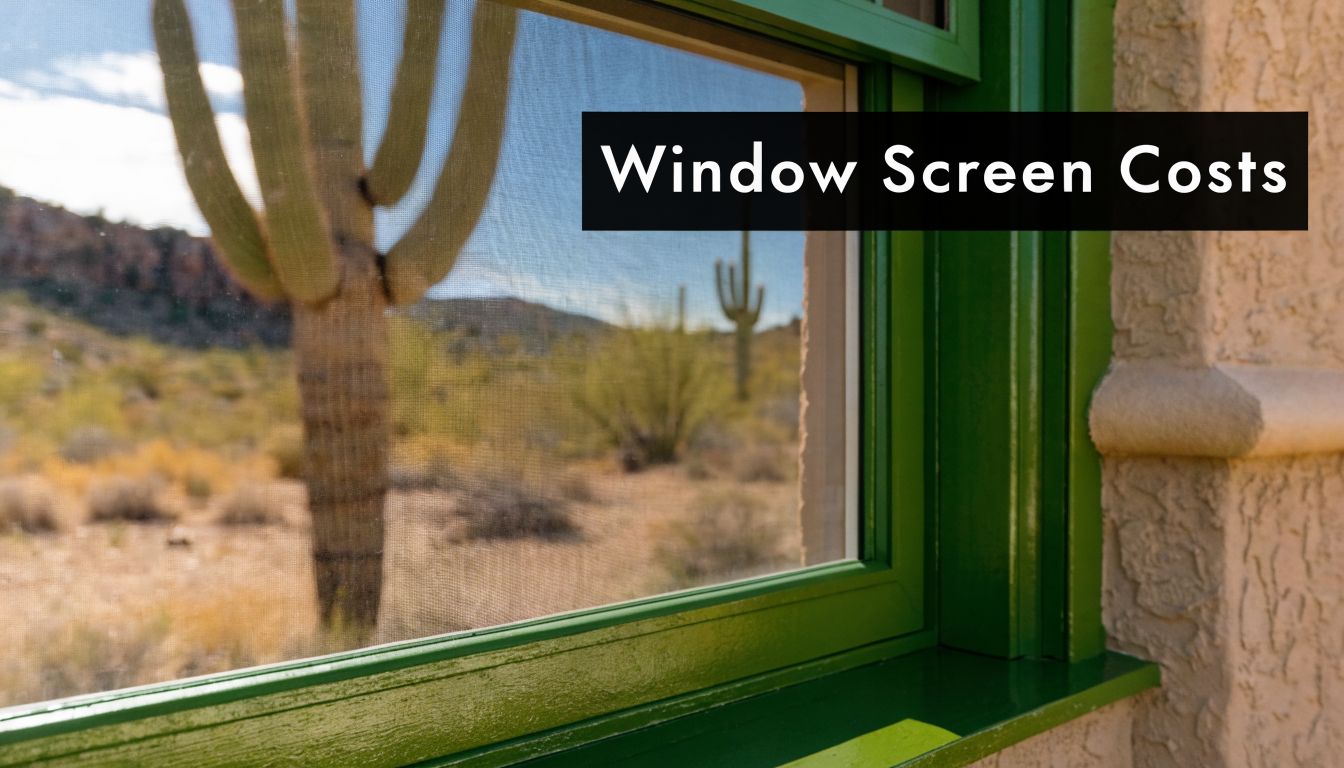

New window screens cost $147 to $523 per window for most homeowners nationally, with an average around $300 to $322 per screen. In the Phoenix area, the price you pay depends on the screen size, the mesh you choose, and whether you’re replacing a basic bug screen or moving up to something built for Arizona sun.
If you’re reading this, there’s a good chance you’re dealing with one of the usual Arizona problems. A west-facing room gets hammered by afternoon sun. A torn bug screen is letting in mosquitoes. A sliding screen door drags, pops off track, or has mesh that’s cooked brittle by UV.
That’s where pricing gets confusing. National guides give broad averages, but they usually don’t explain what matters here in Phoenix, Scottsdale, Peoria, Mesa, or out toward places like Waddell and Payson. In Arizona, sunlight, heat, dust, monsoon weather, and long drive times can all affect what new window screens cost and which option makes sense.
Your Guide to Window Screen Costs in Arizona
Arizona homeowners usually replace screens for one of three reasons. The mesh is torn, the frame is bent, or the current screen just isn’t doing enough against heat and glare. In a place like Phoenix, that third reason matters more than many national articles admit.
A basic bug screen and a solar screen may look similar from the curb, but they solve different problems. Bug mesh is there to keep pests out and let air move. Solar mesh is often chosen because a room gets blasted with sun for hours a day, especially on west and south exposures.

Here’s the practical way to think about it. The final number isn’t random. It comes from the frame, the mesh, the fit, and the labor required to build or install it correctly.
What usually changes the price
- Screen type: A standard insect screen costs less than a specialty screen built for solar control or storm resistance.
- Window shape: Straightforward rectangular windows are simpler than arched, round, or unusual custom openings.
- Existing condition: If the frame is still good, rescreening may be enough. If corners are broken or the frame is warped, replacement is the smarter route.
- Service area: Phoenix metro jobs are one thing. Homes farther out may involve material lead times or trip-related cost differences.
Most homeowners don’t need the cheapest screen. They need the screen that solves the problem they actually have.
The Core Cost Factors What You're Really Paying For
When people ask about new window screens cost, they usually want one number. In real life, there are two buckets: materials and labor. Once you separate those, the estimate starts to make sense.
Nationally, the market has settled into a fairly stable range. Window screen replacement averages about $300 to $322 per screen, and most homeowners spend between $147 and $523 per window, according to HomeAdvisor’s screen installation cost guide. That same source notes that basic pre-made standard screens range from $40 to $100, custom-fit screens run $120 to $300, specialty shapes can cost $200 to $400 or more, and professional installation typically adds $150 to $300 per window.
Materials drive the starting point
The first thing you’re paying for is the physical screen itself. That includes the mesh, frame stock, spline, corners, pull tabs, and any hardware needed to hold the unit correctly in the opening.
HomeAdvisor also notes that fiberglass and aluminum are among the most budget-friendly materials at $30 to $150 and $35 to $250, while copper ranges from $100 to $700 in premium applications. Those numbers explain why two screens that look similar in a photo can land in very different price brackets.
In Arizona, material choice isn’t cosmetic. UV exposure is relentless, and cheap mesh can age fast on windows that face strong afternoon sun.
Labor is more than installation
A lot of people hear “labor” and think it only means popping a screen into a window. It doesn’t. Labor includes:
- Measuring the opening correctly
- Cutting frame stock square
- Selecting the right mesh tension
- Installing corners and spline without warping the frame
- Checking fit so the screen doesn’t rattle, bow, or bind
That’s why a well-made custom screen costs more than a grab-and-go unit from a shelf. The service is part fabrication, part fitting, and part troubleshooting.
Practical rule: A screen that fits poorly is expensive even if the invoice looked cheap.
Why Arizona estimates don’t always match national averages
Phoenix-area jobs often sit inside the national range for standard work, but Arizona homes create a few extra variables. Sun screens, larger slider openings, and weather-worn frames show up more often here than in milder climates. That changes both material selection and labor time.
It also changes what “value” means. A basic insect screen may be the right answer on a shaded north side. On a west-facing bedroom in the Valley, homeowners often care more about solar control and privacy than about the lowest possible ticket.
Comparing Screen Materials From Budget to Premium
Material choice changes both price and performance. In Phoenix, that matters more than many national guides admit. A screen on a shaded north-facing window lives a very different life than one on a west-facing bedroom window in Ahwatukee or Goodyear that gets hammered by afternoon sun for months.

The cheapest mesh is not always the lowest-cost choice over time. If it fades, loosens, or fails early, you pay twice.
Homeowners usually ask for one of five material types. Each has a place. If you want a fuller breakdown before choosing, this guide to the best window screen material covers the differences in more detail.
The materials most Arizona homeowners ask about
Fiberglass is the standard entry-level option for bug screens. It keeps insects out, allows good airflow, and keeps the ticket lower on basic replacement jobs. On shaded windows or lower-exposure sides of the house, it often does the job just fine.
In direct Arizona sun, fiberglass has limits. It is better for value-focused replacements than for windows that take heavy UV exposure all summer.
Aluminum gives a firmer, more rigid feel. Some homeowners prefer the look because it stays flatter and feels a bit more substantial in the frame. It can be a good middle-ground option for standard insect protection where you want something a touch stronger than fiberglass.
Its drawback is simple. If aluminum mesh gets creased or dented, the damage usually stays visible.
Pet screen uses a thicker, heavier mesh designed for abuse. It makes sense on low windows, patio sliders, and spots where dogs push against the screen or kids are constantly in and out. In homes with large dogs, I usually see pet screen hold up better than standard mesh on the same opening.
You do give up a little openness in the look. The mesh is tougher, and it tends to appear heavier from the curb and from inside the room.
Solar screen earns its keep in Arizona more than almost anywhere else. On west-facing glass in Chandler, Mesa, or Peoria, this is often the upgrade that changes how the room feels in the afternoon. It cuts glare, reduces UV exposure, and adds daytime privacy from the street.
It also costs more than a basic insect screen because the material is specialized and the fit matters. Homeowners usually choose it for problem windows, not every opening in the house.
Bronze or copper sits at the premium end. These are specialty materials chosen more for appearance and architectural fit than for budget-conscious replacement. They show up on custom homes, historic-style properties, and projects where the owner wants a specific finish that standard mesh will not match.
They are durable and distinctive. They are also far from the typical choice for a production home in the Phoenix metro.
Window Screen Material Cost & Feature Comparison (2026 Arizona Prices)
| Material Type | Estimated Cost (Per Screen) | Pros | Cons |
|---|---|---|---|
| Fiberglass | Lower-cost range | Affordable, flexible, good airflow | Less ideal on high-sun exposures |
| Aluminum | Mid-range | Firmer feel, clean appearance, stronger than basic mesh | Can crease or dent |
| Pet Screen | Higher than standard bug mesh | Resists pet damage, useful on active openings | Heavier look and slightly less open feel |
| Solar Screen | Higher-cost specialty option | Helps cut heat, glare, and UV on sun-heavy windows | Higher upfront cost, best used selectively |
| Bronze or Copper | Premium range | Distinct appearance, corrosion resistance | Highest material cost |
What works where
The best setup for many Arizona homes is a mix, not one material everywhere.
- Shaded windows: Fiberglass is often enough for insect control.
- Front rooms or bedrooms with harsh afternoon sun: Solar screen usually offers better value than basic mesh.
- Low windows and patio areas with dogs: Pet screen tends to last longer.
- Custom homes or architectural accents: Bronze or copper may be worth the added cost for the finish alone.
A practical screen package matches the exposure and use of each opening. That is how Phoenix-area homeowners avoid overspending on low-priority windows and underspending on the ones that take the most abuse.
DIY vs Professional Installation A True Cost Analysis
A Phoenix homeowner replaces one torn screen on a Saturday, and the job looks simple until the new screen will not sit tight in the frame. By Monday, the mesh is rippling, the corners are loose, and the west-facing room still takes on heat all afternoon. That illustrates the DIY calculation in Arizona. The material is only part of the cost.

For a basic rescreen on a standard rectangular window, DIY can be reasonable. If the frame is still square, the corners are tight, and you are replacing ordinary insect mesh, many homeowners can handle it with enough patience. The savings are usually real on one or two simple screens.
That changes fast with Arizona sun.
Heat exposes every measurement error. Strong UV wears out low-grade mesh sooner, especially on south and west exposures. Solar screen material also has less room for sloppy cuts or uneven spline tension. A screen that is slightly off may still go in, but it will not look right, hold right, or perform the way it should during a Phoenix summer.
DIY tends to work best under a narrow set of conditions:
- Standard window opening
- Existing frame is straight and reusable
- Basic bug mesh, not solar or pet screen
- No bent corners, broken tabs, or missing hardware
- You already have the tools and time
The trouble spots are predictable. I see them all the time on service calls in Mesa, Chandler, and north Phoenix.
Measurements are off by a little
A small error can leave gaps at the edge, make the screen rattle, or keep it from seating fully in the channel.Frames get bowed during rescreening
Too much tension pulls the frame out of shape. Too little leaves the mesh loose and wrinkled.The wrong material gets installed
Basic insect mesh on a hot west-facing window saves money up front, but it does nothing for glare or solar heat. That is usually the point where homeowners wish they had priced the right screen first.The repair spreads beyond the mesh
Old spline, cracked corners, worn pull tabs, and brittle frame parts often show up once the screen is apart.
Professional work costs more because it includes more than the mesh. It includes accurate measuring, material selection based on sun exposure, frame inspection, and a finished fit that does not need to be redone in a month. On homes with custom openings, aging frames, or several sun-beaten windows, that service often ends up costing less than a DIY attempt plus a correction visit.
For homeowners comparing the numbers, professional screen installation for Arizona homes usually makes the most sense for solar screens, multi-window projects, sliders, and any opening where appearance matters from the street.
One more point gets missed in national articles. In Arizona, screen choices affect comfort, not just bug control. A poorly fit solar screen can undercut the whole reason you bought it. If you are screening a larger outdoor living area, the same logic applies on a bigger scale. The benefits of adding a screen room are real, but only if the materials and fit match the climate and the opening.
The short version is simple. DIY is fine for a basic rescreen. Custom sizing, solar mesh, damaged frames, and high-sun exposures are where professional installation earns its price.
Pricing for Patio Enclosures and Sliding Screen Doors
Window screens are one category. Patio enclosures and sliding screen doors are another. They use more material, cover larger openings, and take more hardware abuse in daily use.

A sliding screen door has moving parts, track fit, rollers, handles, and a much bigger frame than a standard window screen. A patio enclosure adds another layer. The structure has to stay tight across wider spans, and the mesh has to look consistent across a larger visible area.
Why these jobs cost more
The labor isn’t just “more of the same.” It’s different work.
- Larger frames need better alignment
- Door screens take repeated impact and movement
- Patio sections often involve multiple panels
- Matching existing frames can be more involved
If you’re considering an enclosed outdoor area, this overview of the benefits of adding a screen room gives a helpful look at why homeowners choose them for airflow, comfort, and bug protection.
What to expect from the estimate
Without inventing local price points, the safe expectation is this: a sliding screen door or patio enclosure will usually price above a standard single window screen because it uses more material and more labor. The exact total depends on frame condition, mesh type, hardware needs, and whether the job is repair, rescreening, or full replacement.
For larger outdoor screening projects, homeowners often look at patio screen enclosure services when they want screening added, repaired, or rescreened without guessing at frame compatibility.
One practical note for Arizona homes. Patio spaces often get hard sun, dust, and frequent traffic. That means material choice matters just as much as workmanship. A weak mesh on a heavily used slider won’t stay “cheap” for long.
Smart Ways to Lower Your New Window Screen Costs
A common Phoenix call goes like this: one screen is torn, two are sun-brittle, and the homeowner assumes every frame has to be replaced. In many cases, that is more work and money than the house needs.
The cheapest screen is not always the lowest-cost job over time. In Arizona, heat and UV exposure change the math. A low-grade mesh on a west-facing window in Goodyear or Ahwatukee can wear out a lot faster than the same mesh on a shaded north side.
Keep usable frames in service
If the frame is straight, the corners still hold tight, and the screen fits the opening correctly, rescreening usually saves money. That is often the best move on standard window screens where the damage is limited to the mesh.
Replacement makes more sense when the frame is bent, the corners are failing, or the screen no longer sits right in the track. Paying for new frames only where they are needed keeps the invoice under control.
Put better materials only where they earn their keep
Arizona homes do not need the same screen on every opening. That is one of the easiest ways to overspend.
Use the screen type that matches the exposure and the use:
- Standard bug screens for shaded windows or lower-use sides of the home
- Solar screens on the hotter sun-facing exposures, especially west and south in the Phoenix metro
- Pet-resistant mesh only where dogs, kids, or regular traffic hit the screen
That approach works well in real homes. A Mesa house may need solar screens on the afternoon-sun side and basic mesh everywhere else. You still get comfort where it matters, without paying premium material prices on every window.
Group the work into one visit
Trip time, scheduling, and material setup affect price more than many homeowners expect, especially outside the central metro. Homes in places like Waddell, Sunflower, or Munds Park may face different costs tied to material availability and trip charges.
Bundling the work usually helps. If you already know you need a few window screens, a slider rescreen, and one or two patio panels, pricing them together is often more efficient than spacing them out over separate appointments.
One visit is usually simpler for the homeowner too.
Give accurate job details upfront
Good pricing starts with a clear scope. A vague request for "new window screens" can lead to a rough quote that changes once the technician sees bent frames, missing corners, or sun-heavy exposures.
Send or have ready:
- How many screens need work
- Which ones need new frames versus new mesh only
- Which side of the house gets the harshest sun
- Whether you want bug mesh, solar mesh, or pet-resistant mesh
- A few photos, if possible
That helps narrow the right material the first time and reduces the odds of a second trip, a revised estimate, or paying for upgrades that do not add much value on your particular home.
Get a Fast and Accurate Quote from Sparkle Tech
A good quote usually comes together fast when the request matches what a technician needs to price the job correctly. In Phoenix-area homes, the details matter. A west-facing Arcadia ranch with sun-beaten frames is a different job from a newer Gilbert home that only needs a few torn bug screens replaced.
The fastest way to get a solid number is to send a clear scope from the start. That helps avoid the kind of quote that changes later because a “new screen” turns out to be a full frame replacement, a solar screen upgrade, or a hard-to-fit slider.
Have this ready when you call or text:
- How many openings need work: windows, sliding screen doors, or patio enclosure panels
- What type of screen you want: standard insect mesh, solar screens for heat and glare, pet-resistant mesh, or a mix
- What shape the existing screens are in: torn mesh, bent frames, broken corners, missing screens, or loose hardware
- Where the home is located: Phoenix, Scottsdale, Mesa, Peoria, Surprise, Cave Creek, or a farther-out Arizona stop where trip time can affect scheduling
- A few photos: front view, side view, and any close-up of damage helps speed up pricing
Photos help more than homeowners expect.
A quick set of pictures can show whether the frame is reusable, whether the mesh looks sun-cooked, and whether the screen is a standard size or something custom. On Arizona homes, it also helps to mention which windows get punished by afternoon sun. That is often where solar screens make the most sense, and it can change the quote in a useful way.
Sparkle Tech Screen Service handles new screens, rescreening, repairs, sliders, and sun screens. If you are on the fence between repair and replacement, say that upfront and include the rough age of the screens if you know it. That usually leads to a quote that is closer to the final price, with fewer surprises once the technician is on site.
To reach the team, call or text 623-233-0404 or 800-370-3998.
Frequently Asked Questions About Window Screens
Do window screens wear out faster in Arizona?
Yes, they often do. Arizona sun is rough on mesh and frame components, especially on windows that get strong afternoon exposure. Heat, UV, dust, and monsoon weather all add wear that homeowners in milder climates may not deal with as aggressively.
Should I repair the screen or replace it?
If the mesh is the only problem and the frame is still straight, repair or rescreening usually makes sense. If the frame is bent, corners are failing, or the screen never fit correctly to begin with, replacement is usually the cleaner fix.
Are solar screens worth it in Phoenix?
They can be, especially on west-facing and south-facing windows where heat and glare are the main complaint. They aren’t automatically necessary on every opening. The best use is targeted placement where the sun creates a real comfort problem.
What’s the difference between bug screens and solar screens?
Bug screens focus on airflow and pest control. Solar screens are chosen more for sun management, privacy, and helping reduce heat gain at the window. They solve different problems, so the better choice depends on what’s bothering you day to day.
Why do custom screens cost more?
Because someone has to measure, cut, assemble, and fit them to your exact opening. That extra labor matters even more on older homes, unusual window sizes, or non-standard shapes.
If you want a straightforward answer on what your new window screens cost will look like for your home, contact Sparkle Tech Screen Service . Send a few photos, the number of screens, and your city, and you can get a quick quote without guessing your way through national averages.


