


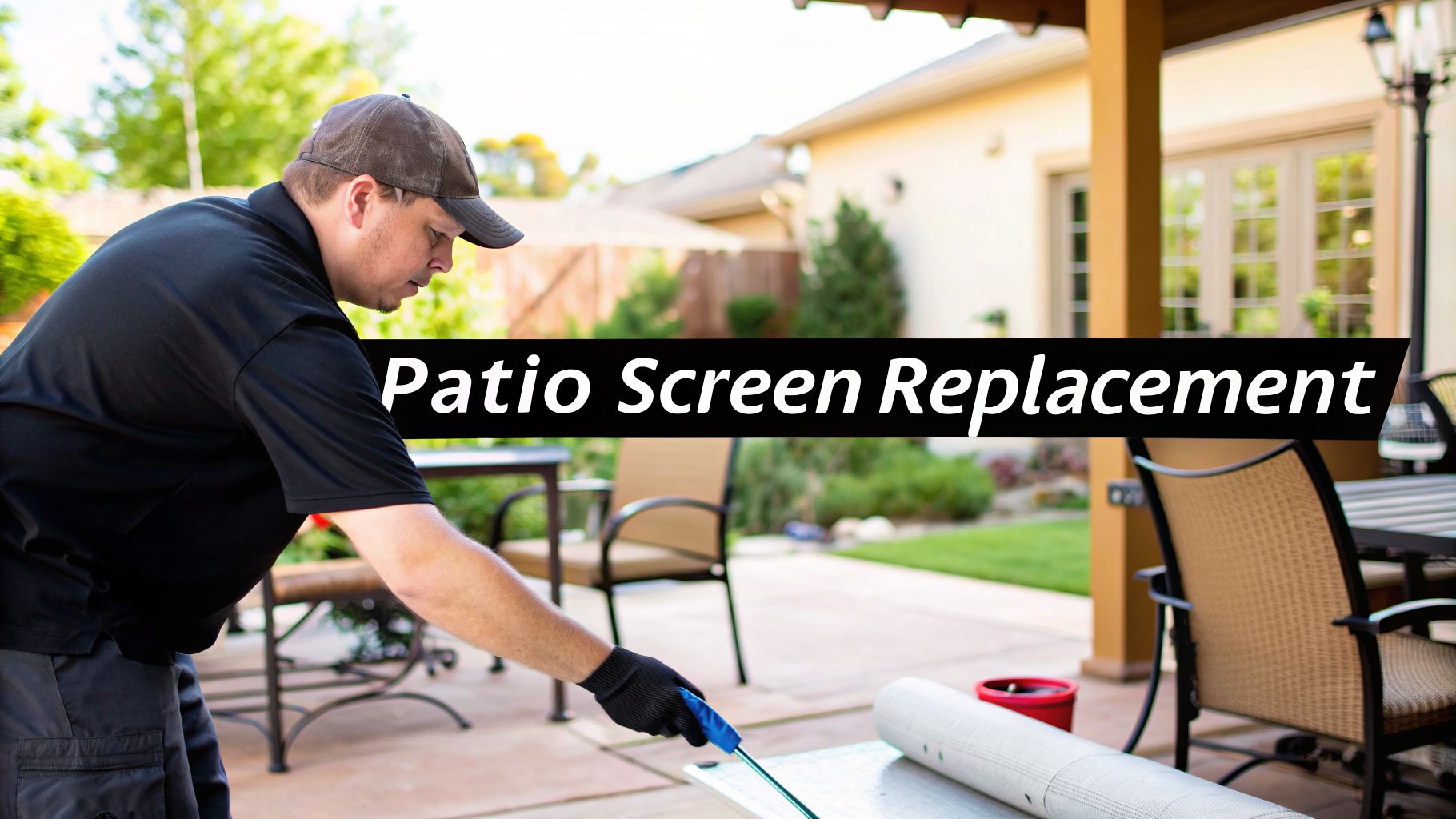

That small tear in your patio screen might look like a simple fix, but it's often a symptom of a bigger problem. Deciding whether to patch it up or go for a full patio screen replacement is really about understanding the overall condition of your entire screen enclosure, not just that one little hole.
Think of it this way: you can plug a single nail hole in a tire, but if the whole thing is brittle with dry rot, a new tire is the only safe and reliable option. Your patio screens are no different.
Knowing When to Replace Your Patio Screens

It’s always tempting to just patch a small hole and move on. The problem is, this often turns into a never-ending cycle of repairs. Here in Arizona, the relentless sun beats down on screen material, eventually making it brittle and weak. A single patch might fix today's tear, but it does nothing to stop another one from popping up next week when the material's time is up.
A full replacement isn’t just about fixing damage; it’s an investment in your home. By replacing all the mesh at once, you get a clean, uniform look and restore your patio's function and comfort.
Signs It's Time for a Full Replacement
So, how do you know when you've crossed the line from a simple repair to needing a full-on replacement? You need to look for widespread issues, not just one-off accidents. If you're seeing any of these signs, a replacement is almost always the smarter, more cost-effective choice in the long run.
- Large Rips or Multiple Tears: One big tear (more than 3-4 inches) or a smattering of smaller rips across several screen panels is a red flag. This tells you the fabric's structural integrity is gone.
- Brittle or Flaking Material: Go ahead, give the screen a gentle push. If you hear a crackling sound or see tiny flakes fall off, that material is toast. UV damage has cooked the life out of it, and it will only continue to crumble.
- Noticeable Sagging: Is your screen mesh wavy, loose, or just won't stay tight in its frame? It has likely stretched out permanently. Sagging screens look sloppy and create gaps for bugs to sneak through.
- Faded and Ineffective Sun Screens: If you have solar screens, take a look. Are they visibly faded or discolored? Does your patio feel much hotter than it used to? That means the UV-protective coating has worn away, and they're no longer saving you money on energy bills or protecting you from the sun.
When you're trying to decide, it helps to put the damage into one of two buckets: is it an accident or is it old age? The table below can help you make a quick call.
Repair vs. Replacement: A Quick Guide
| Symptom | Recommended Action | Reasoning |
|---|---|---|
| A single, small hole or tear (<3 inches) | Repair | The damage is isolated, and the surrounding mesh is still strong and flexible. A patch is a cost-effective fix. |
| Multiple tears on different panels | Replacement | This indicates widespread material failure. Patching one spot will just lead to another tear elsewhere. |
| Mesh feels brittle, stiff, or flakes | Replacement | The screen material has been destroyed by UV exposure. It has no strength left and cannot be reliably repaired. |
| Screen is sagging or won't stay taut | Replacement | The mesh has stretched beyond its elastic limit. It can't be tightened effectively and will continue to sag. |
| Faded solar screen and a hot patio | Replacement | The UV-blocking properties are gone. The screen is no longer performing its primary function. |
Ultimately, choosing a replacement when you see these signs of widespread wear saves you from the headache of constant patch jobs.
Of course, a small puncture from a pet's claw or a stray golf ball can often be handled with a simple fix. If you think a smaller-scale fix might work for you, our guide on professional patio screen repair can give you more specific advice. But when the signs point to system-wide failure, a full replacement is the best way to get your patio back in top shape.
Why Quality Patio Screens Are Essential in Arizona
Here in Arizona, a screened-in patio isn't just a nice-to-have addition—it’s what makes your outdoor space truly livable. Of course, the most obvious job of a screen is keeping bugs out. But a high-quality enclosure does so much more. It literally transforms your backyard into an outdoor living room. It's the key difference between having to retreat indoors as soon as the sun sets and actually enjoying a perfect Peoria evening without swatting away mosquitoes.
Think of a patio screen replacement as a direct upgrade to your lifestyle, not just another chore on the maintenance list. Imagine hosting a Scottsdale barbecue where your guests can relax without battling flies. Picture a safe, shaded area where your kids and pets can play, shielded from the intensity of the desert sun. Good screens expand the usable square footage of your home, making your property more enjoyable and valuable all year long.
Beyond Bugs: An Oasis of Comfort and Privacy
Modern patio screens have evolved far beyond simple bug nets. They serve as a crucial barrier against the harsh Arizona elements and can create a genuine private retreat right in your own backyard. Choosing the right material can dramatically boost your family’s comfort and sense of security.
Here are a few of the biggest advantages:
- UV Protection: Think of specialized solar screens as sunglasses for your patio. They can block up to 90% of the sun's harsh UV rays, protecting your family and keeping your patio furniture from fading and cracking.
- Enhanced Privacy: Tighter weaves and darker screen colors provide a surprising amount of daytime privacy. You can enjoy your morning coffee without feeling like you're on display for the whole neighborhood.
- Increased Home Value: In the Valley, a well-maintained and functional screened patio is a huge selling point. It adds immediate curb appeal and real, tangible value to your home.
Beyond just blocking the sun and bugs, screens are a cornerstone of creating a private outdoor space. For more inspiration, you can check out some creative ideas for privacy on a deck that work beautifully alongside a screened-in area.
An Investment Driven by Lifestyle and Climate
The desire for this kind of comfortable outdoor living has made a huge impact on the market. In fact, global demand for outdoor privacy screens is on track to hit $4,601 million by 2025. Homeowners right here in places like Phoenix are a huge part of that, investing heavily to perfect their outdoor spaces.
But here’s the catch: the same intense sun that makes our patios so appealing is also incredibly destructive. Some studies have shown that standard screen mesh can lose up to 30% of its strength after just two or three years in our arid climate.
This reality is why patio screen replacement isn't a one-time fix. It’s a recurring, essential part of owning a home in Arizona. Opting for durable, high-quality materials from the start ensures your investment pays off for years to come.
There’s also a hidden benefit to your wallet. By stopping a huge amount of solar heat before it ever hits your windows and glass doors, these screens take a significant load off your air conditioner. If you're looking to really maximize those energy savings, you can learn more about our professional solar screen installation and see how it can help lower your cooling bills.
Choosing the Right Screen Material for Your Home
Picking the right material is easily the most critical part of any patio screen replacement. I always tell my clients it’s like choosing tires for your car—you wouldn’t put flimsy street tires on a truck you plan to take off-roading. The same logic applies here. The screen you choose has to match your home, your lifestyle, and your priorities.
This one decision will determine how long your screens last, what they look like, and can even have a real impact on your home's energy bills. Let's walk through the most popular options so you can find the perfect fit.
H3: Fiberglass Screens: The Go-To Standard
Standard fiberglass mesh is what you’ll find on most homes, and for good reason. It’s affordable, flexible, and doesn’t crease or dent the way metal can. It gives you good visibility and lets the breeze flow through nicely. If your patio is fairly protected and doesn't get a lot of rough treatment from kids or pets, fiberglass is a solid, economical choice.
The biggest downside, especially here in Arizona, is its lifespan. The intense sun and UV rays in places like Phoenix will make standard fiberglass brittle over the years. So, while it’s cheap upfront, you might be looking at another replacement sooner than you'd like.
H3: Aluminum Screens: A Step Up in Durability
For homeowners wanting something tougher than fiberglass, aluminum screen mesh is an excellent upgrade. It’s more rigid, which means it resists sagging and is far less likely to tear from everyday wear. It also holds up well against pests like grasshoppers that have been known to chew right through fiberglass.
Aluminum screens come in a few different finishes, like black and charcoal, which actually improve your view looking out. The main trade-off? If it gets hit hard, it can dent or crease, and once that happens, the mark is there to stay.
H3: Pet-Resistant Screens: The Heavy-Duty Hero
If you share your home with dogs that scratch or cats that love to climb, pet-resistant screens are a game-changer. This isn't just slightly stronger material; it’s a vinyl-coated polyester mesh that's about seven times stronger than standard fiberglass. It’s specifically made to take on claws, paws, and the occasional full-body impact without ripping.
There are a couple of things to keep in mind, though:
- The weave is thicker and heavier, which means you'll have slightly less visibility and airflow than with fiberglass.
- It does cost more, but that initial investment often saves you a ton in the long run by preventing constant patch-ups and replacements.
For any household with active pets, the peace of mind you get from a truly tough screen is worth every penny.
H3: Solar Screens: The Smart Investment for AZ Homes
In the blistering Arizona heat, solar screens feel less like a luxury and more like a necessity. Think of them as high-performance sunglasses for your patio and windows. They are specifically engineered to block a huge chunk of the sun's heat and UV radiation before it ever gets a chance to bake your patio or heat up your home.
By blocking anywhere from 60% to 80% of solar heat, these screens can slash your home cooling costs by as much as 15%. For a homeowner in Tempe or Chandler, that's real money back in your pocket every single summer.
There's a reason the market for screen door services, which includes essential patio screen replacements, is projected to hit USD 4.5 billion globally by 2033. In UV-heavy areas, standard fiberglass mesh can lose 25% of its strength in just three years, which drives a constant need for replacement. When you look at those numbers, investing in a long-lasting, energy-saving option like a solar screen just makes financial sense. You can get a better feel for these trends by reading this in-depth industry analysis.
To make things a bit easier, we've put together a quick comparison of the most common materials. This should help you see how they stack up against each other based on what matters most to you.
Comparing Patio Screen Mesh Materials
| Mesh Type | Key Benefit | Best For | Avg. Lifespan (AZ Climate) |
|---|---|---|---|
| Fiberglass | Most affordable option | Low-traffic, protected patios | 5-7 years |
| Aluminum | Increased durability & rigidity | General use, added strength | 8-10 years |
| Pet-Resistant | Resists tears from claws/paws | Homes with active pets | 10-15+ years |
| Solar Screen | Blocks heat & saves energy | Sun-drenched patios, reducing bills | 10-15+ years |
Ultimately, choosing the right material for your patio screen replacement comes down to balancing your immediate budget with your long-term goals. Whether you need maximum durability for your pets, serious energy savings, or just a simple barrier to keep the bugs out, there's a screen material out there that’s perfect for the job.
The Professional Screen Replacement Process From Start to Finish
Ever wondered what actually happens when you hire a pro to replace your patio screens? It can feel a bit like a black box, but it shouldn't. While a weekend DIY project has its appeal, the professional approach is all about precision, long-lasting results, and getting that flawless finish that can handle the intense Arizona sun. Let’s pull back the curtain on the process so you can see exactly what goes into a quality job.
The whole service is really built on two things: craftsmanship and communication. It starts the second you pick up the phone and doesn't end until you’ve signed off on the final work.
On-Site Assessment and Precise Measurements
First things first, a technician comes to you. This initial on-site consultation is more than just a quick measure of your screen panels. It's a full-blown evaluation of the entire space.
They'll get hands-on, checking your existing aluminum frames for any warping, rust, or weak spots that could cause problems later. This is also when we talk about what you actually need. Are you fighting off the afternoon glare? Trying to keep a determined dog from breaking through? Or maybe you just want the clearest view of your backyard. This visit is all about gathering the details to give you a quote with no surprises.
Material Consultation and a Clear Quote
After sizing up the job, the technician will walk you through all the material options. This is your chance to actually see and feel the difference between standard fiberglass, tough aluminum, pet-resistant mesh, and specialty solar screens. They’ll explain the pros and cons of each based on what you discussed.
Once you’ve landed on the right mesh for your home, you’ll get a clear, itemized quote in writing. It will break down the cost of materials and labor, so you know exactly what you’re paying for before the work ever begins. That kind of transparency is the sign of a trustworthy company.
Careful Removal and Frame Inspection
When installation day rolls around, the crew starts by carefully taking out your old, torn screens. They use specific tools to pull the old spline (that little rubber cord holding the screen in) without scratching or denting the aluminum frame.
A crucial step that often gets missed in a rush job is the frame inspection after the old screen is out. With the channels clear, a pro can spot hidden corrosion or damage that wasn't visible before. This ensures the foundation for your new screen is solid.
If they find any minor issues with the frame itself, they'll address them right then and there. It's a small step that prevents much bigger headaches down the road.
This diagram breaks down the core phases of the hands-on work.

It shows how methodical measurement, skilled installation, and a final check all work together to produce a great result.
Expert Installation and Final Walkthrough
This is where the real skill comes into play. The new screen mesh is stretched and rolled into the frame's channels using a professional spline roller. Applying steady, even pressure is the secret to getting that perfect, drum-tight finish. It’s this technique that prevents the sagging and wrinkling you often see in DIY attempts.
The process is methodical:
- Laying the Mesh: The new screen is cut just a bit larger than the frame's opening to ensure full coverage.
- Spline Installation: The spline is expertly rolled into the channel, locking the mesh in place with just the right amount of tension.
- Trimming Excess: A sharp utility knife is used to slice away the extra mesh, leaving a clean, perfectly straight edge.
After all the panels are in, the team does a full cleanup of the area. To wrap things up, they’ll walk you through the finished job, letting you inspect everything up close and answering any questions. The job isn’t done until you are 100% satisfied. If you're thinking about a more unique design, you can get some great ideas from our guide to custom screen installation to see what’s possible.
DIY Patio Screen Replacement vs Hiring a Professional

So your patio screen is shot, and the big question pops into your head: "Can I do this myself and save some cash?" It’s a tempting thought. On the surface, a patio screen replacement seems pretty straightforward.
But here’s the thing we’ve seen time and time again—it’s a lot like a professional paint job. Anyone can slap on a coat of paint, but getting those crisp lines and a flawless, durable finish takes skill. The difference between a weekend warrior's screen job and a professional one is immediately obvious, and it goes far beyond just looks.
The Realities of a DIY Replacement
Going the DIY route puts you in charge of everything. You’re the one taking precise measurements, buying the materials, and doing the installation. While you might avoid labor costs, you'll be spending money on tools you may only use once and dedicating a good chunk of your weekend to the project.
The real challenge? Getting a drum-tight finish. It's a craft that takes hundreds of repetitions to master. Here are a few common headaches we see from well-intentioned DIY projects:
- Wrinkles and Sags: This is the number one giveaway of an amateur job. Achieving perfectly even tension across a large panel is incredibly tricky. One loose spot is all it takes to get that wavy, warped look that just lets bugs right in.
- Damaged Frames: It happens in a split second. You’re prying out the old spline or trying to force the new screen in, and suddenly you’ve bent or deeply scratched the aluminum frame. Those mistakes are permanent.
- Wasted Materials: One wrong cut or a tear while stretching the screen means you’re heading back to the hardware store for another expensive roll of mesh. Your "savings" can disappear fast.
The classic "do it yourself or hire it out" debate comes down to the same things for almost any home project: your time, your skill, and the real cost of potential mistakes. For a different take on this common problem, this guide on DIY vs Professional foundation installation shares some great insights that hold true for screening, too.
The Professional Advantage: Time and Quality
Bringing in a team like Sparkle Tech is about more than just getting the job done. It's an investment in getting it done right, the first time. You’re paying for experience, specialized tools, and a guaranteed result that looks fantastic and lasts.
Our crew arrives with everything needed to do the job efficiently and flawlessly. What might take you an entire weekend, we can often complete in just a few hours. We know exactly how to work with different frame types and screen materials to get that perfect, wrinkle-free tension that will stand up to wind, pets, and time.
We also bring crucial local knowledge. For instance, retractable screens are hugely popular in hot climates like Phoenix and Mesa for creating comfortable outdoor living areas. But in our dusty environment, these systems can fail 20% more often if not installed correctly. A pro knows which materials and techniques are necessary to ensure your investment holds up.
For a single, small window screen, a DIY approach can be a great way to learn a new skill. But for a full patio enclosure, hiring a professional is almost always the smarter, safer, and ultimately more valuable choice. You get a beautiful, functional space back without the frustration or risk of costly errors.
Your Top Questions About Patio Screen Replacement, Answered
Deciding to replace your patio screens is a great first step, but it's natural to have more questions before you commit. We get it. You want to understand the cost, what to expect in terms of durability, and how to care for your new investment.
We hear these questions all the time from homeowners across Arizona. To help you feel confident moving forward, here are some straightforward answers from our team of experienced pros.
How Much Should I Expect to Pay for Professional Patio Screen Replacement?
This is usually the first question on everyone's mind, and the honest answer is: it depends. The final price tag is shaped by a few things, with the total size of your patio being the biggest factor.
The type of mesh you choose also plays a big part. A standard fiberglass screen is more budget-friendly, while a high-performance solar screen or durable pet screen will be a larger investment upfront. On average, most professional projects fall somewhere in the $3 to $7 per square foot range. Any reputable company will give you a firm, detailed quote after an on-site look—no surprises.
How Long Will a New Patio Screen Really Last in the Arizona Sun?
The intense Arizona sun is the ultimate test for any outdoor material. The lifespan of your new screen comes down entirely to the quality of the mesh you select.
- Standard Fiberglass: This is a common choice, but the sun takes its toll. You can realistically expect about 5-7 years before it gets brittle and starts to tear.
- High-Quality Solar or Pet-Resistant Screens: These are built for the long haul. Made to resist UV breakdown and physical wear, they can easily last 10-15 years or even longer with a little care.
Think of it as an investment. Spending a bit more on a tougher screen now can save you the hassle and cost of another replacement project just a few years down the road.
Can We Reuse My Existing Patio Screen Frames?
Absolutely. In most situations, we can reuse your existing aluminum frames, which is a huge cost-saver. As long as the framework isn't badly bent, corroded, or structurally compromised, there's no need to replace it.
Our technicians will simply remove the old, damaged mesh and the dried-out spline holding it in place. Then, we'll expertly install your new screen into the original frame. During our initial visit, we’ll inspect everything thoroughly and let you know if any small repairs are needed.
This focus on quality and durability is part of a larger trend. Home improvement is booming, with residential projects making up 75% of the global market for screen services. This has fueled a 22% jump in outdoor enclosure projects since 2020. You can see more details in these market insights on screen services.
What's the Best Way to Maintain My New Screens?
A little bit of upkeep goes a long way in making your screens last and keeping your view pristine. All that Arizona dust and pollen needs to be cleaned off periodically so it doesn't degrade the material over time.
We recommend giving your screens a gentle cleaning once or twice a year. All you need is a soft-bristled brush and some mild, soapy water. Rinse them well afterward, and they'll look fantastic. Here’s a crucial tip: avoid using a pressure washer. The intense spray is far too strong and can easily stretch, tear, or damage the mesh.
Ready to enjoy a bug-free, comfortable, and beautiful patio again? The team at Sparkle Tech Screen Service provides quick quotes, same-week service, and flawless installations across the Valley.
Get your free quote today by visiting us at https://sparkletechscreenservice.com or text/call us at 623-233-0404.


