


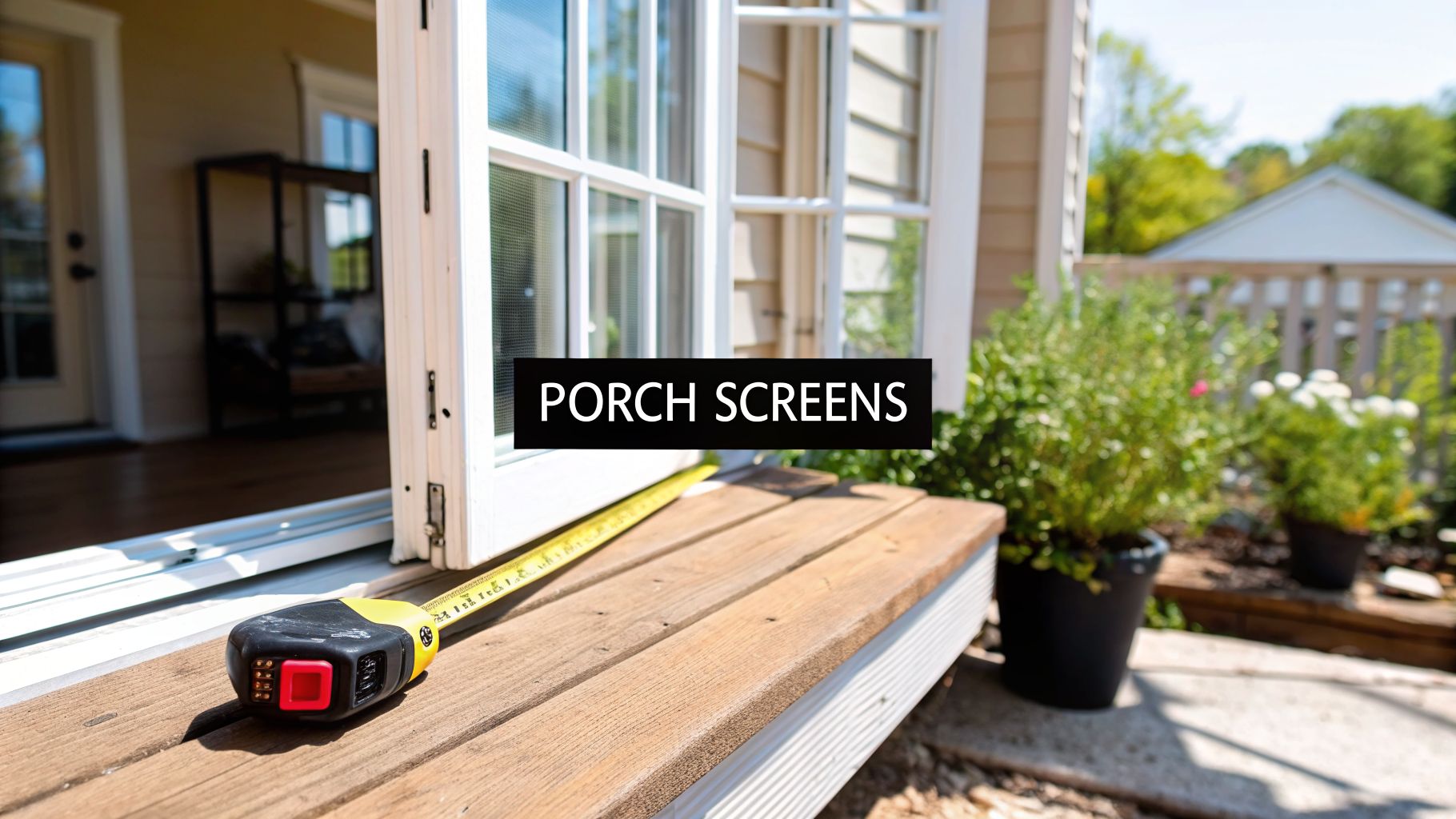

If you're looking to upgrade your porch window screens, you’re making a smart move. It's one of those home improvements that pays you back immediately in comfort, usability, and even lower energy bills. Whether you need a basic bug screen or a high-performance solar screen, the right choice can completely transform your porch into a space you'll actually want to use.
Why Your Porch Window Screens Matter More Than You Think
A screened-in porch isn't just another feature of your house—it's a lifestyle choice. It’s that special spot where you get to enjoy the fresh air without dealing with pesky insects or the full-on glare of the sun. The screens you choose are the single most important factor in creating that perfect balance.
Think of it as adding a whole new room to your home. Here in Phoenix, a well-screened porch becomes a cool retreat from the intense summer heat, especially when you have the right material working for you. This isn't just a small comfort; it delivers real, practical benefits that you'll notice in your daily life and in your wallet.
The Real-World Benefits of Quality Screens
The perks of installing good screens go way beyond just keeping mosquitoes out of your drink. Here are a few of the biggest advantages you’ll experience right away:
-
Pest Protection: This one is a given, but it’s the foundation of a comfortable outdoor space. A properly fitted screen is an essential barrier, working alongside other pest-proofing measures like sealing cracks and openings to keep your home free of unwanted guests.
-
Energy Savings: This is where the investment really shines. Modern solar screens can block up to 90% of the sun's heat before it even hits your glass. In our hot climate, that means your air conditioner doesn't have to work as hard, which shows up as real savings on your monthly cooling costs.
-
Enhanced Privacy: Darker solar screens are fantastic for daytime privacy. From the inside, your view of the outdoors is crystal clear, but from the outside, it’s much more difficult for neighbors or people passing by to see in.
-
UV Ray Protection: High-quality screens act like sunscreen for your home, blocking a huge percentage of damaging UV rays. This simple addition goes a long way in protecting your porch furniture, rugs, and decor from fading and breaking down in the sun.
A well-screened porch isn't just a "nice-to-have" feature; it's an extension of your living space. It gives you back part of your home, letting you enjoy the outdoors comfortably from morning to night.
It’s no surprise that homeowners are catching on. The demand for better screens is driving major growth in the industry, with the global market for plastics coating window screens projected to climb to over $1.7 billion by 2031. This boom is all about homeowners wanting more durable materials and larger, more livable outdoor spaces.
How to Measure Your Porch Openings for a Perfect Fit
If there’s one step you absolutely cannot afford to get wrong, it’s measuring. I’ve seen it countless times—an eighth of an inch might not sound like much, but it’s the difference between a crisp, professional-looking screen and one that sags and looks sloppy. So before we even get into screen materials, let's nail down the fundamentals of measuring.
All you really need is a quality metal tape measure, a notepad, and a pencil. Don't skimp here; a cheap, flimsy tape can easily stretch or give you a bad reading, and that one small error can throw off the entire project.
Understanding Your Screen Mounting Style
Now, before you even unroll that tape, you need to know how your new screens will be attached. This is crucial because the mounting style changes how you measure. The two main ways to do it are inset mounting and face mounting.
-
Inset Mounting: This is when the screen frame sits neatly inside the opening, flush with your porch posts. It’s a clean look, perfect for porches that already have well-defined openings between wood or aluminum posts.
-
Face Mounting: With this method, the screen frame is installed onto the surface of the porch posts, so it overlaps the opening. This is a great solution for porches with uneven surfaces or when there's no natural groove for an inset frame to sit in.
I always tell homeowners: for an inset mount, measure everything three times. Check the width at the top, middle, and bottom, then do the same for the height on the left, middle, and right. Always, always use the smallest of those three measurements. Your openings are rarely perfectly square, and this guarantees the frame will slide in.
How to Measure for Inset and Face Mounts
For an inset mounted screen, you’re measuring the space between the posts. Stretch your tape from the inside of the left post to the inside of the right. After getting your three width measurements (top, middle, bottom), measure the height from the top surface where the screen will rest down to the bottom. Again, stick with the smallest width and smallest height you recorded.
A face mounted screen is a different game because you need to account for the frame overlapping the opening. Most standard frames are between ¾-inch and 1-inch wide. First, measure the opening itself. Then, add the width of your frame twice to each dimension. For a 1-inch frame, you would add 2 inches to your final width and height. This gives you a 1-inch overlap on all four sides for a secure mount.
This quick visual breaks down how your main goal—whether it's bug control, privacy, or energy savings—points you toward the right screen material.

As you can see, figuring out what you need most from your screens is the first step in making the right choice for your home.
Common Measuring Mistakes to Avoid
Over the years, I've seen a few predictable mistakes trip people up. The most common one is forgetting to factor in the hardware. If you’re using tension springs or mounting clips, they take up space. You often need to deduct a tiny bit—usually 1/16 to 1/8 of an inch—from your measurements to leave room. Always double-check the hardware manufacturer’s guide for the exact clearance needed.
Another classic pitfall is measuring the old, busted screen frame instead of the opening itself. Don't do it! Old frames get bent, warped, and damaged over time, and using them as a template is a recipe for a poorly fitting new screen. Take the extra minute to measure the actual porch opening. It’s the only way to ensure your new porch window screens will fit like a glove.
Choosing the Right Screen Material for Your Home

Alright, you've got your measurements. Now comes the part that really defines your project: picking the right material for your porch window screens. This isn't just about looks. The mesh you select will affect everything from your view and the breeze you feel to how much you spend on cooling your home. Think of it as a long-term investment in your porch's comfort and function.
Let's walk through the most common options I see homeowners choosing, so you can find the perfect fit.
Standard Bug Screens: Fiberglass and Aluminum
When most people think of a screen, they're picturing fiberglass mesh. It's the industry standard for a reason. It's affordable, provides excellent airflow, and gives you a crystal-clear view. Because it's so flexible, it won't dent or crease like metal can, making it a solid, all-around choice for basic insect protection.
For a bit more muscle, you can step up to aluminum screens. They offer the same fantastic visibility and bug-blocking power as fiberglass but with added strength. They resist sagging over time and hold up well to general wear and tear. Just be aware that a hard impact—like an errant frisbee or a clumsy visitor—can leave a permanent dent.
Interestingly, the market has seen a big shift toward plastic-coated screens, which now make up over 60% of sales. These newer materials offer a lifespan that's up to 40% longer because they resist tearing far better than older types. Here in sun-baked regions where UV rays force screen replacements every 5–7 years, that added durability is a smart move. For more on this trend, check out the data on the rise of coated window screens on reports.valuates.com.
High-Performance Solar Screens for Real Savings
If your porch feels more like an oven in the afternoon, solar screens are your best friend. These aren't just standard screens dyed a darker color; they are engineered specifically to stop solar heat before it ever touches your glass. That's a huge advantage over interior blinds or curtains, which only block the heat once it's already inside your home.
By absorbing and reflecting up to 90% of the sun's heat, solar screens can take a massive load off your air conditioner. In a place like Arizona, that translates directly to lower energy bills during our long, hot summers. If you want to dive deeper, we have a whole guide on the benefits of solar screen installation.
I often tell clients that solar screens are like sunglasses for their house. They cut the glare, block harmful UV rays that fade furniture, and provide excellent daytime privacy—all while keeping the home significantly cooler.
Specialty Screens for Unique Challenges
Sometimes, a standard solution just won't do. That’s where specialty screens come in, offering targeted fixes for specific problems with your porch window screens.
You might want to consider these if you're dealing with:
- Pets: If you have a dog that leans or a cat that climbs, you need pet-resistant screens. This vinyl-coated polyester mesh is roughly 7 times stronger than standard fiberglass. It's designed to withstand claws and paws, saving you the headache and cost of constant repairs.
- Tiny Bugs: Live near a lake, creek, or just in a buggy area? You know that "no-see-ums" and other tiny gnats can wiggle through standard mesh. "No-see-um" screens feature a much tighter weave that blocks even the smallest intruders, so you can finally relax in peace.
- Security Concerns: For the ultimate peace of mind, security screens provide a serious barrier against break-ins. Made from high-tensile stainless steel mesh, they are incredibly difficult to cut or force open, giving you robust protection without the need for unsightly security bars.
So You Want to DIY Your Screen Installation? Here's How

Thinking about tackling your screen project yourself? Go for it. DIY screen installation is one of those incredibly satisfying jobs that saves you a bit of cash and gives you some serious bragging rights. Whether you're just swapping out torn mesh or building a whole new screen, the process is surprisingly straightforward once you know the ropes.
Let's walk through the process, and I'll share a few tricks of the trade to help you get that tight, professional finish on your porch and window screens.
Get Your Workspace Ready
Before you even think about yanking out that old screen, getting your tools in order will make the entire job go smoothly. Trust me, having the right gear is the difference between a frustrating afternoon and a finished project you can actually be proud of. You don't need a pro-level workshop, just a few key items.
Here’s what you should have on hand:
- Spline Roller: This is your MVP. It has two wheels—a convex (pointed) wheel to press the mesh into the channel and a concave (grooved) wheel to push the spline in after it.
- Utility Knife: A fresh, sharp blade is non-negotiable. A dull blade will snag and ruin your brand-new screen before you even finish.
- Flat-Head Screwdriver or Awl: You’ll need something small and sharp to dig out the old, stubborn spline from the frame's groove.
- Spring Clamps: For bigger porch screens, a few of these are a lifesaver. They hold the mesh taut, freeing up your hands to focus on the spline.
The Art of Rescreening a Frame
Most of the time, "DIY screen repair" just means rescreening—replacing the fabric in a frame you already have. Start by laying the screen frame on a flat, sturdy surface like a workbench or the garage floor.
Use your screwdriver to find an end of the old spline (that rubbery cord holding the mesh in) and just pull it all out. With the old mesh gone, lay your new material over the frame, making sure you have at least an inch of overlap on all sides. Clamp one end to keep it from shifting.
Now for the fun part. Grab your spline roller and use the convex wheel to gently push the mesh into the channel on one side. Then, take your new spline and use the concave wheel to roll it firmly into the channel right over the mesh. Work your way around the frame, keeping light tension on the fabric to prevent any sags or wrinkles.
A Little Trick I've Learned: If your new spline is stiff and fighting you, drop it in a cup of hot, soapy water for a few minutes. The heat makes it way more flexible and easier to roll in, especially around those tricky corners.
Once the spline is seated all the way around, grab your utility knife to trim off the extra mesh. The key is to cut on the outside of the spline channel. This gives you a perfectly clean edge that will be completely hidden.
If you want a deeper dive, our article on window screen repair has more detailed steps. Knowing how to do this yourself is a great skill, especially since trends in outdoor living have caused a 22% jump in patio enclosures. With 65% of homeowners wanting quick turnarounds, fixing it yourself is often the fastest route. You can even read up on some of the market trends driving this on openpr.com.
Knowing When to Call a Professional Screen Installer
There's a real sense of accomplishment that comes from a successful DIY project. But let's be honest—some jobs are best left to the professionals. When it comes to porch window screens, recognizing when to hand over the tools can save you a ton of time, money, and frustration. The ultimate goal is a flawless, durable installation, and sometimes, hiring an expert is the most direct route to get there.
Take a hard look at the scope of your project. Are we talking about a few ground-floor window screens, or are you facing second-story windows that demand tall ladders and create a serious safety risk? Maybe you're dreaming of a huge, multi-panel porch enclosure where one small miscalculation could mean saggy, unprofessional-looking screens. These are the kinds of situations where calling in a pro is a no-brainer.
When Professional Help Is a Smart Investment
Certain scenarios just scream for an expert. A professional brings specialized equipment, access to commercial-grade materials, and the kind of on-the-job experience that prepares them for challenges you might not even see coming.
It’s probably time to call a professional for situations like these:
- Complex or Oversized Openings: Getting the tension just right on a massive porch enclosure is an art form. Without the proper technique, you'll end up with wrinkles and sagging that are impossible to ignore.
- High or Hard-to-Reach Windows: Any job that involves working high off the ground introduces significant safety hazards. Professionals are insured and have the right equipment to work safely and efficiently.
- Custom Shapes and Designs: Arched windows, trapezoids, and other unique architectural shapes require a level of precision that’s nearly impossible to achieve with a standard DIY kit.
- Motorized or Retractable Systems: These advanced screen systems have electrical wiring and specific mounting hardware. A mistake during installation can lead to malfunctions or damage the unit entirely.
A professional installation isn't just about getting the work done—it's about the peace of mind that comes from knowing it was done right. That workmanship warranty offers a level of assurance a weekend DIY project simply can't provide.
The Advantages of Hiring a Local Expert
Bringing in a professional screen service does more than just check an item off your to-do list. You're also getting access to a whole different class of materials you won't find at the local hardware store. These commercial-grade meshes and heavy-duty frames are designed to stand up to the elements and last much longer.
A local installer also has a deep understanding of our area's specific climate challenges. They know firsthand which materials can handle intense sun and salty air, and they can recommend the perfect solution for your home. If your project involves intricate designs or you'd simply rather have an expert handle it, consider reaching out to professional screens and enclosure services that specialize in this exact type of work.
Finally, there’s the speed and efficiency. A project that could consume your entire weekend—full of measuring, cutting, and frustrating do-overs—is often just a few hours of work for an experienced crew. That efficiency, backed by a guarantee of quality, makes it a truly valuable investment in your home. For a seamless experience from quote to completion, a dedicated custom screen installation service will ensure your project is done to the highest possible standard.
Your Top Porch Screen Questions Answered
If you're thinking about a screen project for your porch or windows, you've probably got questions. We get calls about this stuff all the time, so we’ve put together answers to the most common things homeowners ask us.
How Long Do Screens Actually Last in Phoenix?
Here in Phoenix, the sun is relentless on everything, and your screens are no exception. The lifespan really boils down to the material you choose.
A standard fiberglass screen will usually give you 5-8 years before the sun cooks it into a brittle, easy-to-tear mess. But if you go with a quality solar screen, you’re looking at a much longer run—often 10-15 years. A good habit is to give them a quick look-over each year to catch any brittleness or small tears before they become big problems.
Can Solar Screens Go on My Current Windows?
Absolutely. Solar screens are designed specifically to be installed on the outside of your existing windows. We can mount them right onto the window frame or set them in special tracks for a really clean, built-in look.
Putting them on the exterior is the whole secret to their effectiveness. They stop the sun's intense heat before it can even touch your window glass. That's how they make such a big dent in your cooling bills.
A lot of people worry that solar screens will make their house feel like a cave. The truth is, they're designed to cut harsh glare, not kill the natural light. You'll get a beautiful, clear view outside without squinting.
Should I Rescreen or Get a Whole New Frame?
This comes up on almost every job, and knowing the difference is key to figuring out your budget.
-
Rescreening: This is just what it sounds like—we pull out the old, damaged mesh and install fresh screen fabric into your existing frame. It’s a great, budget-friendly option if your metal frames are still straight and in solid shape.
-
New Screen: This means you're getting a brand-new unit: a new metal frame with new mesh already installed. You’ll need this if your old frames are bent, broken, or if you're screening an opening for the first time.
Is Pet-Resistant Screen Really Worth the Extra Money?
If you have a dog that leans on the door or a cat that thinks your screen is a climbing gym, the answer is a definite yes. We’ve seen standard fiberglass screens shredded in a matter of weeks.
Pet-resistant mesh is a seriously tough, vinyl-coated polyester that's about 7 times stronger than the standard stuff. While it costs more upfront, it saves you the headache and repeated cost of fixing or replacing torn screens over and over again. It pays for itself.
Ready to get your screen project started? The team at Sparkle Tech Screen Service offers fast quotes, same-week service, and professional installation for all types of bug and solar screens. Find out more about our screen services or just text/call us today.


