


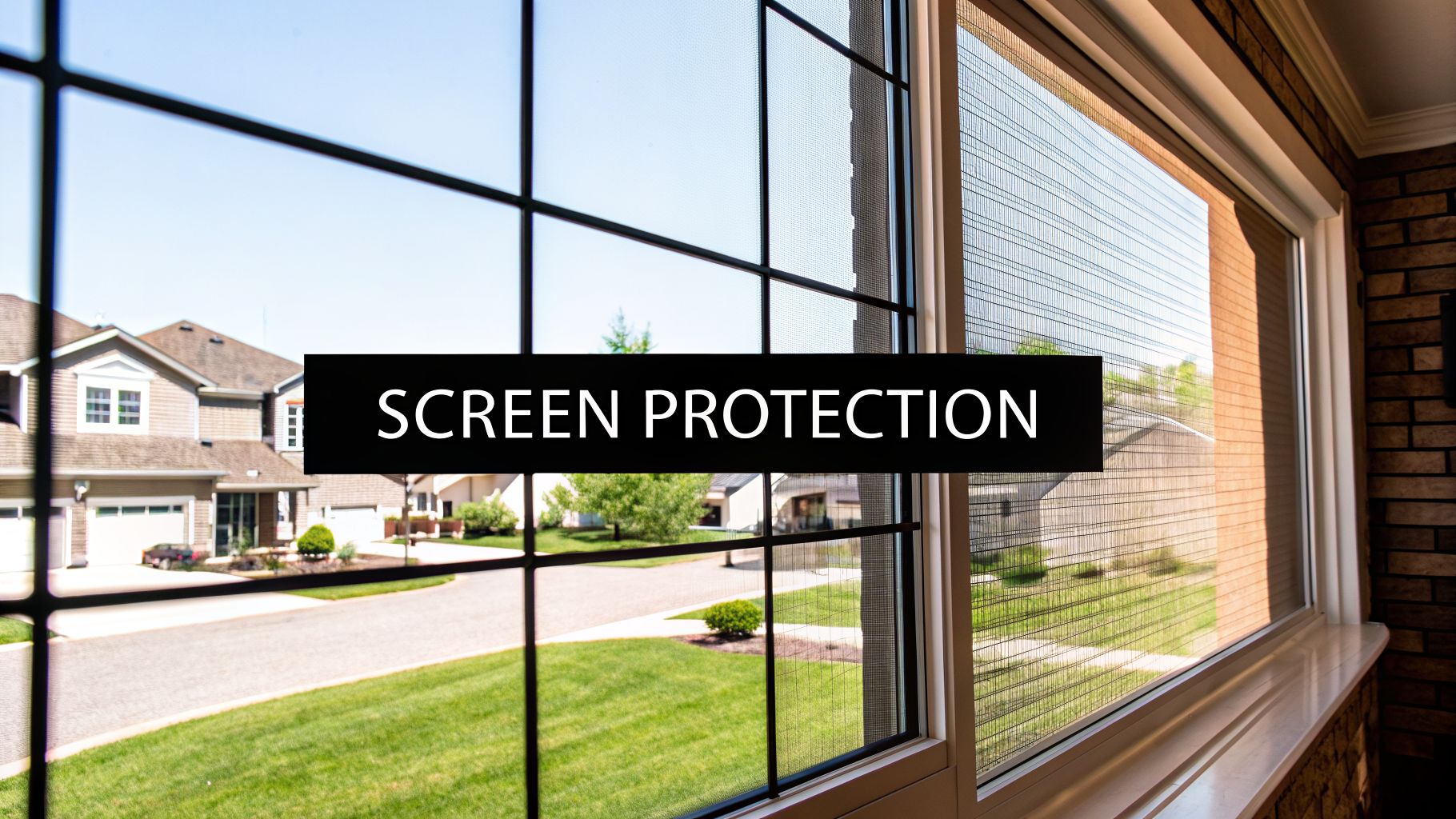

When most people think of window screens, they picture a simple mesh designed to keep bugs out. And for a long time, that’s all they were. But today's specialized screen materials and designs have turned that basic concept on its head.
What Is Window Screen Protection and Why Does It Matter?
Think about it like this: a standard screen is like a thin windbreaker, good for keeping out a few mosquitoes on a calm evening. Modern window screen protection, on the other hand, is more like a technical, all-weather jacket for your house. It’s a high-performance system that does more than just block insects—it intelligently filters what comes into your home.
This isn't about just patching up a tear. It’s about upgrading your home’s first line of defense against pests, the sun's harsh glare, and even physical damage, all without sacrificing that fresh breeze or your view. The right screen choice is a custom solution, not a one-size-fits-all patch.
More Than Just Keeping Bugs Out
Allowing fresh air in while keeping pests out is the bare minimum. Modern screens offer a whole range of benefits that tackle some of the biggest headaches for homeowners, especially for those of us living under the intense Arizona sun. These upgrades turn a simple screen into a smart investment for your property.
Here are a few of the key advantages:
- Enhanced Energy Efficiency: Solar screens are built to absorb and deflect a huge amount of the sun's heat before it ever hits your window panes. This simple change can cool down your indoor temperature noticeably, meaning your AC doesn't have to work as hard and you save real money on your energy bills.
- UV Radiation Blocking: The same sunlight that brightens your home also fades your furniture, rugs, and artwork. Quality sun screens can block up to 90% of UV radiation, acting as a constant shield to protect your valuables from sun damage.
- Improved Durability and Safety: If you have pets or kids, you know how fragile a standard screen can be. Pet-resistant and security screens are made from incredibly tough materials that stand up to tears, claws, and pressure, giving you an extra layer of security and a lot more peace of mind.
Think of it this way: Investing in quality window screen protection is like putting sunscreen on your house. It actively shields your home from the damaging effects of the sun, reduces heat buildup, and protects what’s inside, ultimately contributing to both comfort and long-term value.
Ultimately, choosing the right window screen is a proactive step toward making your home more comfortable, efficient, and secure. It’s about recognizing that these screens aren’t just passive add-ons, but active systems that work hard to improve your daily life.
Exploring the Main Types of Window Screens
When it's time to choose new window screens, you'll find it's not a one-size-fits-all situation. Think of it like buying tires for your car—you wouldn't put racing slicks on an off-road truck. The same idea applies here. Each type of screen is designed to solve a different problem, whether it's keeping bugs out, blocking the sweltering sun, or standing up to a curious cat.
Let's walk through the main options you'll encounter. Getting familiar with what each one does best is the key to picking the right protection for your home and your lifestyle.
The Everyday Defender: Bug Screens
This is the screen everyone knows. A standard bug screen is the baseline for window protection, designed for one simple but essential job: letting fresh air in while keeping annoying insects out. From mosquitos to flies, this screen is your first line of defense.
Most of these are made from either fiberglass or aluminum mesh with a common weave like 18×16 (meaning 18 threads per inch one way, and 16 the other). It's a perfect balance—open enough to give you a clear view and great airflow, but tight enough to stop the vast majority of pests from crashing your party.
The Energy Saver: Solar Screens
If you have rooms that feel like an oven in the afternoon, solar screens are your new best friend. They're essentially sunglasses for your house, engineered to stop the sun's heat and harsh UV rays before they hit your window glass and drive up your energy bills.
Instead of standard mesh, they use a special, tightly woven vinyl-coated fabric that absorbs and dissipates a huge amount of solar energy. The benefits are impossible to ignore.
- Serious Heat Reduction: A quality solar screen can block anywhere from 65% to 90% of the sun's heat. You'll feel the difference immediately, and your AC unit will thank you.
- UV Ray Protection: They act as a powerful shield against the UV radiation that causes your furniture, carpets, and artwork to fade over time.
- Daytime Privacy: From the outside, the dark, dense mesh makes it tough to see in during the day, giving you an extra layer of privacy without blocking your view out.
In a sunny climate, these screens aren't just a luxury; they're a smart investment that pays for itself in energy savings. For anyone serious about creating a more comfortable and efficient home, it’s worth looking into professional solar screen installation.
This chart gives you a quick visual breakdown of the key benefits you get from any quality screen.

As you can see, the right screens work on multiple levels—improving comfort, boosting energy efficiency, and adding a layer of protection to your home.
The Durable Guardian: Pet-Resistant Screens
If you have pets, you already know the fate of a standard window screen. One determined cat clawing its way up or an excited dog pushing its nose through is all it takes to leave you with a giant rip. That's exactly why pet-resistant screens were invented.
These screens are made from a super-tough, vinyl-coated polyester that’s about seven times stronger than the typical fiberglass mesh. It's designed to resist tearing, scratching, and puncturing from claws and paws.
It’s important to know that they are "pet-resistant," not "pet-proof." A very determined animal could still cause damage, but for everyday climbing and scratching, this material holds up beautifully. It gives you peace of mind and saves you from the headache of constant screen repairs.
The Fortress: Security Screens
When safety is your top concern, nothing beats a security screen. From a distance, they look just like a regular screen, but they are actually heavy-duty barriers built to stop a forced entry in its tracks. You get the strength of security bars without making your home look like a fortress.
The secret is in the materials. Security screens are built with high-tensile stainless steel mesh woven into a tight pattern and locked into a reinforced aluminum frame. This combination is incredibly tough to cut, kick in, or pry open.
- Forced Entry Defense: They are specifically engineered and tested to withstand impact, knives, and crowbars.
- Safe and Easy Exit: Unlike iron bars, most security screens are designed to allow for a quick escape from the inside during an emergency.
- Added Perks: On top of the security, they still work perfectly as a bug screen and even offer some of the UV-blocking benefits of a solar screen.
Comparing Window Screen Protection Options
To make the choice a little easier, here's a side-by-side comparison of the most common window screen types to help you decide on the right protection for your home.
| Screen Type | Primary Benefit | Best For | Common Material |
|---|---|---|---|
| Bug Screen | Keeps insects out while allowing airflow | General-purpose use in most homes | Fiberglass or Aluminum |
| Solar Screen | Blocks solar heat and UV rays, reduces energy costs | Homes in sunny climates or with west-facing windows | Vinyl-Coated Fiberglass/Polyester |
| Pet-Resistant Screen | Withstands scratches and tears from pets | Households with cats, dogs, or other potentially destructive pets | Heavy-Duty Vinyl-Coated Polyester |
| Security Screen | Prevents forced entry and enhances home safety | Homeowners seeking maximum protection without compromising aesthetics | High-Tensile Stainless Steel |
Ultimately, your choice depends on balancing your needs, your home's location, and your budget. Whether you just need to keep the mosquitos at bay or want to secure your home against intruders, there's a screen out there that's perfect for the job.
How to Choose the Right Screen Material and Mesh

So, you’ve figured out what type of window screen you need. Great! Now comes the part that really determines how well your screens will perform day-to-day: choosing the right material and mesh.
Think of it like picking out a jacket. Some are built for blizzards, some are for a light breeze, and others are purely for looks. Your screen material works the same way—the choice you make here directly affects durability, how clear your view is, and of course, the final cost. Getting this right means you’ll have screens that perfectly match your home and your needs.
Decoding the Most Common Screen Materials
The material is the very foundation of your screen. It dictates how it stands up to weather, stray soccer balls, and the test of time. Let's walk through the two main players you'll find on the market.
Fiberglass Screen Mesh
This is the go-to standard in the industry today, and for good reason. Fiberglass is a flexible material coated in PVC, which makes it incredibly forgiving and easy to handle.
- Key Advantage: It’s almost impossible to permanently crease or dent, and it won’t unravel when cut. This makes it a favorite for pros and a lifesaver for DIYers.
- Best For: It's the perfect workhorse for standard bug screens in most homes. Its blend of durability and affordability makes it a smart, cost-effective option for outfitting multiple windows.
Aluminum Screen Mesh
If you want a sharper, more pristine view and a little more strength, aluminum is a fantastic choice. This metal mesh is more rigid than fiberglass, which translates to a crisper, less obstructed view of your yard.
- Key Advantage: Aluminum provides excellent strength and resists sagging, so it keeps that clean, taut look for years. A baked-on finish also helps it fight off rust and corrosion.
- Consideration: While it's tougher, it can be dented on impact, and those creases are usually there to stay. It's an ideal pick for windows that aren't in high-traffic areas where they might get bumped.
Beyond these two, you'll see other specialty materials. For example, heavy-duty polyester is the core of pet-resistant screens due to its incredible tear strength. For serious security, pros turn to stainless steel mesh for its ability to resist cutting and impact.
Understanding Screen Mesh Count
Once you've landed on a material, there's one last detail to sort out: the mesh count. It sounds technical, but it's actually a straightforward concept with a big impact.
The mesh count simply tells you how many threads there are in one square inch of screen. A screen with an 18×16 mesh has 18 vertical threads and 16 horizontal threads. This number is your guide to how tight the weave is.
A tighter weave means the holes in the screen are smaller. This is what determines airflow, visibility, and what size bugs you're keeping out.
Common Mesh Counts and Their Uses:
- 18×16 Mesh (Standard): This is the everyday champion for fiberglass and aluminum screens. It strikes a great balance, stopping common pests like mosquitoes and flies while still allowing for good airflow and a clear view.
- 20×20 Mesh ("No-See-Um" Screen): If you live near the coast or a marsh, you know the pain of gnats and midges. This tighter weave is specifically designed to block those tiny pests. The trade-off is slightly less airflow and visibility, but it's well worth it to keep the "no-see-ums" out.
- Solar Screen Mesh (Varies): Solar screens play by different rules. Instead of a simple thread count, their density is measured by how much UV light they block, typically from 65% to 95%. The higher the percentage, the more heat and glare you block, but the more opaque the screen becomes.
Pairing the right material with the right mesh is the secret to truly effective window screen protection. It’s how you ensure your screens don't just fit your windows—they fit your life.
How to Prevent Screen Damage Before It Happens

As anyone who's dealt with home repairs knows, an ounce of prevention is worth a pound of cure. While today's window screens are impressively durable, a little bit of proactive care can make a huge difference in how long they last and how good they look. Real window screen protection isn't about scrambling to fix damage—it's about stopping that damage from happening in the first place.
Think about it like the finish on your car. Left unwashed, dirt and sun will slowly but surely wear down the paint. Your window screens are no different; they take a beating from the elements every single day. By understanding the common threats, you can take a few simple steps to protect your investment and sidestep the cost and hassle of future repairs.
Defending Against Environmental Wear
Your screens' number one enemy is the environment itself. The sun, wind, rain, and airborne grime are constantly working to break down the mesh and frames. The good news is, you can dramatically slow this process down.
The biggest factor, especially here in sunny regions, is ultraviolet (UV) radiation. Just like it can fade your curtains or couches, non-stop sun exposure makes screen materials brittle and prone to tearing over time. This is exactly why investing in screens with built-in UV resistance, such as a quality solar screen, really pays for itself.
Of course, it’s not just the sun. Dirt, dust, and pollen build up on the mesh, looking grimy and trapping moisture right against the material. This moisture, combined with UV exposure, is a recipe for accelerated decay. A quick, gentle cleaning with mild soap and water a couple of times a year is all it takes to wash away that buildup and keep your screens in great shape.
Stopping Accidents and Pet Damage
Aside from the slow grind of the elements, most screen damage happens in an instant. It could be a misplaced ladder during yard work, a kid's stray baseball, or an excited pet scratching at the door. While you can’t bubble-wrap your house, you can be smart about the most common culprits.
For homes with pets, standard fiberglass screens are often living on borrowed time.
If you have a cat that loves to climb or a dog that pushes against the screen door, upgrading to pet-resistant mesh is non-negotiable. This heavy-duty material, made from vinyl-coated polyester, is up to seven times stronger than the standard stuff and is built to resist punctures and tears from claws.
Making that one switch is a game-changer. It provides serious window screen protection that saves you from constant patch-ups and keeps your four-legged family members safely where they belong.
Your Seasonal Screen Maintenance Checklist
The real secret to screen longevity is catching small problems before they become big ones. A quick walk-around each season helps you spot trouble early. Just follow this simple checklist to keep your screens working perfectly.
- Inspect the Mesh: Get up close and look for any small holes, tears, or frays. You'll also want to check if the mesh is pulling away from the frame anywhere. A tiny hole is all a bug needs.
- Check the Frame: Look over the screen frames for any bending, cracks, or rust. Make sure the corners are tight and that the frame sits squarely in the window channel.
- Test the Hardware: If you have sliding or retractable screens, check the rollers, tracks, and handles. Clear out any leaves or debris from the tracks to make sure everything glides smoothly.
- Give It a Gentle Clean: Using a soft brush and some mild, soapy water, wipe down the mesh and the frame. This gets rid of corrosive grime and instantly improves your view.
By making this quick inspection a seasonal habit, you'll ensure your screens stay strong, look great, and do their job protecting your home for years to come.
DIY Screen Repair vs. Professional Installation
So you've spotted it—a tear, a sag, or a hole in your window screen. Now you're facing a classic homeowner dilemma: Do you head to the hardware store and make it a weekend project, or do you call in a pro? The right answer really depends on the job's size, the type of screen you're dealing with, and how much a flawless finish matters to you.
The appeal of a DIY repair is obvious. It seems like a great way to save some money, and for small, straightforward jobs, it absolutely can be. If you're just replacing a standard bug screen in a small, easy-to-pop-out frame, it’s a perfectly reasonable project to tackle yourself.
Armed with a few key tools and a healthy dose of patience, you can definitely get a functional screen back in your window. The DIY path is best for those simple jobs where a perfect, drum-tight finish isn't your top priority.
Tackling the Job Yourself: The DIY Route
Going the DIY route means getting your hands on a small but very specific set of tools. The one non-negotiable item is a spline roller—it’s a simple little tool with wheels on both ends designed to wedge the screen and a rubber cord (the spline) into the frame's channel.
For a basic re-screening job, here's your shopping list:
- New Screen Mesh: Your replacement material, whether it’s standard fiberglass or something more specialized.
- Spline: The rubbery cord that locks the mesh into the frame. Getting the correct diameter for your frame is critical.
- Spline Roller: The essential tool for pressing the spline into its groove.
- Utility Knife: Needed for trimming the excess mesh for a clean finish.
- Flat-Head Screwdriver: Handy for prying out the old, brittle spline.
The process itself sounds simple enough: you pull out the old screen, lay the new mesh over the frame, and use the spline roller to secure it. But the real art is in the execution. The trickiest part, and the one that separates a DIY job from a professional one, is applying perfectly even tension to prevent sags and wrinkles. For a basic bug screen, a few minor imperfections might not bother you.
Why Go Pro? The Difference is in the Details
While a DIY fix can certainly patch a problem, professional installation delivers a level of quality and durability that’s tough to achieve on your own. If your goal is pristine, long-lasting window screen protection, calling an expert is often the smarter and more cost-effective move in the long run.
Professionals don't just show up with experience; they bring specialized gear. We use professional-grade stretching tables and jigs that pull the screen perfectly taut across the frame before it's even rolled in. This process makes wrinkles, ripples, or sags practically impossible, giving you that clean, almost invisible look.
A professional installation guarantees a drum-tight fit that not only looks better but also performs better. A taut screen is more resilient to wind and pressure, extending its lifespan and maximizing the effectiveness of the material.
We also have access to a wider variety of high-quality, commercial-grade materials. If you’re spending good money on premium screens—like a heavy-duty solar screen or a tough pet-resistant mesh—a perfect installation is essential to get your money's worth. A poorly installed solar screen can look wavy and cheap, completely undermining its purpose and your home’s curb appeal.
When to Pick Up the Phone and Call an Expert
The choice becomes much clearer when you factor in the job's complexity. If you're curious about what goes into a professional job, you can learn more about our process for professional window screen repair and what to expect.
We always recommend calling a professional for situations like these:
- Large or Unusually Shaped Screens: Big jobs like screened-in patios, sliding glass doors, or custom-arched windows require real expertise and specialized tools to handle without causing damage.
- Specialty Materials: Installing stiff or dense materials like solar screens, security screens, or even heavy-duty pet screens requires unique techniques to get a tight fit without ruining the mesh.
- Multiple Windows: If you have more than a few windows to re-screen, a professional service can knock out the entire job in a fraction of the time, ensuring every single screen is perfect and consistent.
- A Perfect Finish: Let's be honest—if you're a perfectionist who wants that flawless, factory-new look, a pro is the only way to guarantee a wrinkle-free and perfectly taut result.
At the end of the day, a DIY repair can definitely work in a pinch. But professional installation is an investment in a superior, lasting solution that truly enhances your home.
How to Find the Right Window Screen Service
You’ve done your homework and picked out the perfect screen material. That’s a great first step, but the job is only half done. Finding a truly reliable service to build and install those screens is just as important.
Think about it: even the best, most expensive screen material is useless if it's installed poorly. A shoddy installation job leads to sagging, wrinkling, or gaps around the edges. You won't get the full window screen protection you paid for, and your investment will have a much shorter lifespan. It all comes down to the quality of the craftsmanship.
Qualities of a Top-Tier Screen Service
Hiring a screen professional is like hiring any other skilled expert for your home. You’re looking for someone who not only knows their craft inside and out but also respects your time and your property. The best companies make the whole process feel effortless, from getting a quote to watching the final screen pop into place.
So, what separates the pros from the amateurs? Here are the key things to look for:
- Rapid Response Times: Your time is valuable. A great company gets back to you quickly, provides a no-fuss quote, and can get the job done fast—often within the same week.
- A Wide Selection of Materials: A real pro will have a full inventory on their truck, from standard bug screens to various solar screen grades and tough, pet-resistant options. This ensures you get what you need, not just what they have on hand.
- Local Expertise and Guidance: A local expert understands your neighborhood's unique challenges. They'll know about the tiny "no-see-um" bugs near the lake or the punishing UV rays that hit west-facing windows. This is the kind of advice a general handyman just can't offer.
The best screen service doesn't just install things; they act as a consultant. They listen to what you want, take a look at your home, and then recommend the smartest, most effective solution for your budget.
Putting It All into Practice
Let’s walk through a common scenario. Imagine you need new screens and you call two different places. Company A takes a few days to call you back and only offers a single, basic type of fiberglass mesh. It's their way or the highway.
Now, consider Company B—a team like ours at Sparkle Tech Screen Service. We answer the phone right away and listen as you explain your concerns about the blistering afternoon sun. We schedule a visit for the very next day.
When our technician arrives, they don’t just measure. They show you a sample of a 90% solar screen that would be perfect for that sun-baked living room and a durable pet screen for the patio door your dog loves to scratch. You get a clear, itemized quote on the spot, and we can schedule the full installation for later that same week.
That’s the difference. It’s a blend of speed, genuine expertise, and a focus on solving your specific problems. To see what a dedicated provider can do for your home, take a look at the various window screen services we offer. Hiring a team that stands by their work is the final, crucial step to protecting your home and enjoying your space.
Frequently Asked Questions About Window Screen Protection
Even after diving into the details, you might still have a few questions floating around. That’s perfectly normal! Here are the answers to some of the most common things we get asked by homeowners, clearing up any final uncertainties you might have.
How Often Should I Replace My Window Screens?
That’s the million-dollar question, isn't it? The real answer depends on the material you choose and our local weather. A standard fiberglass screen will generally give you a solid 5-8 years of service.
If you upgrade to a tougher material like aluminum or a pet-resistant screen, you can easily expect them to last 10-15 years or even longer, provided you keep them clean. The biggest killer for screens in a sunny climate is UV damage, so choosing a UV-resistant material right from the start is a smart investment.
Can I Put a Solar Screen on Any Window?
Absolutely. Solar screens can be fitted to pretty much any window in your home. For the best results, though, you’ll want to focus on the windows that get blasted with direct sun all day—typically those facing south or west.
Putting them on these high-exposure spots is where you'll see the biggest drop in indoor heat and get the most bang for your buck on your energy bills.
Will Pet Screens Block My View or Airflow?
It's a fair concern. Pet-resistant screens are definitely thicker and stronger than your average bug screen, so there is a small trade-off. The mesh is a bit more noticeable, and it might slightly reduce the amount of breeze that comes through.
However, most homeowners find this minor difference is a small price to pay for the incredible durability and peace of mind that comes with preventing constant tears and repairs from their pets.
Is Professional Installation Really Necessary?
For a simple, single-bug screen, a DIY approach can work if you’re handy. But for specialty screens like solar or security mesh, we always recommend calling in a pro. It’s not just about getting it done; it’s about getting it done right.
Professionals have the tools to stretch the screen perfectly taut, eliminating any sags or wrinkles that are common with DIY jobs. That flawless fit doesn’t just look a whole lot better—it’s crucial for making sure the screen works as intended and lasts as long as possible.
Ready to get a flawless, professional finish for your new screens? The experts at Sparkle Tech Screen Service offer same-week service and quick, no-hassle quotes for all your window screen protection needs. Visit https://sparkletechscreenservice.com or call us at 800-370-3998 to get started.


