


A solar screen is essentially a high-tech window screen designed to stop the sun's heat before it ever touches your window glass. Think of it like a pair of high-quality sunglasses for your home. These screens are engineered to cut down on blinding glare, block intense solar heat, and shield your home's interior from fading, making them one of the smartest upgrades for comfort and energy savings.
The Smart Way to Block Solar Heat Gain
Picture your windows as giant gateways for sunlight. While all that natural light is great, it brings along two unwanted guests: solar heat and damaging ultraviolet (UV) rays. A standard insect screen does almost nothing to stop them, letting heat pour in and forcing your air conditioner to work that much harder.
A window screen that blocks sun, or a solar screen, acts like a gatekeeper. It stops the worst of the heat and UV radiation right at the window, on the outside, before it has a chance to heat up your house.
This simple but brilliant technology delivers some immediate and noticeable benefits:
- Lower Energy Bills: By blocking the heat at the source, your cooling system gets a much-needed break and doesn't have to run constantly to keep you comfortable.
- Enhanced Comfort: Those rooms that used to turn into saunas every afternoon? They suddenly become pleasant, usable spaces again, all day long.
- UV Protection: It’s like putting sunscreen on your house. Solar screens protect your furniture, wood floors, and artwork from the fading and damage caused by direct sunlight.
- Reduced Glare: You can finally watch TV or work on your laptop during the day without fighting that annoying glare on the screen.
To give you a quick overview, here are the main advantages you can expect.
Key Benefits of Solar Screens
| Benefit | How It Helps You |
|---|---|
| Cooler Home | Stops up to 90% of solar heat before it enters your home. |
| Lower Energy Costs | Reduces the strain on your AC, leading to smaller utility bills. |
| UV Damage Prevention | Protects furniture, floors, and artwork from sun-fading. |
| Glare Reduction | Makes rooms more comfortable for watching TV or working. |
| Daytime Privacy | You can see out, but it's much harder for others to see in. |
Ultimately, installing solar screens is a straightforward and effective way to tackle multiple problems at once.
A Growing Need for Energy Efficiency
The move toward smarter energy solutions isn't just a passing fad—it's a direct response to rising utility costs and a greater awareness of our environmental impact. It's a shocking statistic, but heat gain through windows can be responsible for 25% to 30% of a home's cooling costs.
When you consider that residential and commercial buildings account for nearly 40% of all energy use in developed countries, you can see why solutions like solar screens are becoming so important. You can read more about the growing solar control market and its effect on energy conservation.
A solar screen is one of the most practical and effective upgrades you can make. It solves several common homeowner frustrations—high energy bills, uncomfortably hot rooms, and sun-damaged interiors—with a single, durable product. By stopping the sun's energy on the outside, it delivers a powerful cooling effect that pays for itself over time.
How Solar Screens Keep Your Home Cool
Ever wonder how a simple screen can make such a huge difference on a hot day? The magic of a solar screen lies in a surprisingly simple idea: stop the sun’s heat before it ever has a chance to touch your window glass.
Think about it. Standard windows let solar energy pour through, baking the glass and turning your home into a greenhouse. Solar screens act as a protective barrier on the outside, absorbing and deflecting a massive amount of that heat before it can get in. This is why they’re so incredibly effective at keeping your house comfortable.
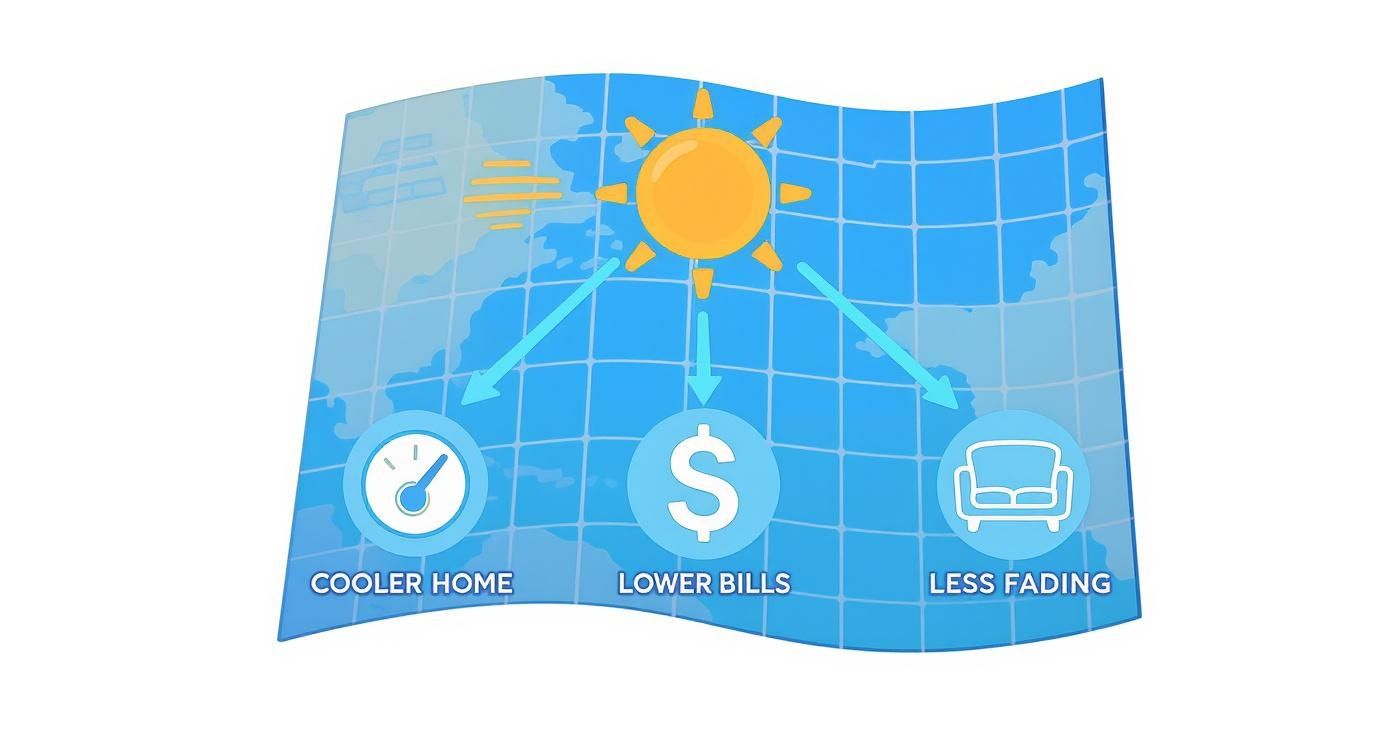
As you can see, blocking that initial blast of solar energy creates a domino effect. Your home stays cooler, your AC doesn't have to work nearly as hard, and your furniture is saved from the sun's damaging rays.
Getting a Handle on Performance Numbers
When you start looking at solar screens, you'll come across a few key numbers. These aren't just industry jargon; they’re the vital stats that tell you exactly how a screen will perform in the real world.
Here are the three big ones you need to know:
- Solar Blockage: This is the screen's raw heat-stopping power. A screen with 80% blockage stops 80% of the sun’s heat. A 90% screen stops even more. Simple as that.
- Openness Factor: This tells you how tightly the screen is woven. A lower number, like 10%, means a tighter weave. This blocks more heat but also lets in a little less natural light.
- UV Reduction: Think of this as the SPF rating for your home. Most quality solar screens offer over 90% UV reduction, which is fantastic for protecting your floors, furniture, and art from fading.
Finding the Sweet Spot for Your Home
So, which screen is right for you? It's all about finding the right balance between cooling power and visibility.
For most people, an 80% solar screen is the perfect middle ground. It provides a serious reduction in heat and glare while still giving you a great view of the outside. You’ll feel a massive difference in comfort without making your rooms feel dark.
But what if you have windows that get absolutely hammered by the afternoon sun? That’s where a 90% solar screen comes in. It's the maximum-strength option for those problem areas where heat is a constant battle. The view is a bit more diffused, but the trade-off is a room that stays dramatically cooler.
A solar screen’s biggest advantage is that it stops heat on the outside. This prevents the glass itself from getting hot and radiating warmth into your home. It’s a far more effective strategy than interior blinds or curtains, which only trap heat after it's already inside.
It can be really eye-opening to see what you're currently spending on cooling. Learning how to calculate energy consumption in your home helps put the potential savings from solar screens into clear focus. At Sparkle Tech Screen Service, we're here to help you pick the perfect screen to start cutting those numbers down.
Choosing the Right Material and Color
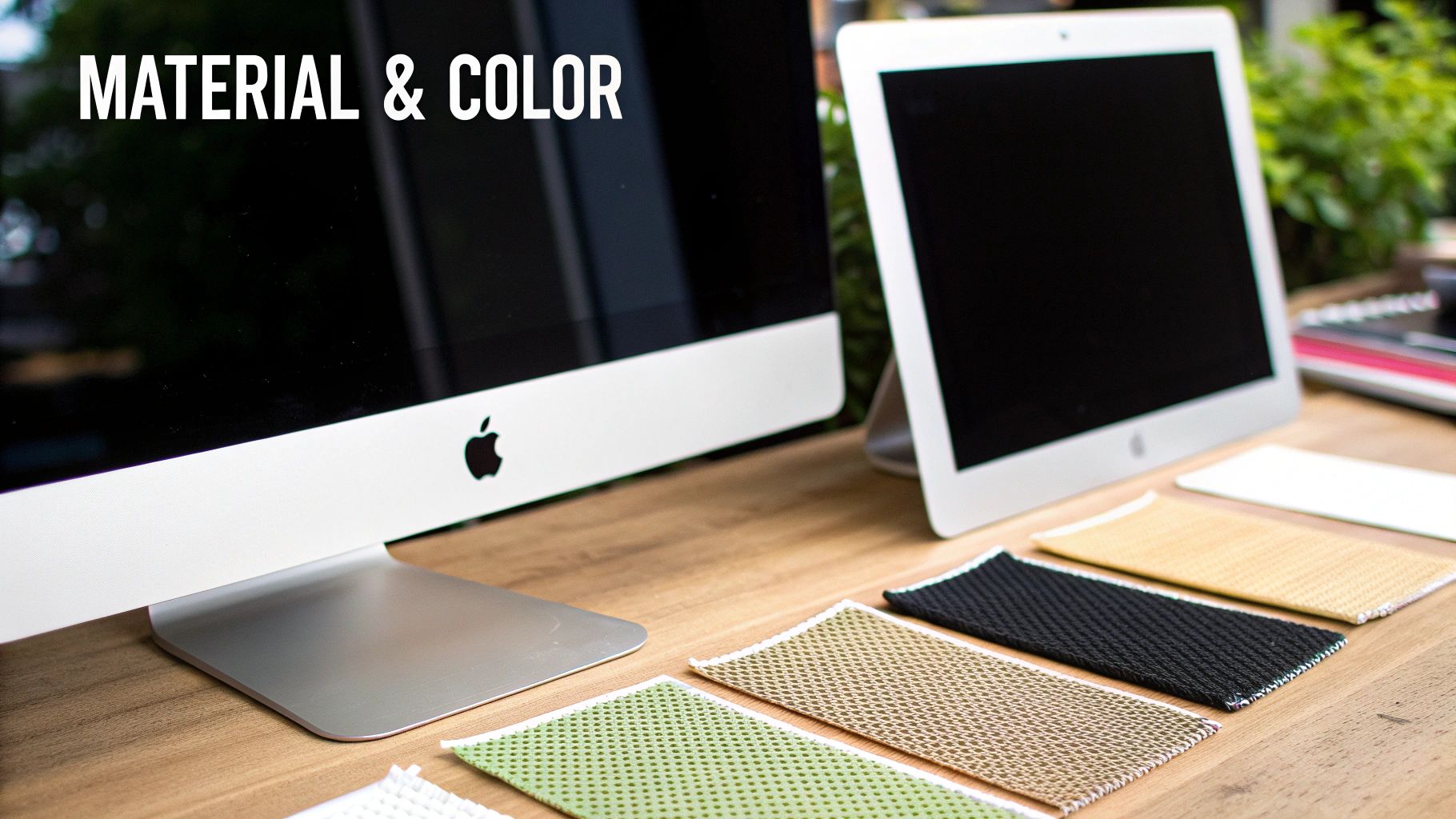
When you're picking out a sun-blocking window screen, the material and color are two of the biggest decisions you'll make. These choices don't just affect how the screens look on your home—they directly control how well they perform and how long they last. It's all about striking that perfect balance.
Let's start with what the screens are actually made of. High-quality solar screens typically come down to two core materials, and each has its own lane.
- Standard Fiberglass: Think of this as the reliable, budget-friendly workhorse. It offers solid performance and durability without breaking the bank, making it a great entry point for many homeowners.
- Vinyl-Coated Polyester: This is the premium, heavy-duty option. It’s incredibly strong and tear-resistant, built to withstand everything from kids and pets to harsh weather, which means it will last much longer.
While both get the job done, vinyl-coated polyester is a smart investment if you're looking for maximum strength and longevity. This focus on material science is what drives performance in the solar control industry. For example, specialized films that use vacuum-coating technology now command over 47.01% of the solar film market simply because they reflect so much solar radiation. You can discover more insights about solar control technology to see how deep the rabbit hole goes.
The Surprising Importance of Screen Color
Once you've landed on a material, it's time to pick a color. This might feel like a simple design choice, but it has a massive impact on your view and how the screen manages heat. It’s actually pretty counterintuitive.
Darker colors, like black and charcoal, are the undisputed champions of visibility. They absorb light and cut down on glare, which makes your view to the outside feel sharper and clearer. It’s the same principle as wearing a good pair of sunglasses.
On the other hand, lighter colors like grey or beige work by reflecting more solar heat away from the glass. They are great at bouncing heat back, but this reflection can sometimes soften the view and create a bit of its own glare.
Key Takeaway: For the clearest, most vibrant view and the best glare reduction, always go with a dark-colored screen like black or charcoal. If bouncing heat away is your absolute top priority and you don't mind a softer view, a lighter color can work.
Dark Screens vs Light Screens
Deciding between dark and light screens often comes down to what you value most. This table breaks down the core differences to help you choose the right fit for your home.
| Feature | Dark Colors (Black, Charcoal) | Light Colors (Grey, Beige) |
|---|---|---|
| View Clarity | Excellent, crisp, and high-definition | Good, but can be softer or more diffused |
| Glare Reduction | Superior. Absorbs light effectively. | Fair. Can create some reflective glare. |
| Heat Management | Absorbs heat and radiates it outward | Reflects heat away from the window |
| Daytime Privacy | Very effective from the outside | Effective, but slightly less than dark colors |
| Aesthetics | Tends to blend in and "disappear" | More noticeable on the window |
Ultimately, the best choice depends on what you want to achieve. Do you have a stunning backyard view you refuse to sacrifice, or is your main goal to reflect as much heat as possible from a sun-drenched wall? Answering that question will point you directly to the perfect color for your home.
Common Installation Types and Applications
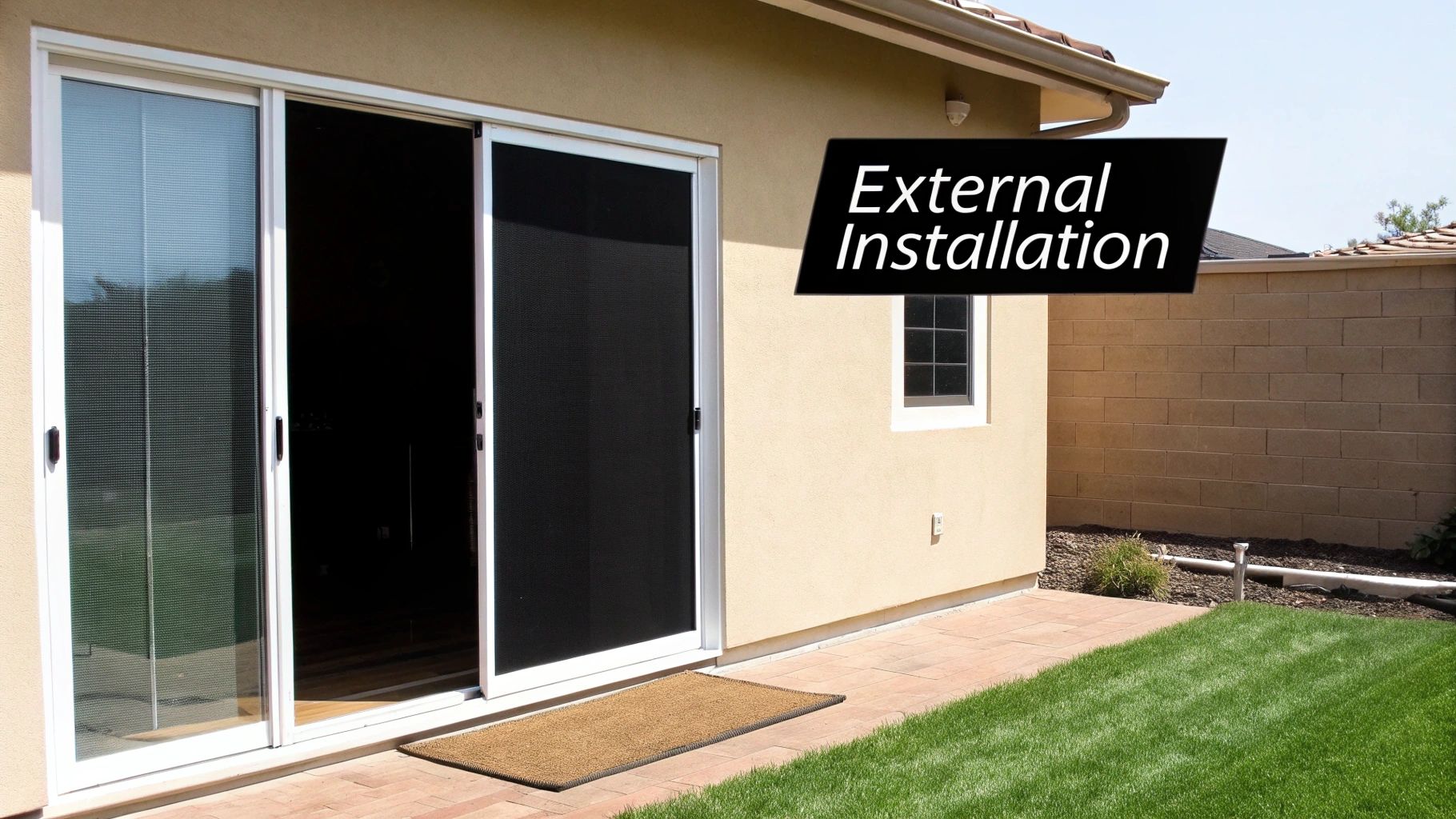
To really get why a window screen that blocks sun works so well, you need to understand where it goes. The single most important detail is that almost all solar screens are installed on the exterior of your home. This isn't just a style choice—it's the core of their effectiveness.
By mounting the screen outside, it stops solar energy long before it ever hits your window glass. This simple placement prevents the glass itself from getting hot and radiating that heat inside. Think of it as creating shade for your window. It’s a huge advantage over interior blinds or curtains, which only block the light after the heat has already passed through the glass.
Beyond Standard Windows
Sure, solar screens are a perfect fit for the usual single or double-hung windows, but their usefulness doesn't stop there. Since these screens are custom-built, we can make them work for just about any opening, including some of the most challenging spots in your home.
We see them used all the time for:
- Sliding Patio Doors: Those big glass doors are a massive source of heat. We build heavy-duty solar screen sliders that can handle the daily grind of foot traffic while dramatically cutting down on heat and glare.
- Enclosed Patios and Porches: A sun-blasted porch can be unbearable in the summer. Wrapping it in solar screen material turns that space into a shaded, comfortable retreat where you can actually enjoy the breeze without baking or swatting away bugs.
- Arched or Uniquely Shaped Windows: Don't assume your cool architectural windows have to be a source of high energy bills. Solar screens can be custom-made to fit arches, circles, and virtually any other non-standard shape you have.
This flexibility means you can solve heat problems wherever they pop up, making your entire home more comfortable and efficient.
The Critical Role of Professional Installation
I know the DIY route can be tempting, but when it comes to solar screens, a professional installation really pays off. The energy-saving power of these screens hinges on a perfect, gap-free fit. A small mistake in measurement can let in just enough heat and light to undermine the whole point.
A professional installer doesn't just hang a screen; they ensure it's measured with precision and mounted securely for a completely sealed fit. This is what guarantees you get the maximum energy savings and a clean, finished look.
For anything large like a patio door, or for complex custom shapes, getting a pro is essential. They have the experience and equipment to manage oversized frames and secure them properly against wind and weather. It’s that expert touch that delivers the powerful performance you’re paying for.
What to Expect for Your Project: Cost and Timeline
When you're looking into a window screen that blocks sun, one of the first questions is always about cost. It helps to think of this less as an expense and more as a home upgrade—one that actually pays you back over time by slashing those high energy bills and making your home far more comfortable.
So, what goes into the final price? A few things. The size of your windows is the biggest factor, naturally, since bigger windows mean more material and time. The screen material you pick matters, too. A high-performance 90% screen that's super durable will be a bigger investment upfront than a standard 80% screen, but it also delivers the biggest punch in terms of heat blocking. Lastly, tricky installations—like second-story windows or custom-shaped arches—can also affect the bottom line.
Mapping Out a Typical Project
Knowing how the process works from start to finish can take a lot of the stress out of a home project. We've refined our process over the years to be as clear and efficient as possible, getting you from a sweltering, sun-blasted room to a cool, comfortable space in no time.
Here’s a look at our typical timeline:
- Quick Quote: It all starts with a simple call or text. We'll chat about what you need and can usually give you a solid quote right over the phone.
- Precise Measurements: Once you give us the green light, we'll schedule a visit to get exact, professional measurements. This is a crucial step—a perfect fit is key to getting the best performance and a clean look.
- Custom Building: Back at our shop, we build each screen from scratch to fit your windows perfectly. No off-the-shelf solutions here.
- Professional Installation: The final step is bringing the finished screens to your home and installing them. Our crew makes sure every screen is secure and fitted just right.
We've built our whole operation around speed and quality. At Sparkle Tech Screen Service, we specialize in same-week service, so you can feel the relief almost immediately.
A Global Trend with Local Benefits
The push for better sun control isn't just a local thing; it's happening all over the world. In fact, the Asia-Pacific region became the largest market for solar control films in 2024, driven by massive urban growth in countries like India and China. As more people move to cities, the need for energy-efficient buildings skyrockets. You can actually read more about these global market trends and see how this technology is taking off.
What does this global demand mean for you? It means the technology keeps getting better and more affordable. We can now offer incredibly effective screens that bring instant comfort and long-term savings, often with a surprisingly fast turnaround. From the first call to the final installation, our goal is to get your home cooler in days, not weeks.
Common Questions About Sun Blocking Screens
Making a big decision for your home, like adding a window screen that blocks sun, always brings up a few questions. That's completely normal. You want to be sure you're making a smart choice for your home’s comfort, your energy bills, and how everything looks. So, let’s walk through the most common questions we get from homeowners every day.
We'll tackle the big ones head-on, from how they change the light in your rooms to what you can actually expect to see on your energy bill.
Will Solar Screens Make My Home Too Dark?
This is, without a doubt, the number one concern we hear. The reality? It’s a pleasant surprise for most people. Solar screens are engineered to cut the harsh, blinding glare, not plunge your rooms into darkness.
Think of it less like a blackout curtain and more like putting on a great pair of sunglasses. The world doesn't go black; it just becomes clearer and more comfortable on the eyes. An 80% screen, for instance, creates a soft, ambient light that's perfect for watching TV without glare, but still keeps the room feeling bright and open. If you want to let in as much natural light as possible, we can always go with a screen that has a higher openness factor. It's all about finding that perfect balance for you.
Can I Still Open My Windows With Them?
Absolutely. Solar screens fit onto the outside of your window frame, right where your old bug screens used to be. They don't get in the way of opening, closing, or locking your windows at all.
The screen stays put, blocking the sun and keeping bugs out, while you can let the fresh air in whenever you want. Even for those tricky windows that crank outward, we have special mounting hardware that ensures everything works just like it did before.
How Do Solar Screens Differ From Window Film?
It’s a great question because both are trying to solve the same problem, just in completely different ways. Window film is a thin sheet that gets applied directly to the inside of your window glass. Solar screens, on the other hand, are a tough mesh fabric installed on the outside.
The real magic is where the heat gets stopped. An exterior screen blocks and scatters the sun's heat before it ever has a chance to hit the glass. Window film does a decent job, but the glass itself still heats up and can radiate some of that warmth into the room. Solar screens are also more durable and can be easily removed for cleaning.
That external barrier is why solar screens are the powerhouse when it comes to pure heat reduction.
How Much Can I Realistically Save on Energy Bills?
The exact numbers can change based on your climate, which way your windows face, and your local power rates, but the savings are almost always significant. According to the U.S. Department of Energy, exterior solar screens can slash solar heat gain by a whopping 65% to 90%.
For homeowners here in sunny Arizona, that often translates to cutting cooling costs by up to 30%. The initial investment frequently pays for itself in just a few hot seasons, making it one of the smartest energy-saving upgrades you can make. It's a practical improvement that keeps paying you back, summer after summer.
Ready to feel the difference a cooler home can make? The team at Sparkle Tech Screen Service specializes in same-week service to bring you relief fast. Text or call us today for a quick quote and start enjoying a more comfortable home right away.


