


That whole "window screen replacement near me" search usually starts with a moment of annoyance. You're swatting at a mosquito inside your house, you spot a new tear in the screen that definitely wasn't there yesterday, or you just realize how faded and shabby they've become. These are the classic signs that your home's first line of defense is giving up.
Knowing When It’s Time for a Screen Replacement
Window screens do more than just keep bugs out. They're a key part of your home's comfort, can help with energy bills, and generally keep the outdoors out. But they don't last forever. Constant exposure to the elements, especially the brutal Arizona sun, eventually breaks down the mesh and can even warp the frames.
What starts as a tiny problem can quickly turn into a bigger one, letting in everything from dust to pests. Learning to spot the early warning signs can save you a lot of hassle down the road. It’s not always about a giant, obvious hole—sometimes the little things tell you it's time for an upgrade.
From Minor Flaws to Major Failures
The easiest thing to spot is visible damage, of course. We're talking rips, punctures, or holes in the mesh itself. A single small tear might be something you can patch, but if you're seeing multiple holes or the edges are starting to fray, it means the material is getting old and brittle. If you gently press on the screen and it feels stiff or makes a crackling sound, it’s lived a full life.
Don't forget to check the frame and the spline. The spline is that little rubber cord tucked into the frame's channel that holds the screen material tight. If that spline is cracking, shrinking, or popping out, your screen is going to sag. That sag creates gaps, and pests see that as a welcome mat. Likewise, a bent or warped aluminum frame just won't seal properly, making a full replacement the only real fix.
For a lot of folks, it’s not one big tear that finally makes them call us. It’s the combination of faded mesh that isn't blocking the sun anymore and a loose frame that's letting in a constant stream of dust and bugs.
Beyond the Obvious Damage
Sometimes, the screens look okay from a distance, but they just aren't doing their job anymore. Think about these common situations—if they sound familiar, it's probably time to call a pro:
- Your energy bills are creeping up. Do certain rooms feel like an oven in the afternoon? Old, worn-out screens don't do much to block solar heat, which means your air conditioner has to work that much harder. Swapping them for new solar screens can make a huge difference you can actually feel.
- You're finding more uninvited guests inside. If you're suddenly waging a war against flies, mosquitoes, or no-see-ums in your living room, your screens are the likely point of entry. Even a tiny gap from a bad spline is all they need.
- The view is getting blurry. Over the years, old screens can get a grimy, oxidized film that just won't wash off. It can make your whole view look hazy. Fresh, new screens bring back that sharp, clear view of your backyard.
When you start noticing a few of these issues at once, patching things up is just kicking the can down the road. Investing in a professional window screen replacement near me is the smart move to get your home's comfort and protection back where it needs to be.
Choosing Between A Simple Repair Or A Full Replacement
So, you've noticed a problem with your window screens. Now what? The big question is whether you can get away with a simple repair or if it's time to bite the bullet and go for a full replacement. The answer isn't always as simple as looking at the size of the tear. It really comes down to the age of your screens, the condition of the frames, and what you want for your home in the long run.
A tiny, clean hole in a screen that's only a year or two old is a great candidate for a quick patch or rescreening (where we just replace the mesh). But think of that as a band-aid. The real decision comes from stepping back and looking at the health of the entire screen assembly.
Evaluating The Frame And Hardware
The metal frame is the backbone of your window screen. If that's compromised, a fresh sheet of mesh won't do you any good. Before you even think about a repair, give the frame itself a good, honest inspection. Is it bent, warped, or looking a little sad? Years of being taken in and out and baked by the sun can make aluminum frames lose their shape, leaving you with gaps that are an open invitation for pests.
Here's what I tell homeowners to look for:
- Bent Corners: Take a close look at where the frame pieces connect. If those corners are pulling apart or bent out of shape, the screen will never sit flush against your window.
- Warped Edges: An easy test is to lay the screen on a flat surface like your driveway. If it wobbles like a bad restaurant table, the frame has lost its structural integrity.
- Damaged Hardware: Check out the little pull tabs and tension springs. If they're snapped off or missing, the screen becomes a pain to handle and might not even stay in place securely.
If you're nodding along to any of these points, a full replacement is really the only way to go. A professional will build a brand-new screen from scratch, ensuring the frame is sturdy, straight, and fits your window opening like a glove.
This decision tree is a great visual for walking through that initial thought process.
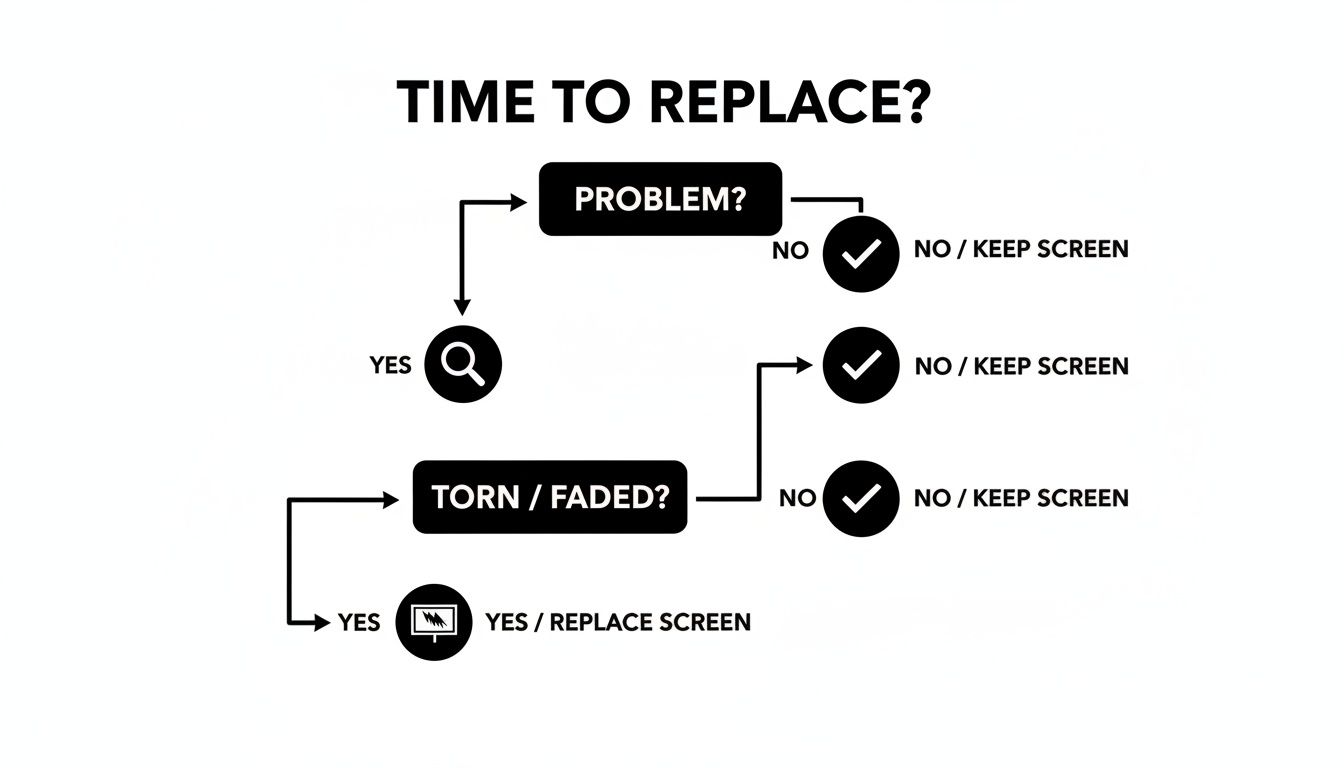
As you can see, once you spot a problem, the actual condition of the screen—whether it's torn, faded, or otherwise damaged—is what really points you toward needing a replacement.
To help you weigh the options, here’s a quick breakdown of what you’re looking at with each choice.
Screen Repair vs Full Replacement A Quick Comparison
| Factor | Screen Repair (Rescreening) | Full Screen Replacement (New Frame & Mesh) |
|---|---|---|
| Best For | Minor damage to the mesh on a relatively new, straight, and sturdy frame. | Bent, warped, or broken frames; old screens (10+ years); or when upgrading screen material. |
| Cost | Lower upfront cost. You're only paying for new mesh and the labor to install it. | Higher upfront investment. You're paying for a new custom-built frame, hardware, and mesh. |
| Timeline | Very fast. Often can be done on-site in a single visit if the frame is standard. | Slightly longer. The new frame needs to be custom-measured and built, which may take a few days. |
| Long-Term Value | Good for extending the life of a newer screen by a few years. A short-term solution. | Excellent. Provides a brand-new, perfectly fitting screen that will last for many years. It's a long-term investment. |
| Material Options | Limited to standard mesh types that work with the existing frame. | Wide range of options. The perfect time to upgrade to pet-resistant, solar, or better-visibility screens. |
Ultimately, choosing a replacement when the frame is compromised is the smarter financial move in the long run. It prevents you from paying for the same job twice.
When Rescreening Makes Sense
Rescreening is simply the process of taking out the old, torn mesh and the rubber spline that holds it in, then stretching new material into that same frame. It’s a fantastic, budget-friendly choice, but only if the frame is still in prime condition.
You should consider rescreening when:
- The frame is perfectly straight, strong, and shows no signs of corrosion.
- The damage is only to the mesh itself (like a tear or sun-fading).
- Your screens are just a few years old and the mesh failed for some reason.
But be careful. If your screens are over a decade old, the mesh is probably brittle and the spline that holds it in has likely turned to hard plastic. Even if the frame looks okay, a full replacement is almost always a better value.
A common mistake is putting brand-new mesh into a ten-year-old frame. The frame might fail just a year or two later, meaning you'll have to pay for the work all over again.
The Long-Term Value Of A Full Replacement
Opting for a full replacement isn't just about fixing a problem; it's an opportunity for a serious upgrade. This is your chance to improve your home’s comfort, energy efficiency, and durability in ways a simple repair just can't. When people search for “window screen replacement near me,” they’re often looking for a solid return on investment. While national remodeling data shows window replacement can have an ROI of 70–80% at resale, high-quality screens are a huge part of that. They protect the windows and improve the home's comfort and perceived value. In fact, a major driver in the window and door market growth is energy efficiency, and that’s where modern screens really shine.
The biggest perk of a full replacement is the ability to upgrade your screen material. Instead of just getting new standard fiberglass, you can choose a material that fits your life. Think about options like pet-resistant screens, which are seven times stronger than normal mesh, or solar screens that can block up to 90% of the sun's intense heat. These high-performance materials need the tension and support of a new, robust frame to work correctly, making a full replacement the only logical path for a true upgrade.
How to Find a Trusted Local Screen Professional
Googling “window screen replacement near me” is the easy part. You’ll get a huge list of companies. The real challenge? Sifting through that list to find someone who’s not just available, but actually good at what they do. Finding the right pro goes way beyond a quick glance at star ratings, especially here in Arizona where our screens take a serious beating.
Before you even pick up the phone, look for proof of their work. A legitimate company will have a photo gallery on their website or social media. Don’t just scroll through—really look at the pictures. Are the lines clean? Are the corners tight? Do the screens sit perfectly flush in the window frames? You’re looking for craftsmanship, not just a quick snapshot.
Specialist Versus General Handyman
Your search results will probably be a mix of dedicated screen companies and general handymen. While a handyman might seem like a convenient, one-stop-shop, I always recommend going with a specialist. A dedicated screen professional lives and breathes this stuff. They know the subtle differences in frame types, spline sizes, and mesh materials that a generalist simply won’t.
This is a huge deal in places like Phoenix, Scottsdale, and Mesa, where the sun is relentless. A specialist will guide you toward the right solar screen that will actually make a dent in your cooling bills. A handyman, on the other hand, might just have standard fiberglass mesh on their truck. A specialist’s focused experience means a better fit, a longer-lasting product, and advice that’s actually relevant to our climate.
For a deeper look into finding the right fit, our guide on how to find trusted screen repair near you today has even more tips.
Vetting Potential Companies Online
Once you’ve got a short list, it’s time for some basic due diligence. First, check their website for a clear service area map or a list of towns they cover. It’s incredibly frustrating to get a great quote only to find out you’re outside their travel zone.
The whole "window screen replacement near me" world is surprisingly local. In fact, the window installation industry in the U.S. is projected to hit $6.7 billion by 2025, spread across an estimated 25,194 businesses. That's a lot of small, local players, which is why you have to confirm they actually work in your specific neighborhood. If you're curious how these companies get in front of you, guides on local SEO strategies for contractors offer a fascinating peek behind the curtain.
A professional company's website should feel like a resource. Look for clear information on the types of screens they offer, their process, and an easy way to request a quote. If the site is sparse or confusing, it can be a red flag.
Questions To Ask During The First Call
That first phone call is where you can really separate the pros from the amateurs. A trustworthy provider will be happy to answer your questions and won’t rush you off the phone.
Keep this list handy when you call:
- What screen materials do you offer? You want to hear options beyond just standard fiberglass. Do they carry pet-resistant or solar screens?
- Do you offer a warranty on your work and materials? A confident pro will always stand behind their product.
- What is your process for providing a quote? Do they need to visit for precise measurements, or can they quote based on your numbers?
- What is your typical turnaround time? This is key for setting realistic expectations.
- Are you insured? This is a non-negotiable. Anyone working on your property needs to be properly insured.
Asking these direct questions helps you quickly vet who you’re talking to. The goal isn’t just to get new screens; it’s to find a reliable partner who is transparent, knowledgeable, and delivers a quality product that will last.
Comparing Screen Materials: Bug, Solar, And Pet Screens
Once you’ve decided a full replacement is the way to go, you get to the fun part: picking your new screen material. This is where a simple search for "window screen replacement near me" opens up a real opportunity to upgrade your home’s comfort and even its efficiency. Sure, the standard fiberglass screen does its job, but today’s materials offer specialized perks for everything from cutting down energy bills to withstanding the chaos of playful pets.
The material you choose has a direct impact on your daily life, influencing the temperature in a room, the clarity of your view, and your peace of mind. It’s no longer just about keeping bugs out—it's about customizing your home's protection to match your life.
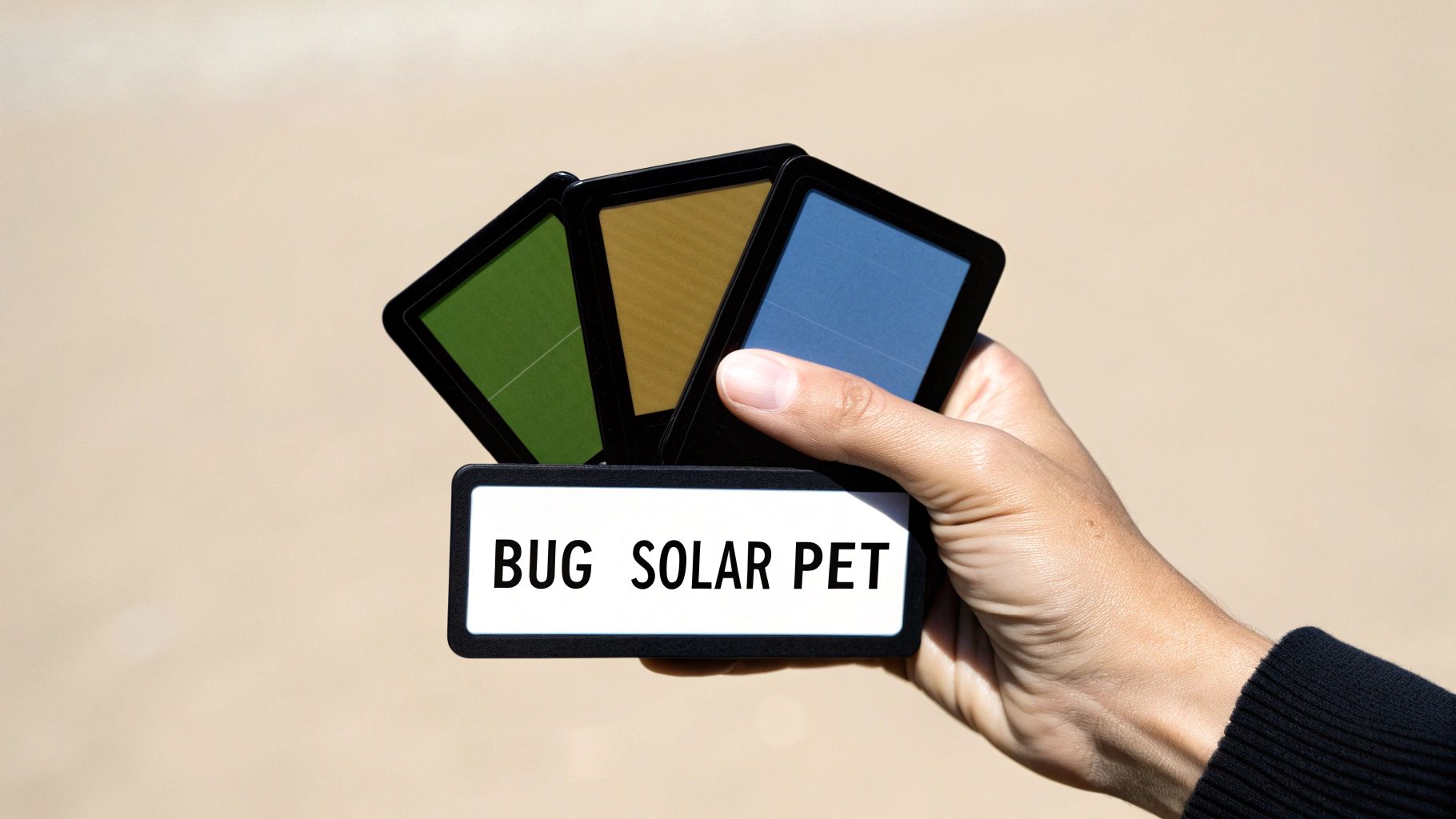
Standard Fiberglass Bug Screens
Think of this as the reliable workhorse of the screen world. Standard fiberglass mesh is what you’ll find on most homes, and for good reason. It's affordable, flexible, and gets its main job done perfectly: keeping insects out while letting the breeze flow through.
Another plus is that fiberglass is resistant to rust and corrosion. The downside? It's the least durable of the common options. Over time, sun exposure can make it brittle, and it's pretty susceptible to tears from sharp objects, enthusiastic pets, or even a particularly strong gust of wind.
- Best For: General use on windows that aren't baked in direct sun or in the path of pets and small children.
- Key Feature: Offers solid visibility and airflow without breaking the bank.
- Main Drawback: It has the shortest lifespan and is the easiest to damage.
Pet-Resistant Screens
If you have dogs, cats, or even curious toddlers, pet-resistant screening is a lifesaver. This stuff is made from an incredibly tough vinyl-coated polyester, which makes it about seven times more durable than standard fiberglass. It’s engineered from the ground up to resist tearing and puncturing from claws, paws, and general roughhousing.
Now, that incredible toughness does come with a couple of trade-offs. The mesh is thicker, which can slightly reduce visibility and airflow compared to a standard screen. For a patio door or a low window in a busy area, however, that's a small price to pay for finally solving the torn-screen problem.
We hear it all the time from homeowners: "I had to replace my patio screen door mesh every year because of my dog." After they switch to a pet screen, they don't have to think about it for years. It just works.
High-Performance Solar Screens
Living somewhere with intense sun makes solar screens less of a luxury and more of a necessity. These screens aren't just for shade; they're engineered with a special weave designed to absorb and dissipate a huge chunk of the sun's heat and glare before it even hits your window glass. Depending on the weave's density, a good solar screen can block anywhere from 80% to 95% of solar heat.
That makes a real difference inside your home and on your energy bills. By cutting down on solar heat gain, your AC unit doesn’t have to run constantly, leading to noticeable savings, especially during the hottest months.
On top of that, solar screens are fantastic for protecting your belongings. They block the damaging UV rays that cause carpets, furniture, and artwork to fade. They also provide excellent daytime privacy—it’s tough to see in from the outside, but you can still see out clearly from inside your home.
For a deeper dive into all the options, check out our guide on the best window screen material to find the perfect fit.
Choosing The Right Screen Material For Your Home
Feeling a little overwhelmed by the choices? Don't be. Most of the time, the right material becomes obvious when you think about the specific window's location and what it deals with day-to-day.
This table gives a quick rundown to help you compare.
| Screen Type | Primary Benefit | Best For | Relative Cost |
|---|---|---|---|
| Fiberglass Bug Screen | Affordability and good airflow. | Standard windows in low-traffic areas without direct sun exposure. | $ |
| Pet-Resistant Screen | Extreme durability against tears and punctures. | Patio doors, ground-floor windows, and any area accessible to pets or small children. | $$ |
| Solar Screen | Blocks solar heat, reduces energy costs, and provides daytime privacy. | Windows facing west or south that receive intense, direct sunlight. | $$$ |
Remember, you don't have to pick just one type for your whole house. In fact, the most effective strategy is often to mix and match. Put tough solar screens on the sun-beaten west side of your home, use a pet screen on the back patio door, and stick with standard fiberglass for the shaded windows on the north side. This custom approach ensures you get the best performance right where you need it most.
What To Expect From Your Screen Replacement Service
So, you've decided to call in the pros for your window screens. Smart move. Knowing what happens next can take all the stress out of a home repair project, turning it into a surprisingly smooth and satisfying experience.
When you find a great local service, the whole operation is really designed around you. From the first call to the final walkthrough, everything should feel clear, straightforward, and efficient. Let’s walk through what a typical, customer-focused process looks like so you know exactly what to expect.
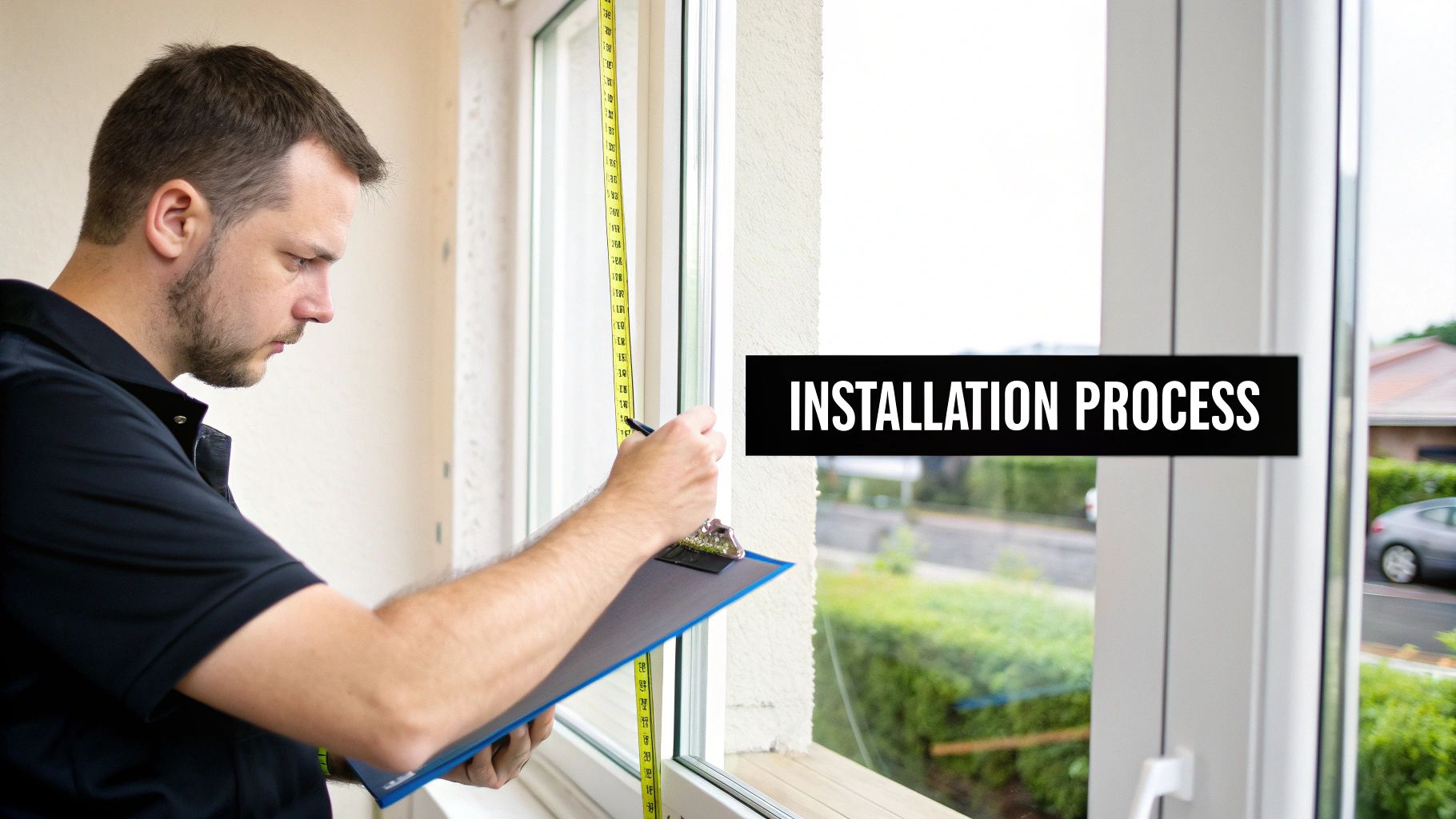
The Initial Contact and Quote
It all starts with a phone call or an online form. To get a useful, accurate estimate right off the bat, it helps to have a little info ready. Don't worry about pulling out a tape measure yet—a rough idea is all that's needed at this point.
Try to have this information handy:
- A quick screen count: Just count how many window screens and sliding screen doors need work.
- What you think you need: Are you just rescreening (new mesh in your old frames) or do you need brand new frames and all?
- Any special materials: Mention if you’re thinking about upgrading to something specific, like durable pet-resistant screens or solar screens to block heat.
With these details, any good screen company can give you a solid ballpark estimate. This gives you a clear sense of the potential cost before you even schedule a visit.
The On-Site Measurement Appointment
Once you're comfortable with the initial quote, the next move is to schedule an on-site measurement. A technician comes to your home to get exact, laser-precise measurements for every opening. This is easily the most critical part of the whole process. Custom-built screens fit perfectly, which means no annoying gaps for bugs to sneak through.
During this visit, the technician will also:
- Confirm your material choices in person.
- Take a look at the condition of your existing window frames.
- Answer any last-minute questions you might have.
This hands-on attention to detail ensures the final product is made to the exact specifications of your home—something you’ll never get from a big-box store.
A lot of our customers are genuinely surprised by how convenient this all is. We often take the old screens, build beautiful new ones back at our shop, and then come back for a quick, clean installation. Your daily routine is barely interrupted.
Off-Site Fabrication and Installation Day
With the measurements secured, the real magic happens back at the workshop. Your new screens are built from scratch by experienced pros using professional-grade equipment. Building them off-site is the key to maintaining high quality and keeping the final installation on your property quick and clean.
When your new screens are ready, you’ll get a call to schedule the installation. A little prep work on your end can make this go even faster. Just try to ensure there is clear and easy access to the windows. Moving a couch or some plants out of the way helps the installer work safely and efficiently.
The installation itself is usually very quick. Since the screens were custom-made to fit, they just pop right in. The technician will do a final check to make sure every screen is seated properly and looks perfect. This streamlined approach minimizes the disruption to your day and gets your home looking great in no time.
It’s this kind of professional service that’s driving the global windows and doors market, which is projected to hit $355.1 billion by 2035. As homes age, more and more homeowners are looking for fast, reliable local screen services. To learn more, check out the full research on the windows and doors market size.
Answering Your Window Screen Questions
After you've looked at the signs of failing screens, weighed repair against replacement, and considered the different materials, a few practical questions usually pop up. This is where we get into the nitty-gritty details that homeowners ask us about every day.
Think of this as the final chat you'd have with a pro before making a decision. Getting these answers straight ensures you know exactly what to expect and can move forward with confidence.
How Long Should My New Screens Last?
This is a big one, especially in a tough climate like ours in Arizona. The lifespan of your new screens really boils down to two things: the material you pick and how much sun it gets.
- Standard Fiberglass Screens: For a typical fiberglass bug screen, you can reasonably expect 7-10 years of good service. Keep in mind, though, a screen on a west-facing window getting hammered by the afternoon sun will likely be on the shorter end of that range.
- Solar Screens and Pet Screens: These are the heavy hitters. Premium solar screens and tough pet-resistant screens are built to last, often giving you 10-15 years, sometimes even more. Their entire design is focused on fighting off UV rays and handling more physical wear and tear.
Don't forget that a professional installation makes a huge difference. A screen that's installed with the right tension in a quality frame is always going to outlive a flimsy, poorly-fitted one.
Will Solar Screens Make My Rooms Too Dark?
It's a totally fair question. You want to cut the heat, not feel like you're living in a cave. The truth is, modern solar screens are designed to strike a great balance between blocking heat and letting in natural light.
Most people find that instead of making a room "dark," solar screens simply cut down on the harsh, annoying glare. It’s a lot like putting on a nice pair of sunglasses—the world doesn't go black, it just gets clearer and more comfortable on your eyes.
Screens with an 80% blockage rating are fantastic for most homes, offering a perfect blend of heat reduction and visibility. If you need maximum heat relief, a 90% screen will be a bit darker, but the boost in comfort and energy savings is a trade-off many find well worth it.
We hear this all the time: homeowners are shocked when they realize they can finally leave their blinds open all day after getting solar screens. The screens provide fantastic daytime privacy and cut the glare so effectively that the room feels bigger and more usable.
What Kind Of Maintenance Do New Screens Need?
Great news here—new window screens are incredibly low-maintenance. All they really need is a simple cleaning once or twice a year to keep them looking sharp and working well.
Here’s a simple routine that does the trick:
- First, grab a vacuum with a soft brush attachment and gently go over the screen to get rid of loose dust and cobwebs.
- Mix a little bit of mild soap with warm water in a bucket. Stay away from harsh chemicals.
- Using a soft cloth or sponge, gently wipe down both sides of the screen mesh.
- Rinse it all off with a hose on a low-pressure setting.
- Just let them air dry completely, and you're all set.
This quick cleaning doesn’t just make your view better; it also prevents grime from building up and slowly damaging the screen material, helping you get every last year out of your investment.
Can I Replace Just One Damaged Screen?
Of course. You absolutely do not have to replace every screen at once. If a stray baseball takes out one screen but the rest are in good shape, a pro can easily build a single, perfect replacement that matches the others.
The only time to reconsider is if your screens are all the same age. When one starts getting brittle and failing from sun damage, it's usually a warning sign that the others will follow suit soon. In that situation, it’s often more efficient and budget-friendly to replace them all at once. You'll save on paying for multiple service calls and get a clean, uniform look for your whole house. If you're weighing the options, our guide on the factors that influence window screen replacement cost offers a detailed breakdown to help you decide.
Ready to enjoy clear views, fresh air, and a more comfortable home? The team at Sparkle Tech Screen Service is here to provide fast, professional screen replacement with a focus on quality and customer satisfaction. Get a quick quote and enjoy same-week service today.


