


Sliding French door screens give you the best of both worlds: fresh air without the bugs. They’re a practical, elegant solution that marries the classic charm of French doors with the convenience we all want today. The best part? Modern versions, especially the retractable kind, are designed to practically disappear, so they don't mess with your home's aesthetic.
Why a Sliding Screen Is the Perfect French Door Upgrade
There's nothing quite like throwing open a set of French doors. They create this grand, inviting connection between your indoor and outdoor spaces, flooding your home with light and creating a fantastic cross-breeze. That double-wide opening is a beautiful thing… until the flies, mosquitoes, and every other critter in the neighborhood decide to invite themselves in.
This is exactly where a sliding screen system comes in. It’s the missing piece of the puzzle.
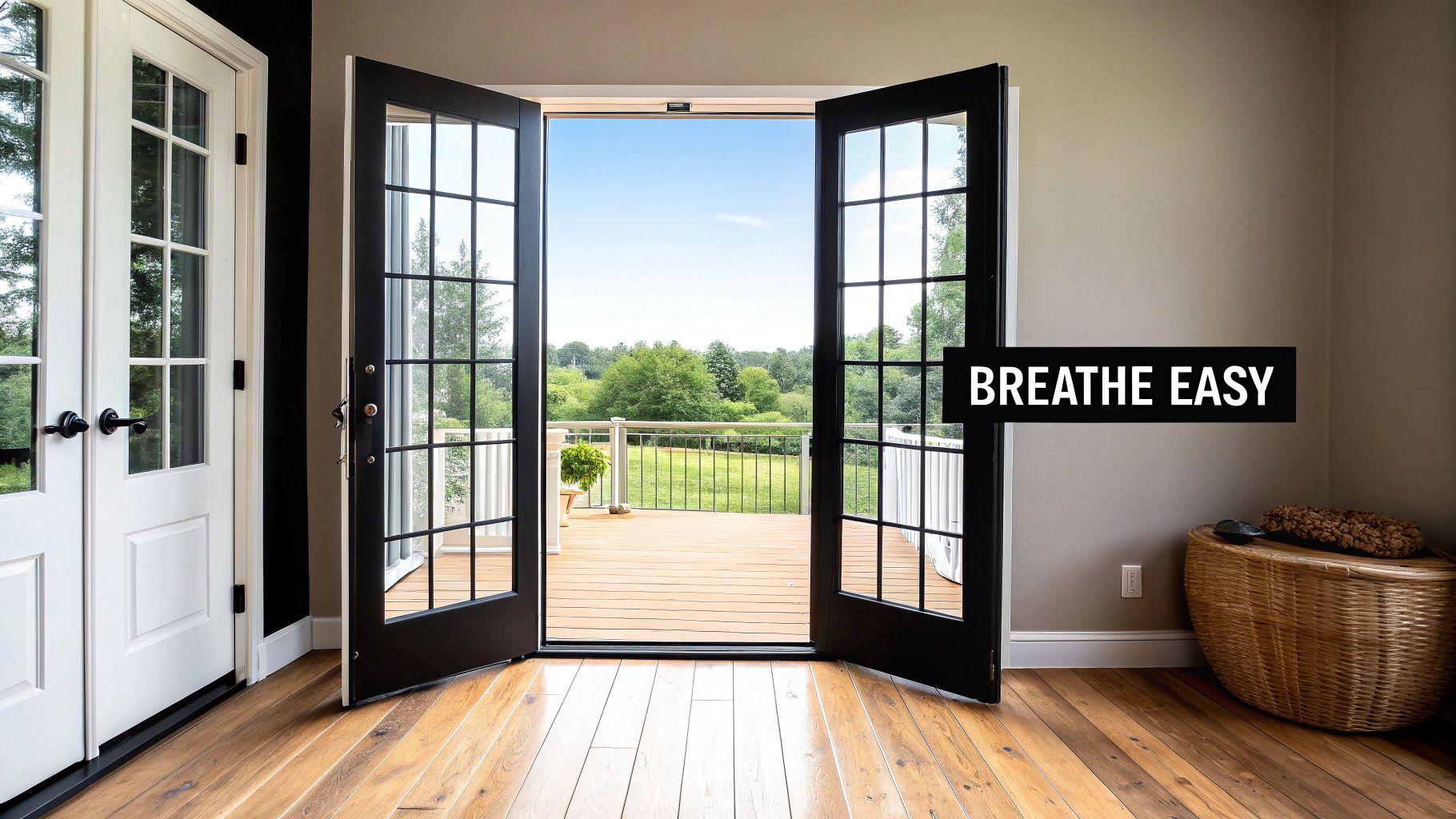
You get an instant, effective barrier that lets you enjoy everything you love about your French doors, with none of the downsides.
The Best of Both Worlds
I hear it all the time from homeowners: "I don't want to ruin the look of my beautiful French doors." It's a valid concern. Old-school hinged screen doors are often clumsy, they swing out into your living space, and they're always there, obscuring the view. But modern sliding screens are a completely different animal, especially retractable models.
- Seamless Integration: These screens live in a discreet housing mounted on the side of your door frame. When you're not using them, they retract right into it, becoming almost invisible.
- Preserved Aesthetics: You keep the clean lines and architectural beauty you chose your French doors for in the first place. The screen is there when you need it and gone when you don’t.
- Enhanced Functionality: Get a completely clear view and an easy walk-through when the screen is open, and total protection from pests when it’s pulled across.
This blend of style and function isn't just a niche idea; it's a major trend. The global market for retractable screens is already worth around USD 371.5 million and is expected to climb to nearly USD 596.54 million by 2031. It’s clear that homeowners are looking for smart, energy-efficient ways to improve natural ventilation. You can dig into the retractable screen market trends yourself to see just how popular these upgrades have become.
Key Takeaway: You don't have to choose between the beauty of your French doors and a comfortable, bug-free home. A sliding screen system is a sophisticated solution that gives you the best of both without any compromise.
Immediate Practical Benefits
Beyond just keeping bugs out, a good sliding screen system delivers some real perks right away. It genuinely changes how you use your living space, making it more comfortable and enjoyable every day.
Think about the instant improvements:
- Better Natural Airflow: On those perfect spring and fall days, you can turn off the A/C and let cool breezes flow through your home, saving energy and money.
- Uninterrupted Indoor-Outdoor Living: It creates a truly seamless flow to your patio or deck. This is a game-changer for backyard barbecues, parties, or just relaxing with the family.
- Protection from Pests: A quality screen is your first line of defense against everything from annoying gnats and flies to evening mosquitoes.
In the end, a sliding screen isn't just a small addition. It's an upgrade that enhances your home’s value and, more importantly, your daily quality of life.
Finding the Right Sliding Screen for Your French Doors
Choosing a screen for your French doors isn't as simple as just picking one off the shelf. The best fit really depends on how you live. Think about how often you use the doors, your budget, the look you're going for, and even whether you have pets clawing at the door to get in or out. Let's walk through the main types so you can find the perfect match.
It's no surprise that homeowners are looking for smart solutions like these. We all want to blend those classic, elegant architectural features with modern, everyday convenience. The global market for French patio doors is huge—valued at around USD 1.9 trillion—which just goes to show their timeless appeal. In fact, hinged doors, the classic style we're talking about, make up a whopping 64% of that market. This trend points to a real desire for upgrades like sliding screens that give us fresh air and better energy efficiency without messing up the style. You can dig deeper into the French patio door market insights on futuremarketinsights.com.
The Most Popular Choice: Retractable Screens
Hands down, retractable screens are the most elegant and popular solution for French doors today. The magic is in the design: one or two screen panels roll up into a slim, discreet housing mounted vertically on the sides of your door frame. When you don't need them, they vanish, giving you a completely unobstructed view.
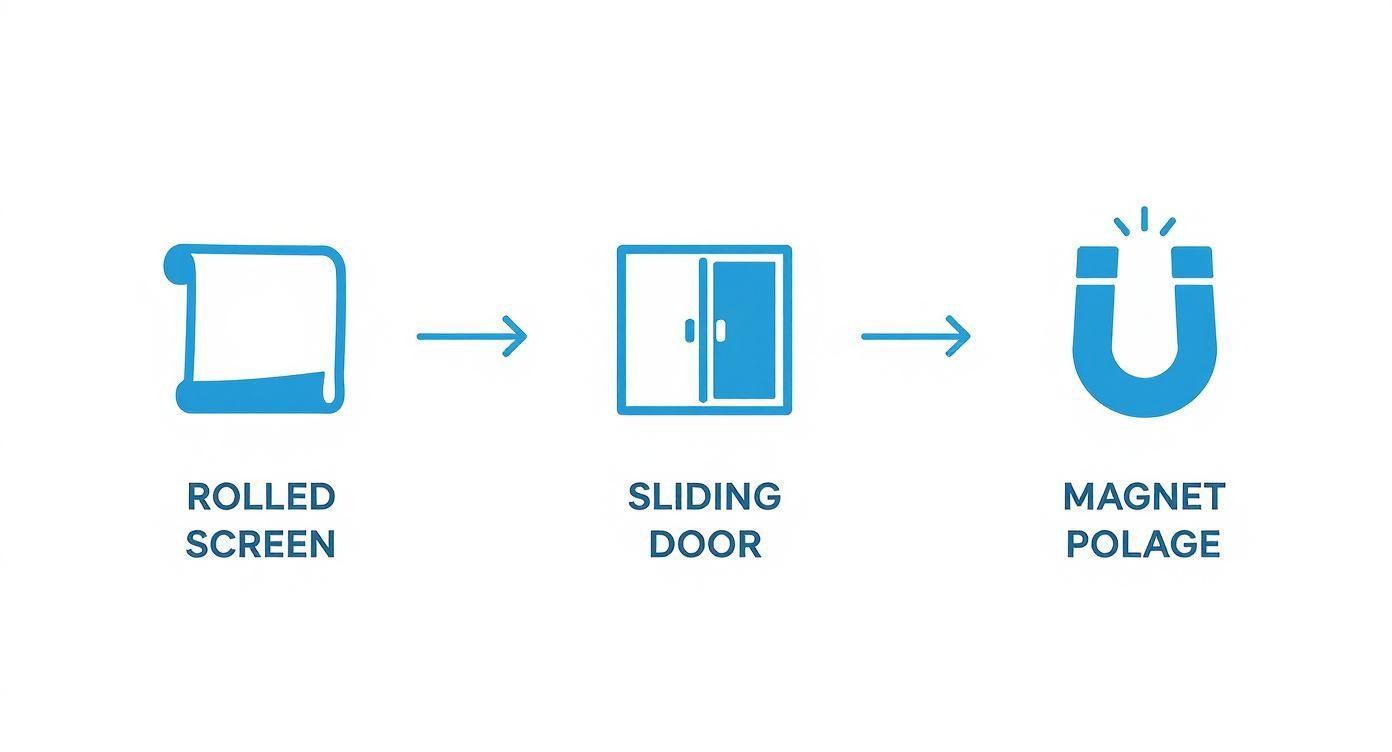
- Single Retractable Screen: This setup uses one wide screen panel that pulls across the entire double-door opening. It's a fantastic choice for a super clean, minimalist look, but it works best on openings that aren't excessively wide.
- Double Retractable Screen: This is the go-to for most French doors. You get two screen panels that pull out to meet in the middle, usually locking together with a simple magnetic strip. It feels really natural because you're mimicking the motion of opening and closing the doors themselves.
If your French doors are a main feature, like the entrance to your patio or deck, a retractable system is the way to go. You invested in beautiful doors for a reason—this is the best way to keep that view pristine.
A More Traditional Route: Sliding Screen Panels
You've definitely seen these before. They're basically the classic patio screen doors we all grew up with, just adapted for a double-door setup. This system requires installing tracks at the top and bottom of your door frame for two screen panels to slide back and forth on.
While they get the job done, they're not as common for true French doors. The main drawback is that one panel is always fixed in place, which means you can only ever open up half of your doorway. They're also always visible, which can take away from that grand, wide-open feel that makes French doors so special. On the plus side, they're incredibly durable and often a more budget-friendly option than a custom retractable system.
Quick and Easy (But Temporary): Magnetic Screens
You've probably seen the "as seen on TV" ads for these. Magnetic screens are the simplest option out there. They're just two mesh panels that hang from the top of the door frame with weights at the bottom. A line of magnets down the center seam allows them to snap shut behind you, which is handy for kids or when your hands are full.
My Two Cents: Magnetic screens are a great temporary fix. They're incredibly cheap and you can install them in minutes, making them perfect for rental properties or as a stop-gap measure. But be realistic—they are not a long-term solution and their durability just can't hold a candle to a proper framed screen.
To make things a little easier, here's a quick rundown of how these options stack up against each other.
Comparison of Sliding French Door Screen Types
| Screen Type | Best For | Pros | Cons | Average Cost |
|---|---|---|---|---|
| Double Retractable | Preserving views on high-traffic doors | Disappears when not in use; feels natural; protects from insects | Higher initial cost; professional installation recommended | $500 – $1,500+ |
| Single Retractable | Minimalist aesthetic on standard-width doors | Clean, seamless look; easy to operate | Can be difficult to operate on very wide openings | $400 – $1,200 |
| Sliding Panels | Budget-conscious and high-durability needs | Very durable; lower cost than retractable | Always visible; only opens half the doorway | $200 – $600 |
| Magnetic Screen | Temporary situations, rentals, or low-traffic doors | Extremely low cost; DIY installation; hands-free entry | Not durable; can look messy; less effective at sealing | $20 – $50 |
Choosing the right type is the biggest decision, but the materials you pick are just as important for making sure your new screen lasts.
Don't Overlook the Materials: Frame and Mesh
Beyond the style of the screen, the actual materials used for the frame and the mesh itself will make a huge difference in performance and longevity.
Frame Materials
The housing and tracks for your screen will typically be either aluminum or vinyl.
- Aluminum: This is the premium choice, and for good reason. It’s strong, lightweight, and won’t rust. Most are powder-coated, which gives you a tough finish that resists chipping and fading, making it a great investment for any climate.
- Vinyl: Vinyl is a solid budget-conscious option. It's naturally resistant to moisture, so you don't have to worry about rust. The downside is that it can become brittle and crack over time, especially if you live somewhere with extreme heat, cold, or intense sun.
Mesh Options
The screen fabric itself can also be customized for your needs.
- Fiberglass Mesh: This is your standard, all-purpose mesh. It gives you good visibility and airflow and is pretty affordable. It’s the default for most screen doors.
- Pet-Resistant Mesh: If you have a dog or cat, this upgrade is a no-brainer. It’s a vinyl-coated polyester that’s about 7 times stronger than standard fiberglass, designed to stand up to claws and paws.
- Solar Mesh: This is a specialty mesh designed to block a good chunk of the sun's heat and UV rays. It's a great choice for south-facing doors, as it can help keep your home cooler and protect your floors and furniture from fading. The only trade-off is slightly less visibility and airflow compared to standard mesh.
A Practical Guide to Measuring and Installation
Alright, you've picked out the perfect screen. Now for the fun part: getting it installed. This is where you get to see it all come together, but a smooth installation all comes down to one thing—getting your measurements right from the start.
Taking a few extra minutes to be precise here will save you a massive headache later on. Let's walk through how to do this like a pro, so your new sliding French door screens glide perfectly from day one.
Getting Your Measurements Right
This is the most critical part of the entire project. Seriously, measure twice, cut once. A small error here can throw everything off. Grab a good quality steel tape measure (not a flimsy cloth one), a notepad, and a pencil.
You need to account for any imperfections in your door frame, because almost no frame is perfectly square.
- For the Width: Measure across the top, middle, and bottom of the door opening.
- For the Height: Do the same thing, measuring on the far left, in the center, and on the far right.
- Always Use the Smallest Number: This is key. For both the width and the height, you'll use the smallest of the three measurements you took. This guarantees the screen frame will fit, even in the tightest spot of the opening.
If you're new to this kind of project, getting a feel for the basics is a great idea. There are some good general guides on how to accurately measure for window treatments that can build your confidence.
Inside-Mount Versus Outside-Mount
Next, you have to decide where the screen will sit. This choice depends entirely on your door frame and what you want it to look like.
Inside-Mount: This is the go-to for a clean, built-in look. The screen frame fits neatly inside the door jamb, sitting flush with your wall. For this to work, you need enough flat, clear depth in your door frame to hold the screen's tracks or housing.
Outside-Mount: If your door frame is too shallow, has some decorative molding in the way, or just isn't square, an outside-mount is your solution. Here, the screen frame is mounted onto the wall or trim around the door opening. You'll just need a flat surface of about 1.5 to 2 inches all the way around the frame for a solid installation.
Pro Tip: For an outside-mount, you'll measure the opening and add the width of the frame on both sides. For instance, if your opening is 72 inches wide and the frame needs 1.5 inches of mounting space, your final frame width will need to be 75 inches (72 + 1.5 + 1.5).
Assembling Your Installation Toolkit
Getting your tools together before you start makes the whole process feel less like a chore and more like a satisfying project. You don't need a full workshop, but there are a few essentials you can't skip.
Here's what you should have on hand:
- Power Drill with Bits: A must-have for drilling pilot holes and driving screws.
- Hacksaw: If your kit isn't custom-cut, you'll need this to trim the tracks. Use a blade with fine teeth for a clean cut on aluminum or vinyl.
- Level: A 4-foot level is best. Don't eyeball this—the tracks and cassettes must be perfectly straight for the screen to work properly.
- Rubber Mallet: Perfect for gently tapping frame pieces into place without denting them.
- Utility Knife: Great for trimming any excess material.
- Safety Glasses: An absolute must. Protect your eyes, especially when cutting or drilling.
The Installation Walkthrough
With your measurements triple-checked and your tools laid out, you're ready to get started. Before you do anything else, grab the manufacturer's instructions that came with your screen. Read them. Every brand has its own quirks.
Frame and Track Preparation
First up is prepping the frame. If you splurged on a custom-sized screen, you might get to skip this. Most DIY kits, however, will need you to cut the top and bottom tracks to fit your measurements.
Use your hacksaw for a straight, clean cut. A little trick is to use a miter box to get a perfect 90-degree angle. Once cut, take a small file and smooth down any rough edges or burrs. This tiny detail prevents the screen from catching and snagging down the line.
Mounting the Cassette and Tracks
Now it's time to attach the screen to the doorway. For a double retractable screen, you'll have two vertical cassettes that house the rolled-up screens. Start by positioning these on either side of the frame.
Hold your level against each cassette to make sure it's perfectly plumb (that means vertically straight). A cassette that's even slightly off-kilter will cause the screen to retract crookedly and jam up over time. Once it’s perfect, drill your pilot holes and secure it with screws.
With the vertical housings installed, move on to the top and bottom tracks. These are the guides for the screen, so they need to be perfectly horizontal. Secure them firmly and, you guessed it, check them with your level.
Final Adjustments for a Smooth Glide
You're almost there. The last step is all about fine-tuning. Most retractable screens have a tension adjustment screw hidden inside the cassette. Your goal is to get the screen to retract smoothly and fully, but without it slamming violently back into its housing.
This usually takes a bit of trial and error. Adjust the tension screw a little at a time, testing the screen after each turn until it feels just right. Once you're happy with how it glides, you're done. Time to open the doors and enjoy that bug-free breeze.
Keeping Your Screen Working Like New
So, your new sliding screen is installed. You're enjoying the fresh air without the bugs. Fantastic. But to keep that perfect setup gliding smoothly for years to come, a little routine care is non-negotiable. Think of it less as a chore and more as protecting your investment.
A little attention a few times a year prevents those annoying little hitches from turning into big, expensive headaches. It's no surprise that homeowners are focusing on these kinds of upgrades. The windows and doors market is projected to jump from USD 216.04 billion to an estimated USD 270.39 billion by 2030, largely because people are renovating their homes. Especially in North America, where many houses are getting older, quality-of-life improvements like a good screen door are becoming essential. You can see the full picture by reading more about the growth in the windows and doors market.
Your Simple Maintenance Checklist
Good news: keeping your sliding French door screens in top shape doesn't take much time. Just roll these simple tasks into your regular home cleaning schedule.
Clean Out the Tracks
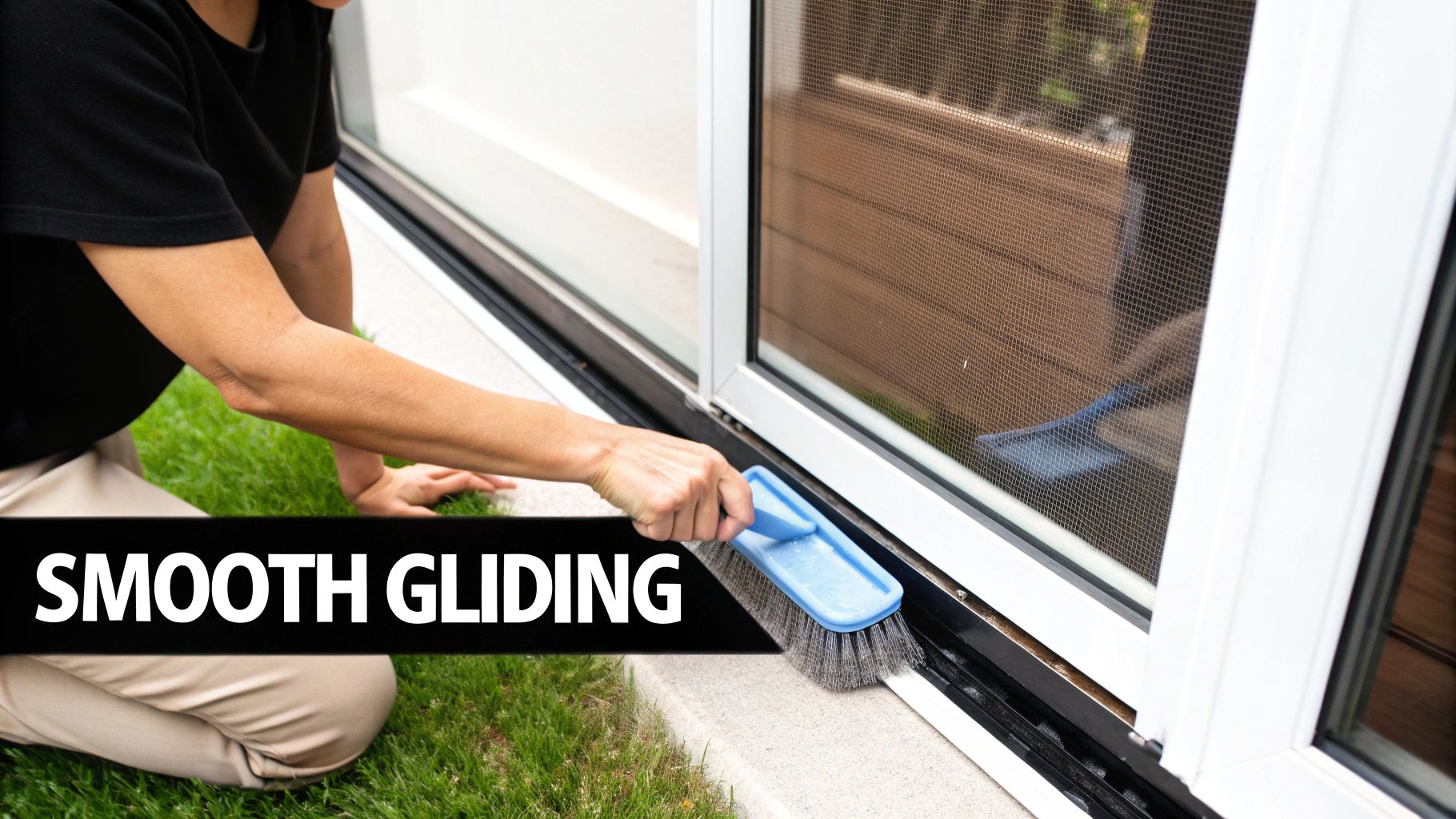
The tracks are a magnet for everything—dirt, leaves, pet hair, you name it. When the screen starts to stick or feels gritty when you slide it, clogged tracks are almost always the culprit.
- First, vacuum it out. Grab your vacuum and use a brush attachment to get all the loose gunk out of the top and bottom tracks.
- Then, give it a scrub. A little dish soap in warm water is all you need. Use an old toothbrush or a small, stiff brush to get into the grooves and break up any caked-on grime.
- Finally, wipe it clean. Use a damp cloth to wipe away the soap, then follow up with a dry one to make sure no moisture is left behind.
Take Care of the Screen Mesh
Over time, the mesh itself will collect a film of dust, pollen, and cobwebs that can cloud your view and block the breeze. Cleaning it is easy, but you have to be gentle.
- Mix a simple cleaning solution. A few drops of mild dish soap in a bucket of lukewarm water works perfectly.
- Use a soft brush or cloth. Dip a soft-bristled brush or a microfiber cloth in the soapy water and gently wipe down the entire screen. Don't push too hard or you could stretch the mesh.
- Rinse it off. A spray bottle filled with clean water is perfect for lightly rinsing the soap from the screen.
- Let it air dry. Make sure the screen is completely dry before you retract it. This is key to preventing mold or mildew from growing inside the housing.
Key Takeaway: Stay away from harsh chemicals, abrasive cleaners, or a pressure washer. They can destroy the delicate fibers and coatings on your screen, forcing you to replace it much sooner than you should have to.
Troubleshooting Common Screen Problems
Even with the best care, things can still go wrong. Luckily, most common issues with sliding screens are minor and can be fixed in a few minutes if you know what to look for.
I've seen it all over the years. Here's a quick rundown of the most frequent problems people run into and how to sort them out yourself.
Common Sliding Screen Door Problems and Fixes
| Problem | Possible Cause | DIY Solution |
|---|---|---|
| Screen is hard to slide | Debris in the tracks. | Thoroughly vacuum and scrub the top and bottom tracks. Apply a silicone-based lubricant. |
| Screen retracts too slowly | Dirty tracks or low spring tension. | Clean the tracks first. If it's still slow, make quarter-turn adjustments to the tension screw. |
| Screen slams shut | Spring tension is too high. | Locate the tension adjustment screw and turn it slightly to decrease the tension until it retracts smoothly. |
| Mesh has popped out of the track | The door was bumped or closed too hard. | Gently guide the edge of the mesh back into the track channel, using a dull, flat tool like a putty knife. |
| Small holes or tears in the mesh | Accidental damage from pets, kids, or objects. | For very small holes, a dab of clear nail polish or super glue can stop it from spreading. Larger tears will require a screen patch kit or a full re-screening. |
These simple fixes will handle about 90% of the issues you'll ever encounter. It's usually a quick adjustment that gets things back on track.
Budgeting for Your Project and When to Call a Pro
Adding screens to your French doors is a fantastic upgrade, but it pays to have a solid idea of the cost and time involved before you start. Knowing what to expect financially helps you decide whether to roll up your sleeves for a DIY project or bring in an expert to handle the job.
The price can swing pretty dramatically depending on what you choose. A simple magnetic screen might only cost you $20 to $50, but a high-quality, custom-fit retractable screen system can easily run from $500 to over $1,500. When you're thinking about the budget, it's also smart to look beyond the initial price tag by understanding the total cost of ownership to make sure you're getting a durable solution that will last for years.
Breaking Down the Costs
So, what should you really expect to spend? The final number isn't just about the screen itself. You have to factor in any tools you might need to buy and, of course, the cost of labor if you hire it out.
Here’s a realistic look at the numbers:
- DIY Kits: You can find off-the-shelf retractable or sliding panel kits for $200 to $600. They're a solid option for standard-sized doors, but be prepared to do some work, like cutting tracks to size and assembling the frame.
- Custom-Ordered Screens: If your doors are an odd size or you want a specific color match, a custom-built screen is the way to go. These are made-to-measure, with prices typically starting around $500 and climbing based on the size and features you want.
- Professional Installation: Hiring a pro will generally add $150 to $400 to your total. That fee covers their time, expertise, specialized tools, and often includes a warranty on their work.
- Tools & Materials: For a DIY install, you might need to grab a hacksaw, a good level, or some specific drill bits. If you don't have these on hand, expect to spend another $50 to $100.
A Note on Time Commitment
If you're tackling this project yourself, be realistic about the time commitment. Even for a seasoned DIYer, installing a retractable screen kit on a set of French doors will likely take 4 to 6 hours. That includes everything from unboxing and measuring to cutting, mounting, and making those final adjustments.
Knowing When to Hire a Professional
While installing a screen yourself can be satisfying and save you some money, there are definitely times when calling in a professional from a trusted company like Sparkle Tech Screen Service is the smarter move. Paying for an expert can save you from costly mistakes and give you a flawless result that you'll be happy with for a long time.
Think about calling a pro if you find yourself in any of these situations:
- Non-Standard Door Sizes: If you have an unusually tall, wide, or arched door frame, a standard kit from a big-box store just isn't going to cut it. A professional can measure and create a custom screen that fits perfectly.
- Out-of-Square Frames: Let's face it, older homes have character, and that often means door frames that aren't perfectly square. An experienced installer knows how to adjust for this, using shims and other tricks to make sure the screen glides smoothly without gaps or jamming.
- Complex Retractable Systems: Getting double retractable screens to meet perfectly in the middle requires a precise touch. A pro will ensure the magnetic seal is tight and that both screens retract evenly into their housings.
- Peace of Mind and Warranties: Professional installation almost always comes with a warranty on the labor. If something isn't right because of the installation, they'll come back and fix it. That peace of mind alone is often worth the extra cost.
In the end, it really comes down to your comfort level with the tools, how complex your doorway is, and what your budget looks like. For a straightforward job on a standard door, DIY is completely achievable. But for anything more complicated, investing in a pro ensures your new sliding French door screens work perfectly from day one.
Got Questions? We've Got Answers
Even with all the details covered, a few questions always pop up. It’s completely normal. Let’s tackle some of the most common things homeowners ask when they're thinking about adding screens to their French doors.
Can I Put a Retractable Screen on My Out-Swing French Doors?
Absolutely. This is a super common setup, and retractable screens are perfect for it. When your French doors swing outward, we simply mount the screen's housing on the inside of your door frame.
It’s a clean, practical solution. The screen operates from inside your home, so it never gets in the way of the doors swinging open. You get all the benefits of a screen without cluttering up the look of your home's exterior. When you're not using it, the screen just disappears into its housing, keeping the classic look of your doors intact from the outside.
Is Pet-Resistant Mesh Really Worth the Extra Money?
If you have a dog or a cat, the answer is a definite yes. Think of it less as an extra cost and more as a smart investment in your sanity.
Here’s what you’re paying for:
- Serious Strength: This isn't just slightly tougher mesh; it's made from vinyl-coated polyester that's up to seven times stronger than the standard stuff.
- Claw & Scratch Proof: It’s specifically engineered to stand up to claws, scratches, and the occasional burst of zoomies into the door.
- Saves Money Later: Yes, it costs more upfront. But it saves you from the cycle of patching holes or completely re-screening every time a pet gets a little too excited.
The mesh is a bit thicker, so you might notice a very slight reduction in visibility, but it's a small price to pay for a screen that will actually last.
A Pro's Take: I always tell my clients to think of pet mesh as insurance. The cost to have a pro come out just once to fix a big tear from a pet can easily be more than what you would have paid to upgrade the mesh in the first place.
Do Sliding Screens Actually Help With Energy Bills?
They can, and the impact might be bigger than you think. The main benefit is all about better, natural ventilation.
On those beautiful, breezy days, you can throw your French doors open and let that fresh air cool your home down. The screen keeps the bugs out, so you can turn off the air conditioning—which is usually the biggest energy hog in the house.
You can take it a step further with solar mesh. This stuff is designed to block a huge chunk of the sun's heat and UV rays before they even hit your glass. It helps keep your rooms cooler on hot, sunny days, making your AC work a lot less. As a bonus, it also protects your furniture, floors, and artwork from fading.
Ready to let the breeze in without the bugs? Whether you need a brand-new installation, a quick repair, or a mesh upgrade, the team at Sparkle Tech Screen Service delivers fast, professional work you can rely on. Get a quick quote and we can often get you scheduled for same-week service.
Get in Touch Today:
- Text or Call: 623-233-0404
- Toll-Free: 800-370-3998
- Or get a quote online


