


Screening in a patio is one of those home improvements that completely changes how you live in your space. It's about taking a part of your yard that gets limited use and turning it into a comfortable, protected room that bridges the gap between indoors and out. You're essentially building a bug-free, shaded oasis that lets you enjoy the fresh air without the annoyances.
Why Bother Screening In Your Patio?
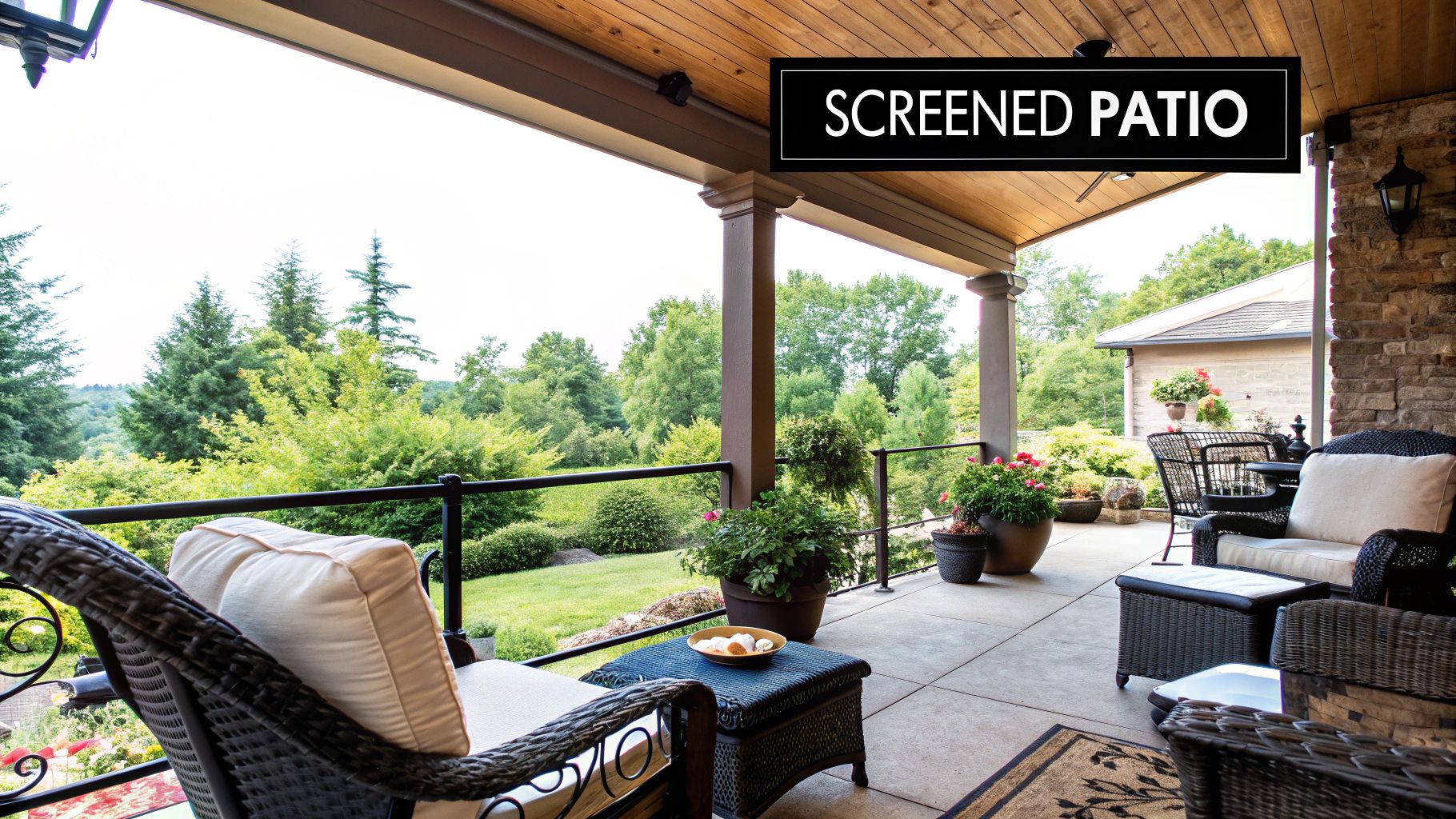
The biggest win is obvious: you instantly gain more usable square footage. That concrete slab that’s often too sunny, too buggy, or too exposed to be comfortable suddenly becomes a reliable extension of your home. It’s no longer just a patio; it’s a whole new room with endless possibilities.
I've seen homeowners get incredibly creative with these spaces. Your new screened-in area could become:
- An outdoor dining room: Imagine enjoying dinner with friends without having to swat away mosquitoes.
- A breezy home office: A little fresh air can do wonders for productivity, especially when you don't have to worry about insects landing on your laptop screen.
- Your new favorite coffee spot: There's nothing better than sipping a hot cup of coffee in the morning, listening to the birds, without the sun beating down on you.
- A safe play zone: It’s a great way to give kids and pets a secure, enclosed area to enjoy the outdoors.
It's Not Just About Keeping Bugs Out
While escaping pests is a huge perk, the benefits go much deeper. A well-designed screen enclosure provides a surprising amount of protection from the elements. It can cut down on wind, soften the harsh glare of the afternoon sun, and keep out light rain.
This not only makes the space more comfortable for you but also extends the life of your patio furniture by shielding it from constant sun and moisture.
A screened patio doesn't just add a room; it genuinely improves your quality of life. It’s about taking back your outdoor space and making it a place you want to be every day, not just on those rare, perfect-weather days.
A Smart Move for Your Home's Value
Beyond your own enjoyment, adding a screened-in patio is a savvy investment. It seriously dials up your home's curb appeal and can offer a fantastic return when you eventually decide to sell. Homebuyers see it as a major lifestyle upgrade, making your property stand out from the rest.
The desire for private, functional outdoor living areas is stronger than ever. In fact, the global market for outdoor privacy screens hit USD 1.5 billion in 2024 and is expected to more than double by 2033. This explosion in popularity shows just how much people value creating their own secluded backyard retreats. You can dig into the market trends driving the desire for private outdoor spaces to see how this fits into the bigger picture.
Planning Your Project and Measuring for Success
Any good project starts with a plan, not with the first swing of a hammer. Before you even think about buying materials for your patio screen, you need to get the lay of the land. This is where you map everything out, catch potential problems early, and figure out exactly what you need. A little time spent here saves a lot of headaches—and money—down the road.
First, think about how you're actually going to use this new space. Is it going to be your quiet morning coffee spot? A place for family dinners? Or will it be a free-for-all zone for kids and the dog? Your answer changes everything. A dining area needs enough room to pull out chairs, while a high-traffic play area calls for a seriously tough, pet-resistant screen.
Creating Your Blueprint
You don't need to be a professional drafter to map this out. Grab a piece of graph paper and sketch out your patio. Start by getting the basic length and width, then mark down where everything important is—support posts, house windows, and especially any doors.
Be on the lookout for little things that can trip you up. A classic mistake is forgetting which way the back door swings into the patio space. Another one is not accounting for the slight slope of the concrete slab, which is almost always there to help with water drainage. Your plan has to match reality, slope and all.
Pro Tip: When you're measuring the height for your vertical frame pieces, measure at the house and then again at the outer edge of the patio. You'll often find a small difference because of that drainage slope. This means your posts will likely need to be slightly different lengths to keep everything level.
Calculating Your Material Needs
Once your sketch is done, you can figure out your shopping list. Getting this right means one trip to the hardware store, not three.
Here's how I break it down for my projects:
- Frame: Tally up the total linear feet for every piece of the frame—vertical posts, top and bottom plates, and any mid-rails you want for support. I always add an extra 10% to that final number. It’s a buffer for those inevitable mis-cuts.
- Screen Mesh: Figure out the square footage for each panel you'll need to screen. Just multiply the height by the width for each opening and add them all up. My advice? Buy one big roll of screen that can cover the whole job. It’s usually cheaper and guarantees the color and weave will match perfectly across the entire enclosure.
Choosing the right screen is a huge part of this step. You'll want to explore the best window screen material for your specific situation. There's a big difference between standard fiberglass and a heavy-duty solar screen, and your choice will directly affect the project's cost and how much you enjoy the finished space.
Choosing the Right Materials and Tools for the Job
This is where your project really starts to take shape. The materials you pick now will determine not just how your patio enclosure looks, but how it holds up against everything from summer storms to your dog's enthusiastic greetings. Getting this right from the start saves you a world of headaches down the road.
It’s no surprise that homeowners are pouring money into these spaces. The global outdoor deck and patio market was valued at around USD 15.7 billion in 2024 and is expected to climb to USD 23.0 billion by 2032. Your material choices are a direct investment in your home's long-term value and your enjoyment of it.
Selecting the Right Screen Mesh
Let’s be clear: not all screen mesh is the same. The type you choose directly impacts everything from your view and durability to how much heat gets through. Your climate and your lifestyle—especially if you have pets or kids—are the biggest factors here.
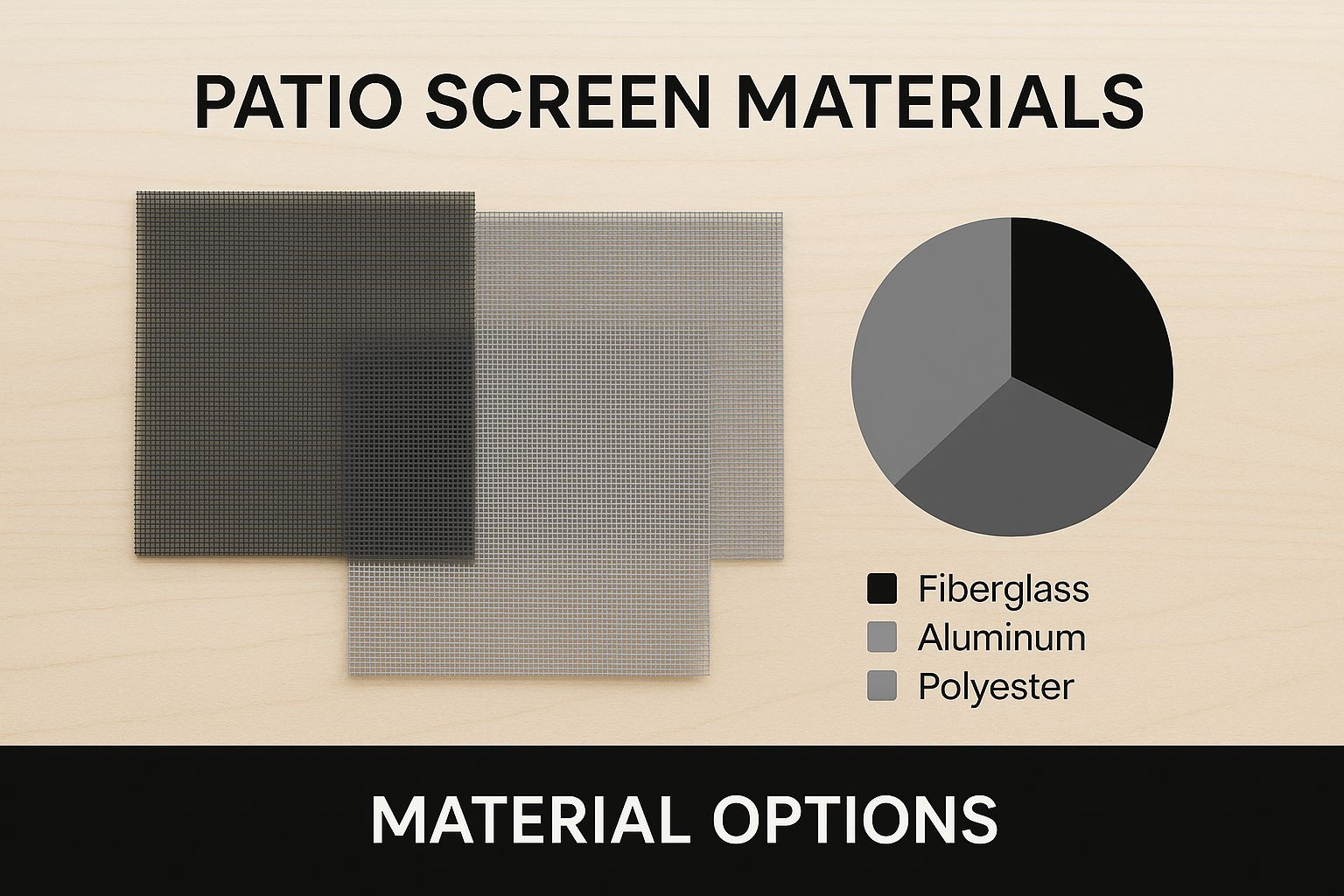
Seeing the materials up close really shows the difference in weave and texture, which translates directly to performance once it's installed.
To help you decide, I've put together a quick comparison of the most common materials I see homeowners using.
Screen Mesh Material Comparison
Choosing the right screen is a balancing act between durability, visibility, and cost. This table breaks down the pros and cons of the top contenders to help you find the perfect fit for your patio.
| Material Type | Pros | Cons | Best For |
|---|---|---|---|
| Fiberglass | Affordable, flexible, and won't dent or crease easily. It's the go-to standard for a reason. | Can tear more easily than metal or specialty screens. Not ideal for high-traffic areas. | General use in places with mild weather and no pets trying to claw their way out. |
| Aluminum | Offers a crisp, clear view and excellent durability. It won't sag over time, keeping that tight look. | Can be dented by impact and may corrode over time, especially in coastal, salty air. | Homes where a sharp, unobstructed view is a priority and durability is needed. |
| Pet Screen | This stuff is tough. Made from vinyl-coated polyester, it resists tears from claws and paws. | The thicker weave means slightly lower visibility and it comes with a higher price tag. | Any household with active pets or small children who might push against the screens. |
| Solar Screen | Blocks 65-90% of the sun's heat and damaging UV rays, keeping your patio cooler. | Significantly reduces visibility and airflow. It's the most expensive option. | Patios that get blasted with intense sun, particularly in hot southern or western climates. |
Ultimately, the best screen for you depends entirely on your specific situation. A pet screen might be overkill if you don't have pets, but it's an absolute must if you do.
Choosing Your Framing System
The screen mesh needs a solid frame to keep it taut and secure. For a DIY project, you're generally looking at two main options: traditional wood framing or a more modern aluminum or vinyl kit.
-
Wood Frames: Nothing beats the classic, customizable look of wood. You can paint or stain it to perfectly match your home's exterior. The trade-off? Maintenance. Wood needs to be regularly sealed, painted, or stained to keep it from rotting or getting eaten by insects. It's also heavy, which can make installation a two-person job.
-
Aluminum/Vinyl Kits: These systems are engineered for straightforward assembly and are practically maintenance-free. They won’t rot, warp, or ever need a coat of paint. While the upfront cost might be a bit higher than wood, their incredible longevity and ease of installation make them a fantastic, practical choice for most people.
It really boils down to aesthetics versus maintenance. If you love that traditional look and don't mind the upkeep, wood is a great option. But for a "set it and forget it" solution, aluminum and vinyl kits are tough to beat.
The Essential Toolkit Checklist
Trust me on this: having all your tools laid out and ready to go before you begin is a game-changer. It’s the difference between a smooth, professional-looking job and a day filled with frustration and trips to the hardware store.
Here’s a no-fluff checklist of what you'll actually need:
- Power Drill & Bits: You'll be using this constantly for assembling the frame and attaching it to your home and patio.
- Tape Measure & Level: Accuracy is everything. The old saying, "measure twice, cut once," exists for a reason.
- Miter Saw or Circular Saw: This is essential for getting those clean, precise, and perfectly angled cuts on your framing material.
- Spline Roller: This little gadget is the secret weapon for getting your screen tight and wrinkle-free. It's cheap, but absolutely non-negotiable.
- Utility Knife: For trimming away excess screen and spline. Start with a fresh, sharp blade—it makes a huge difference.
- Safety Gear: Don't skip this. At a minimum, have safety glasses and a good pair of gloves on hand.
Once you have your tools and materials gathered, you're ready to start building. For a detailed guide on the next steps, our walkthrough on how to install screens covers the specific techniques you'll need.
Putting It All Together: Frame Construction and Screen Installation
With all your materials gathered and tools laid out, this is where the real work—and the real fun—begins. You’re about to see your careful planning turn into a physical structure. We'll walk through building a rock-solid frame and then move on to the satisfying step of installing a perfectly tight screen.
Assembling the Frame
First things first, let's build the skeleton of your enclosure. Whether you're working with traditional wood or a handy aluminum kit, the core goal is the same: build it square, build it strong.
I always recommend assembling the main wall sections on a flat, level surface like your garage floor. This gives you a controlled environment to make sure every corner is a perfect 90-degree angle before you even think about attaching it to the house.
If you're building with wood, this is the time to make your final cuts. Grab those 2x4s and cut them to the exact lengths you worked out earlier, using a miter saw for any angled cuts. Lay out each wall section on the ground and join the pieces with corrosion-resistant screws.
Pro Tip: To check if a frame section is perfectly square, measure diagonally from corner to corner. Then, measure the opposite two corners. If those two diagonal measurements are identical, your frame is square. If not, adjust it until they are.
Securing the Frame in Place
Once a wall section is built and squared up, it's time to raise it into position. Trust me, you’ll want a helper for this part.
Start by positioning the first section flush against the house wall. Use your level to ensure it's perfectly plumb (that’s perfectly vertical). Secure it to the house with lag screws long enough to bite deep into the wall studs—don’t just attach it to the siding.
Next, anchor the bottom plate of the frame to your concrete patio slab using specialized concrete anchors or screws. From there, it's a matter of repeating the process: raise the next section, make sure it's level, and fasten it securely to the house, the slab, and the adjoining frame section.
The stability of your entire enclosure hinges on how well this frame is anchored. Take your time here. A wobbly frame will only lead to sagging screens and a structure that won’t last.
Getting a Drum-Tight Screen Installation
Now for the part that truly transforms the frame into a screen room. Installing the screen can seem tricky, but with the right technique and one essential tool, you'll get it right.
That secret weapon is the spline roller. This little gadget is non-negotiable for achieving a professional, taut finish.
Start by draping your screen mesh over one of the frame openings. Leave at least a few inches of extra material hanging over all four sides. It’s crucial that you don’t pre-cut the screen to the exact size; you’ll trim the excess at the very end.
Here’s the method I’ve used for years to get a perfect, wrinkle-free finish every time:
- Start at the Top: Pick a top corner and begin there. Use the convex (rounded) wheel of your spline roller to gently press the screen mesh into the frame’s channel. Then, lay the rubber spline over it and use the concave (grooved) wheel to roll the spline firmly into the channel, locking the screen in place. Only do the top edge for now.
- Create Tension: Move down to the bottom of the opening. Gently pull the screen taut, creating light, even tension from top to bottom. Now, roll the spline into the bottom channel just like you did at the top.
- Lock in the Sides: With the top and bottom secured, move to one of the vertical sides. Pull the screen sideways to make it taut horizontally and roll the spline into the channel. Finish by repeating this on the last side, applying just enough outward pull to remove any remaining slack. The screen should now be completely flat and tight.
Once the spline is seated securely on all four sides, take a sharp utility knife and carefully trim the excess screen mesh from the outside edge of the spline. Angling the blade away from the spline can help prevent any accidental slips that might cut your brand-new screen. That’s all there is to it—a simple process for a flawless result.
Adding Finishing Touches and Ensuring Longevity
With the frame solid and the screen pulled perfectly taut, you’re on the home stretch. But don't rush this part. These final details are what separate a DIY project from a truly professional-looking outdoor room. It's all about refinement and setting up your new enclosure to last.
First things first, a quality screen door is non-negotiable. Look for one that not only matches your home's aesthetic but is also built tough enough to handle daily traffic. Another trick I've learned over the years is to install thin trim or molding over the exterior of the frame. This simple addition hides all the fasteners and spline channels, giving the whole structure a clean, seamless appearance.
Keep It Looking Great for Years to Come
Your new screened-in patio is a fantastic investment, and with a little upkeep, it will stay that way. Think of it as a simple seasonal routine, not a list of chores. A proactive approach is the best way to stop small issues from becoming big, expensive headaches.
This desire for comfortable outdoor living isn't just a trend; it's a huge market. The global outdoor privacy screen market hit nearly USD 3 billion in 2024 and is on track to blow past USD 5.1 billion by 2033. That growth shows just how much homeowners value creating these private, functional spaces. You can discover more insights about the outdoor living market to see how this trend is evolving.
Here’s a straightforward maintenance checklist to follow:
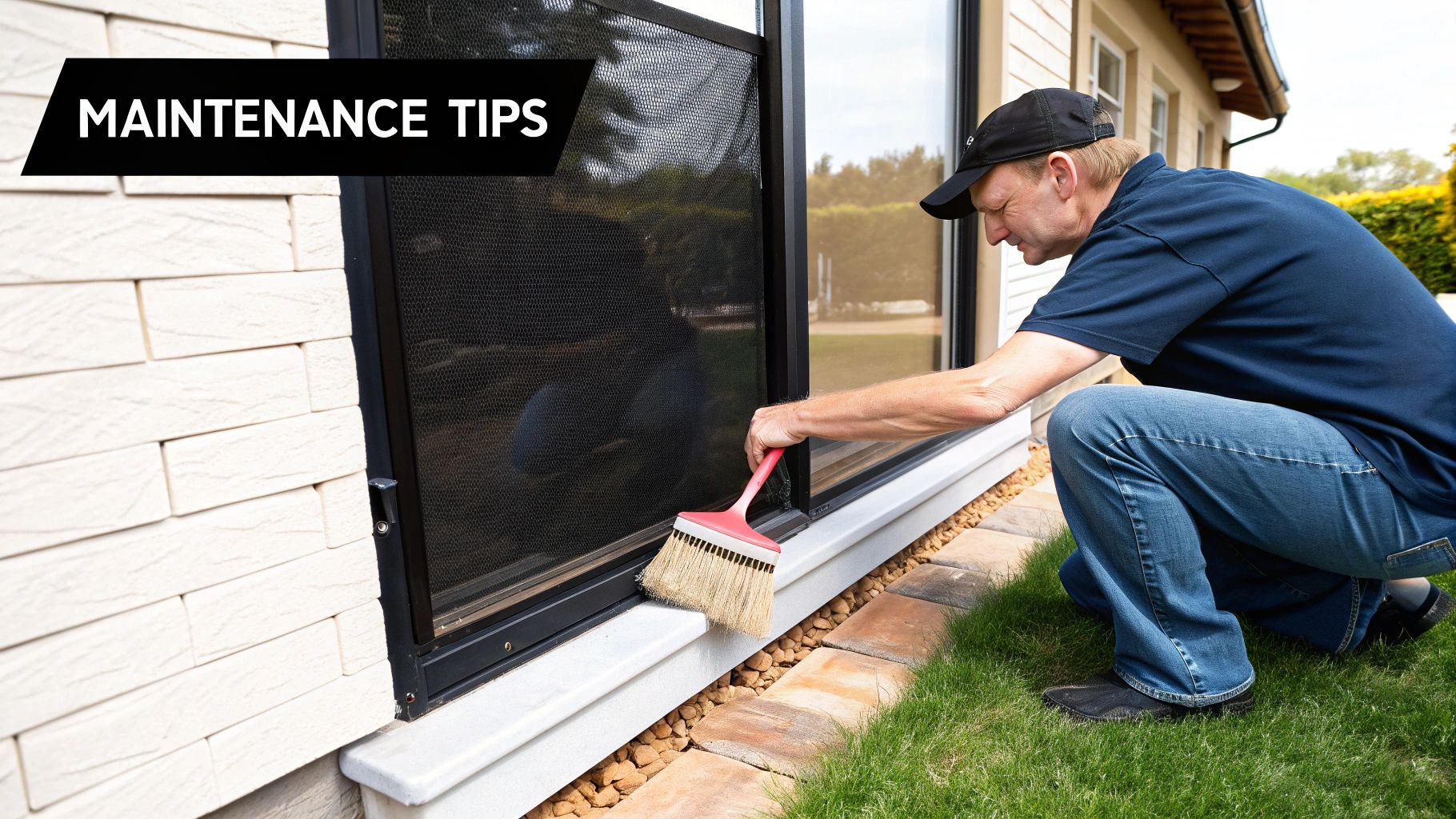
- Gentle Cleaning: A couple of times a year, give the screens a light wash. All you need is a soft brush and a bucket of mild, soapy water. Whatever you do, don't use a pressure washer—that intense spray can easily tear the mesh or pop the spline right out.
- Frame Inspection: Once a year, give the frame a good look-over. If it’s wood, check for any peeling paint or signs of rot. On an aluminum frame, just make sure all the fasteners are still snug.
- Clear the Debris: Leaves, twigs, and other gunk love to pile up at the base of the frame. Clear it away regularly to prevent moisture from getting trapped, which can cause damage over time.
Pro Tip: Small tears in the screen mesh are bound to happen, especially if you have pets or kids. Don't sweat it. You can grab a simple screen repair kit from any hardware store to patch tiny holes. Fixing them right away keeps them from turning into a big, ugly rip.
If you went with specialty materials, they might need a bit of extra care. Our guide on sun shade screen patio maintenance has specific advice to protect your investment. A well-maintained screen in patio isn't just an addition; it's a long-lasting upgrade to your home and your lifestyle.
Common Questions About Screening In a Patio
When you're thinking about screening in a patio, a few key questions always seem to pop up. Getting good answers to these is the first step toward a project you can feel confident about, rather than one that feels like a huge undertaking. Let's tackle the questions I hear most often from homeowners.
How Much Does It Typically Cost?
This is always the first question, and the honest answer is: it really depends. Your final cost is going to be shaped by three main things: the size of your patio, the materials you pick, and whether you hire it out or do it yourself.
If you’re planning a DIY project for a standard 10×20 foot patio, you should budget somewhere between $800 and $2,000. That range usually covers a basic wood frame and standard fiberglass screen.
Now, if you bring in a professional, the cost naturally goes up. For the same size patio, you can expect a pro installation to run from $3,000 to $7,000 or more. That price reflects the complexity of the job, the type of framing system they use, and any specialty screens you might want.
Can I Screen In an Existing Porch or Deck?
Absolutely! In fact, this is probably the most common and cost-effective way to get it done. If you already have a covered porch or deck with a roof and support posts, you've already won half the battle.
The first thing to do is give that existing structure a thorough inspection. You need to be sure the foundation, posts, and roof are all in good shape and can handle the addition. From there, it's a matter of building the screen frames to fit snugly between those existing supports. This approach saves a ton of money and time compared to building an entirely new structure from the ground up.
Your existing covered patio is the perfect foundation for a screened-in room. As long as it's structurally sound, you can easily add screen panels between the posts to create a beautiful, functional enclosure without the cost of a full build-out.
What Is the Easiest Way for a Beginner?
If you're new to this kind of project, I'd strongly recommend looking into a pre-fabricated screen enclosure kit. These kits are fantastic for a DIY beginner because they take most of the tricky measurements and cutting out of the equation.
They typically come with everything you need:
- Pre-cut aluminum framing: This saves you from having to make complex miter cuts.
- All necessary hardware: Every screw, spline, and corner piece is right there in the box.
- Detailed instructions: The guide is written specifically for homeowners, not professional builders.
Another great choice for beginners is a track-based system. These use simple vinyl tracks and caps that make stretching the screen mesh much easier. The best part? If a panel ever gets damaged, replacing it is a breeze. Both of these routes offer a much more forgiving and faster way to get a result that looks like a pro did it.
If your existing patio screen is torn or you're just ready for an upgrade, the team at Sparkle Tech Screen Service can handle everything from simple repairs to complete rescreening projects. Get a quick quote and enjoy your bug-free patio sooner than you think!


