


When you're trying to decide between fiberglass or aluminum screens, the choice often boils down to a simple trade-off. Fiberglass gives you great flexibility and a lower price point, while aluminum brings serious strength and a longer lifespan to the table. For most standard windows here in Phoenix, the clear view and cost-effectiveness of fiberglass make it a fantastic go-to. However, for high-traffic spots or homes with pets, the durability of aluminum is definitely worth a look.
Choosing the Right Screen for Phoenix Homes
Picking the right screen material is a surprisingly big deal for Phoenix homeowners. Between the intense sun, our infamous dust storms, and all the critters that want to sneak inside, you need a screen that’s built to last. Getting a handle on the core differences between fiberglass and aluminum is the first step to making a smart investment in your home.
Fiberglass is essentially a flexible, vinyl-coated mesh. The big plus? It won't crease, dent, or corrode. It’s also the more budget-friendly option and is a bit more forgiving for DIY projects. On the flip side, you have aluminum—a woven metal mesh that's way stronger and more resistant to punctures and tears. It costs more upfront, but its rigid nature keeps it from sagging in big openings and it holds up much better over time under our relentless Arizona sun.
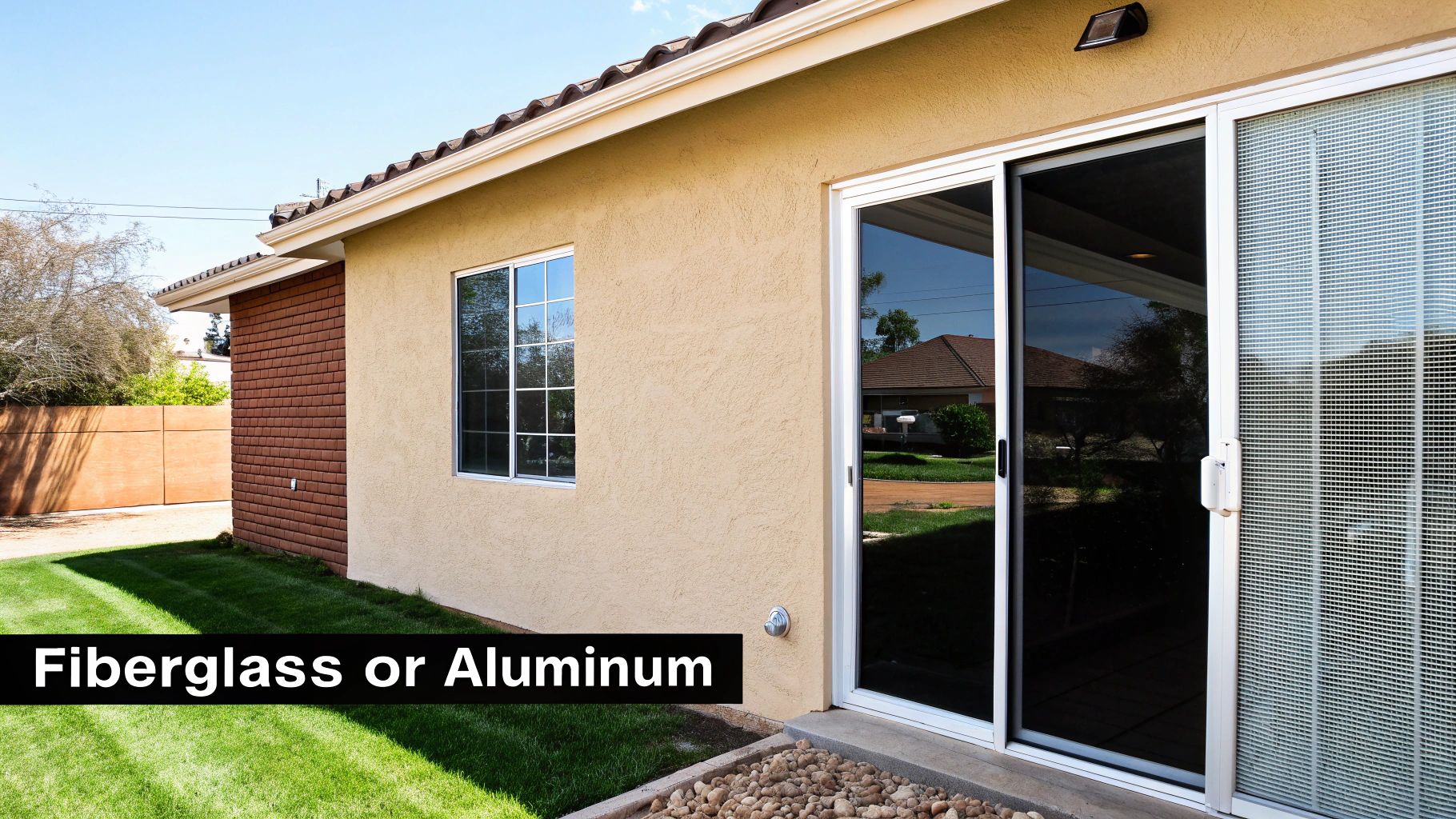
Fiberglass vs Aluminum Screen At a Glance
To help you get started, here’s a quick-glance table that lays out the main differences. Think about how these points apply to your own home—whether it's for a patio door that sees constant action or a bedroom window where the view is everything.
| Attribute | Fiberglass Screen | Aluminum Screen |
|---|---|---|
| Durability | Flexible and forgiving, but more prone to tearing from sharp objects or pets. | Strong, rigid, and puncture-resistant; ideal for high-traffic areas. |
| Cost | More affordable, making it a budget-friendly choice for rescreening entire homes. | Higher upfront cost but can offer better long-term value due to its longer lifespan. |
| Visibility | Typically offers a clearer, less obstructed view, especially with charcoal color. | The thicker wire can be slightly more noticeable, though still provides good visibility. |
| Maintenance | Easy to clean but can become brittle over many years of intense UV exposure. | Resists UV degradation but can dent if hit; requires gentle cleaning to avoid damage. |
This table gives you a solid starting point, but the best choice always depends on the specific job. Now, let’s dig a little deeper into where each of these materials truly shines.
Fiberglass vs. Aluminum: How They Really Perform
When you're trying to decide between fiberglass or aluminum screens, it’s about more than just the price tag. You’re really deciding how your screens will hold up to real life in Phoenix—from kids and pets to the non-stop desert sun. Let's break down how they actually stack up in terms of visibility, durability, and what they'll cost you over the long haul.
The first thing you’ll probably notice is how they look. Fiberglass mesh almost always gives you a cleaner, crisper view. Its thin, flexible threads, especially in the popular charcoal color, are fantastic at cutting glare and seem to just melt into the background. If you want to make the most of that backyard view, fiberglass is hard to beat.
Aluminum is a bit different. It's made of a stiffer, slightly thicker wire, which means the screen itself is a bit more visible. The view is still perfectly fine, of course, but you don't get that same "disappearing screen" effect you get with high-quality fiberglass.
Durability Under Duress
Durability isn’t a simple check-box; it depends entirely on where the screen is going. A second-story bedroom window has a much easier life than the screen on a busy sliding patio door.
- Physical Strength: This one's easy—aluminum wins. It’s metal, so it’s naturally tougher against punctures and tears. It also holds its shape better in large openings, resisting the sagging that can happen over time. If you’ve got a dog that likes to paw at the door or kids who aren't always gentle, that extra strength is huge.
- Flexibility and Dents: Here's where fiberglass shines. It's flexible. Push on it, and it pops right back into place. Aluminum, on the other hand, will dent. While it takes a decent impact, once it has a crease, it’s there for good. The only way to fix a dented aluminum screen is to replace it.
For homeowners here in Phoenix, it comes down to a simple trade-off. Do you need protection from sharp claws and tearing, or from bumps and accidental impacts? A screen on a busy patio door is a great candidate for tough aluminum, while one next to a narrow walkway might be better off with forgiving fiberglass.
The True Cost Over a Lifetime
Don't let the initial price fool you. Fiberglass is definitely cheaper to buy, but you have to think about how long it's going to last in our intense desert climate before you have to pay for it all over again.
With a little care, an aluminum screen can easily last 20 years or more. The metal just doesn't break down from UV exposure. Fiberglass is a different story. After about 7-10 years in the Arizona sun, it starts getting brittle and will eventually need to be replaced. So, you might pay less for fiberglass today, but you could end up replacing it two or even three times in the lifespan of a single aluminum screen.
This idea of long-term value is catching on everywhere. For example, the global market for fiberglass windows—valued at USD 13.39 billion—is booming as builders and homeowners look for more durable, long-lasting materials. You can dig into the numbers yourself on Market Research Future. A good aluminum screen follows that same logic: invest a little more now to avoid the cost and hassle later on.
Matching Your Screen to the Arizona Lifestyle
Picking between fiberglass and aluminum screens isn't just about the material—it's about how you live in your home right here in Arizona. The perfect screen for a quiet bedroom window is almost never the right one for a busy sliding door that leads to the patio. The best way to get it right is to think about what each screen needs to do.
For most standard windows in low-traffic parts of your house, fiberglass is often the perfect fit. It’s flexible and offers fantastic visibility, which is great for rooms where you want to enjoy the view. A charcoal-colored fiberglass mesh is especially good at cutting the glare from our intense Phoenix sun and seems to just disappear, giving you a crystal-clear look at your yard.
But when durability becomes the top priority, the conversation shifts completely.
High-Traffic Areas and Family Life
Think about your main patio slider or the back door. It gets a ton of action, with people coming and going and maybe even pets pawing to get in or out. This is exactly where aluminum screens truly excel.
The rigid metal construction of aluminum gives it far better resistance to punctures, tears, and that dreaded sagging you see on old screens. While a really determined pet might still cause some damage, aluminum holds up much better against everyday bumps, scratches, and pushes than fiberglass ever could. For any screen that’s going to see regular physical contact, that extra strength means peace of mind and better long-term value.
Here’s a little secret from the pros in Phoenix: think screen-by-screen. You don't need the same material everywhere. Mix and match! Put tough aluminum on the patio door and go with the cost-effective, high-visibility fiberglass in the guest room.
This simple chart helps break down the choice based on what matters most to you: the view, sheer strength, or your budget.
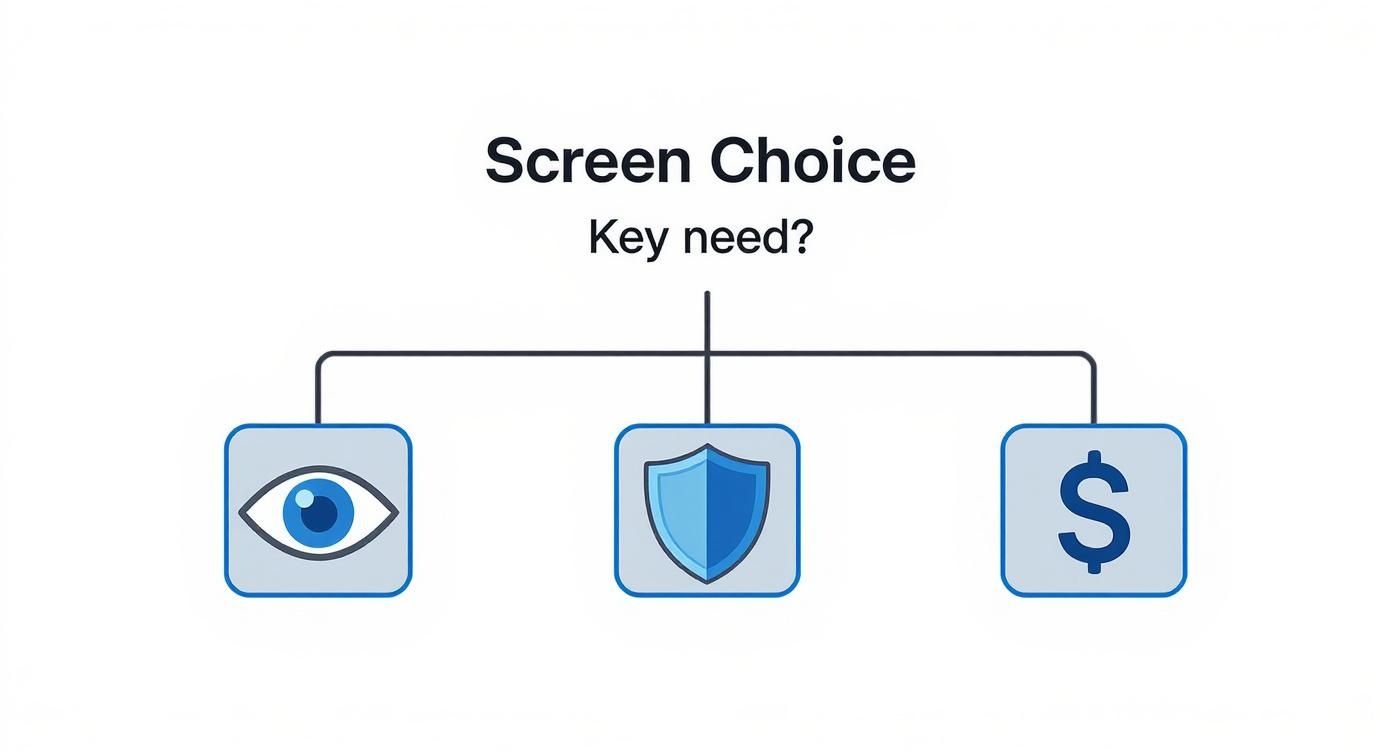
As the diagram shows, figuring out your main priority—whether it’s preserving a beautiful view, needing maximum durability, or sticking to a budget—will point you directly to the best screen material for that spot.
Specialty Screens for Unique Arizona Challenges
Sometimes, the standard options just don't cut it. The brutal afternoon sun hitting the west side of your house calls for a different solution than the windows that stay shaded all day.
- Solar Screens: For those windows that get absolutely baked by the sun, a solar screen isn't just nice to have; it's a must. Usually made from a heavy-duty, PVC-coated fiberglass, these screens can block up to 90% of the sun's heat before it ever hits the glass. That makes a huge difference in your cooling bills.
- Pet-Resistant Screens: If you have dogs or cats that love to climb or scratch, you need to check out pet-resistant screens. This stuff is seven times stronger than standard fiberglass. It's made from a vinyl-coated polyester that stands up to claws and teeth, saving you from constant repairs.
Across the country, standard fiberglass has become the default choice, making up over 42% of the market because it’s affordable and won’t rust. But here in a tough climate like Phoenix, a smarter approach is to blend the standard stuff with these specialty screens. You can dig into the numbers by checking out the latest window screen industry analysis. By looking at each window's specific needs, we can create a custom screen plan for your home that perfectly balances cost, durability, and comfort.
How the Phoenix Climate Breaks Down Your Window Screens
Arizona’s climate is the ultimate stress test for any part of your home’s exterior, and window screens are right on the front lines. When you're deciding between a fiberglass or aluminum screen, the choice really boils down to how each one stands up to our unique brand of punishment—from the brutal, year-round sun to our violent monsoon storms.
Getting this choice right means the difference between replacing your screens every few years and having a set that lasts for decades.
Phoenix is all about the sun. With nearly 300 days of sunshine a year, the constant barrage of ultraviolet (UV) radiation is the number one killer of window screens. This relentless exposure breaks down materials over time, but it attacks fiberglass and aluminum in completely different ways.
Fiberglass, which is essentially vinyl-coated glass fiber, really takes a beating from the sun. It starts out flexible and strong, but years of UV exposure cause it to become brittle. A fiberglass screen that might last a decade or more in a milder state may only give you 7-10 years here before it gets stiff and starts cracking or tearing easily.
Sun Damage on Different Screen Materials
Aluminum, on the other hand, is a different story. The metal itself is naturally resistant to UV rays; it simply won’t get brittle or weak from sitting in the sun. This is a massive advantage for long-term durability in the desert.
That said, the finish on the aluminum can be affected. Cheaper, painted aluminum screens might start to fade or get a chalky texture after years of exposure. That’s why it’s so important to go with a quality, well-finished aluminum screen to preserve its look over its impressive 20- to 30-year lifespan.
For Phoenix homeowners, this isn't just about day-one strength; it's about resilience over the long haul. Fiberglass is a great material, but our sun will eventually win. Aluminum’s core structure just doesn't break down, making it a far more permanent solution for UV protection.
Surviving Monsoons and Desert Dust
Sun isn't the only thing our screens have to deal with. The annual monsoon season hammers them with high winds and driving rain, and the rest of the year, a fine layer of dust settles on everything.
- Corrosion and Moisture: The good news is that both materials are rust-proof. One thing to watch for with aluminum, however, is galvanic corrosion. This can happen if it’s installed in direct contact with a different metal, like a steel frame, especially when moisture from storms gets in the mix. Modern installation techniques usually prevent this, but it’s something a pro keeps in mind.
- Dust Buildup: That classic layer of desert dust will coat any screen, cutting down on your view and airflow. Regular, gentle cleaning is a must. For fiberglass, a simple wash with soap and water does the trick. With aluminum, you have to be more careful—scrubbing too hard can dent the mesh or scratch the finish. All you need is a soft brush and a gentle rinse.
At the end of the day, living in Phoenix requires you to be picky about materials. A fiberglass screen is a solid, budget-friendly option, but you have to accept it has an expiration date under our sun. An aluminum screen, while costing more upfront, is a smarter investment in durability that’s built to withstand the very specific challenges of our desert climate.
Installation and Repair Considerations
Whether you're a seasoned DIYer or you’d rather call in a pro, how easily a screen can be installed or repaired is a huge factor. The way the material behaves in your hands can be the difference between a quick, satisfying Saturday project and a frustrating afternoon full of headaches.
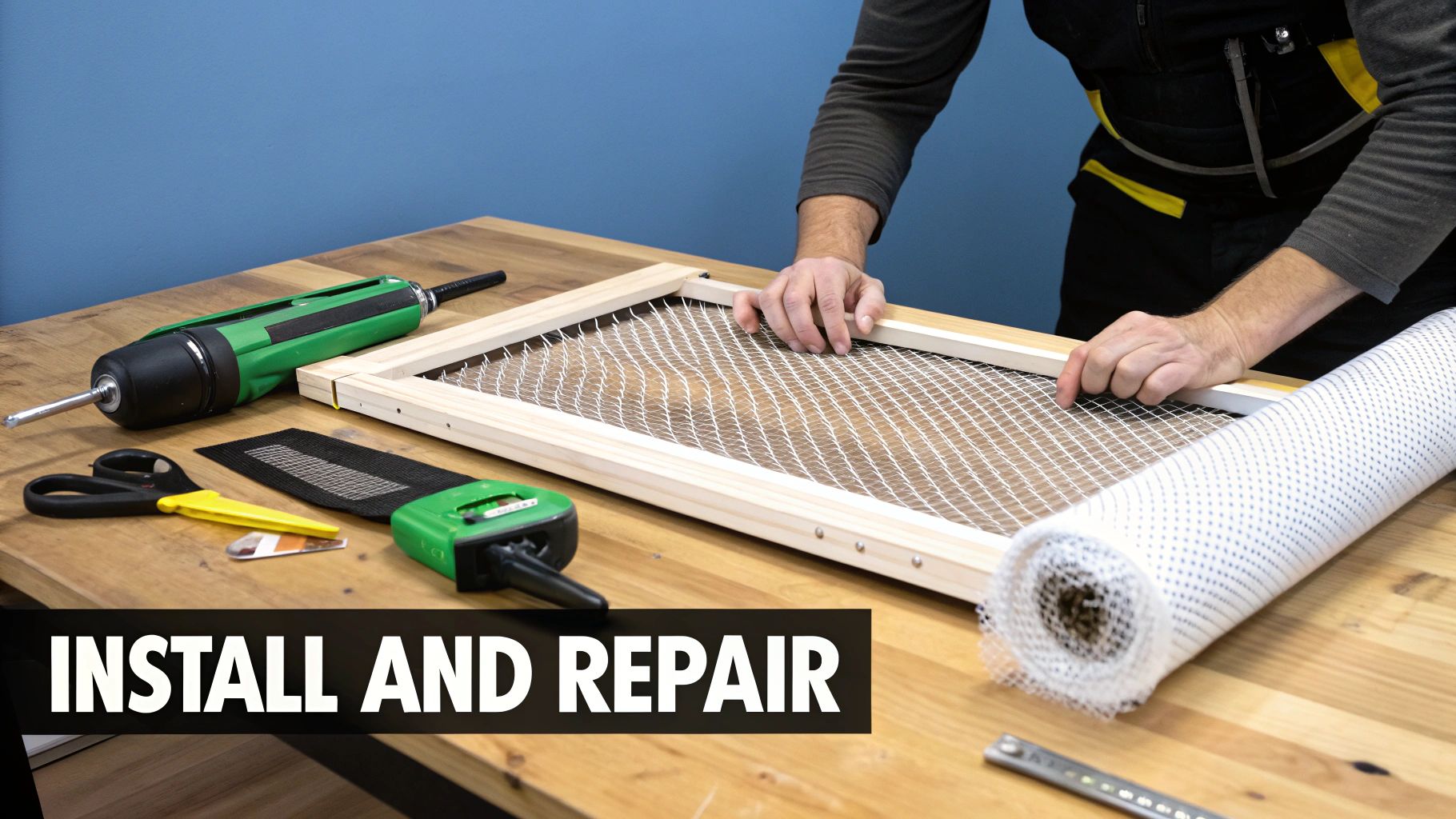
For homeowners ready to tackle their own re-screening, fiberglass is much more forgiving. Its natural flexibility makes it easy to work with, allowing you to pull it taut without much risk of permanent damage. If you accidentally apply uneven pressure while rolling in the spline, you can usually smooth it out without leaving a lasting mark.
Aluminum, on the other hand, demands a more experienced touch. Because it’s a rigid metal, any crease or dent you make during installation is there for good. Getting that perfectly tight, smooth finish without any wrinkles takes real patience and skill, which is why so many homeowners around Phoenix trust professionals for their aluminum screen jobs.
The Right Tools and Techniques
No matter which material you choose, having the right tools is non-negotiable for a professional-looking result. You don't need a huge workshop, but a few key items are absolutely essential.
Your basic screen installation toolkit should include:
- A Spline Roller: This little wheeled tool is your best friend. It presses the rubber spline into the frame’s channel, locking the screen mesh in place.
- A Utility Knife: A fresh, sharp blade is a must for cleanly trimming the excess screen material after the spline is set.
- A Flathead Screwdriver: Perfect for carefully prying out that old, stubborn spline without gouging or damaging the screen frame.
The single biggest mistake we see in DIY projects is improper tensioning. The professional technique is to secure one side completely, then pull the material taut as you install the spline on the opposite side. This simple step is the secret to a smooth, sag-free finish.
To Patch or to Replace?
When your screen gets damaged, you have a choice: patch the spot or replace the whole thing. The right call really comes down to the size of the damage and the overall condition of the screen.
For tiny punctures or tears smaller than a quarter, an adhesive screen patch can be a quick and cheap fix. You can find them at any hardware store, and they work on both fiberglass and metal screens—a great stop-gap measure to keep the bugs out.
But a full replacement is often the smarter move. If your screen has several holes, a tear bigger than a few inches, or if the material feels brittle and weak from years in the Arizona sun, patching is just delaying the inevitable. For a solution that truly restores your screen’s function and looks, a full re-screening from a service like Sparkle Tech is the best investment.
Frequently Asked Questions
When it comes to picking new screens for your Phoenix home, a few questions always come up. Getting straight answers is the key to choosing the right material for your windows and doors, especially with our intense Arizona climate. Let's break down the most common ones.
Which Screen Material Offers Better Visibility?
If you’re looking for the clearest, most unobstructed view, fiberglass is almost always the winner. The strands themselves are thinner and more flexible than aluminum wire, which means you see more of the outdoors and less of the screen.
Here in Arizona, most of us go with a charcoal-colored fiberglass. That darker color cuts down on the harsh sun glare, letting your eyes focus past the mesh. It’s the closest you can get to making the screen feel like it isn't even there.
Is Aluminum Screen Worth the Extra Cost in Arizona?
For certain spots around the house, you bet it is. While fiberglass is easier on the wallet upfront, aluminum's pure ruggedness delivers serious long-term value, especially in areas that see a lot of action.
Think about your main patio slider or a low window where a dog might put its paws. Aluminum's resistance to punctures, tears, and sagging makes it a much smarter investment for these high-traffic zones. You'll spend a bit more now to avoid paying for repairs or a full replacement down the road.
The "better" material really just depends on the job. A second-story window that never gets touched is a perfect place for cost-effective fiberglass. But for that main slider door everyone uses? The durability of aluminum is definitely the wiser choice.
How Long Do Screens Last in the Phoenix Sun?
That intense desert sun is the number one enemy of window screens. A standard fiberglass screen usually gives you about 7 to 10 years before the constant UV beating turns it brittle and prone to cracking.
An aluminum screen, on the other hand, can easily last 20 to 30 years. The painted finish might fade a little over the decades, but the metal mesh itself won't weaken or get brittle from the sun. For our demanding environment, it’s by far the more resilient, long-lasting solution.
Ready to get the right screens for your home and the Arizona climate? The team at Sparkle Tech Screen Service handles it all, from tough aluminum sliders to crystal-clear fiberglass window screens. We offer fast quotes and professional installation. Get your same-week service quote today!


