


Exterior sun screens are one of the smartest upgrades you can make to your home. Essentially, they are specialized mesh screens installed on the outside of your windows, designed to block the sun's heat and glare before it ever has a chance to hit the glass.
Think of them as a set of high-performance sunglasses for your entire house. They keep the inside comfortable while cutting down on how hard your air conditioner has to work.
How Exterior Sun Screens Work and Why They Matter
To really get why exterior screens are so effective, let's use a simple analogy. Imagine it's a blazing hot summer day. If you stand under a big shade tree, you feel instantly cooler, right? That’s because the tree is blocking the sun's rays from reaching you in the first place.
Now, picture yourself wearing a dark t-shirt while standing in that same direct sun. The shirt absorbs the heat and you feel even hotter.
Exterior sun screens are the shade tree for your home. By being on the outside, they act as the first line of defense, intercepting the sun's intense heat. Interior solutions like blinds or curtains are like that dark t-shirt—they're inside the house, absorbing heat that has already passed through the window glass and is now radiating into your room.
The Science of Blocking Heat
The real secret is in the fabric. This isn't your average window screen material; it's a high-tech, incredibly durable mesh built for one purpose: managing solar energy. It does this in two critical ways:
- It absorbs a huge chunk of the sun's heat right in its dense weave.
- It reflects the rest of the solar rays away from your windows before they can heat up the glass.
By keeping the glass itself from getting hot, exterior sun screens can block up to 90% of solar heat gain. That's a massive reduction in the amount of warmth seeping into your home.
The core principle is simple but powerful: It’s far more efficient to stop heat on the outside than it is to deal with it once it's already inside. This proactive approach is what makes exterior screens such a game-changer for home comfort.
This isn't just a niche product anymore; it's a major trend in energy-efficient home improvement. The global market for these screens was valued at USD 11.34 billion in 2022 and is projected to keep climbing as more people catch on. These numbers, detailed in reports from places like Grandview Research, show a clear shift toward smarter, more effective cooling solutions.
What does this mean for you? Your A/C unit doesn't have to run constantly, your energy bills go down, and your home stays consistently cooler—all without losing your view. They get to the root of the problem instead of just treating the symptoms.
Exterior Sun Screens vs Interior Window Treatments
It's easy to lump all window coverings together, but where you place them makes all the difference. Here’s a quick breakdown of how exterior screens stack up against common interior options.
| Feature | Exterior Sun Screens | Interior Blinds/Curtains |
|---|---|---|
| Heat Blocking | Blocks up to 90% of heat before it enters the home. | Blocks heat after it has already passed through the glass and entered the room. |
| Energy Efficiency | High. Significantly reduces cooling costs by lowering A/C workload. | Low to moderate. Provides some insulation but is far less effective at stopping heat gain. |
| Glare Reduction | Excellent. Diffuses harsh sunlight while maintaining the view. | Good, but often requires closing them completely, which blocks the view and natural light. |
| View Preservation | Maintains outward visibility, even during the day. | Obstructs the view when closed or tilted. |
| UV Protection | Protects flooring, furniture, and decor from fading by blocking harmful UV rays. | Offers protection only when fully closed, blocking all light. |
| Privacy | Provides excellent daytime privacy; you can see out, but others can't see in. | Provides privacy only when closed. |
As you can see, while interior treatments are great for privacy and aesthetics, they just can't compete with the raw thermal performance of stopping the sun on the outside.
Choosing the Right Screen Material and Density
When you're looking at exterior sun screens, it's about much more than just picking a color. The two biggest decisions you'll make are the screen material and its density. These choices are what really determine how well the screen performs, how long it lasts, and what your view to the outside world will look like. This isn't like picking out a standard bug screen; this is about fine-tuning your home's defense against the intense Texas sun.
The go-to materials for high-quality solar screens are vinyl-coated polyester and fiberglass. Both are engineered to take a beating from years of harsh sun, wind, and rain without falling apart. Unlike the flimsy material used for typical insect screens, these are tough, built specifically to absorb and reflect solar energy for the long haul.
It's no surprise that more and more homeowners are looking for smart ways to improve energy efficiency. The global market for blinds and shades, which includes exterior sun screens, is expected to jump from USD 17.1 billion in 2025 to USD 28.1 billion by 2035. This huge growth shows just how much people want window coverings that provide serious thermal insulation and UV protection. You can read more about the research on this market's expansion and what’s behind it.
Understanding the Openness Factor
The real magic behind a sun screen comes down to something called the openness factor. It’s a simple percentage that tells you how tight the mesh weave is. Think of it like the thread count on a good set of sheets—the tighter the weave, the less can get through.
You'll typically see a few standard options:
- 80% Screens: These block about 80% of the sun's heat and damaging UV rays. They strike a great balance, offering significant cooling relief while keeping your outward view crisp and clear.
- 90% Screens: Taking it up a notch, these screens block roughly 90% of solar heat. They’re excellent for cutting down on harsh glare and boosting daytime privacy, though the view is a bit more filtered.
- 95% and Higher Screens: For maximum protection, these screens are the heavy hitters. They’re perfect for windows that get absolutely blasted with direct sun or for rooms where you want to minimize light, like a home theater.
This diagram shows exactly how the screen acts as a protective barrier, stopping solar energy before it ever has a chance to heat up your glass.
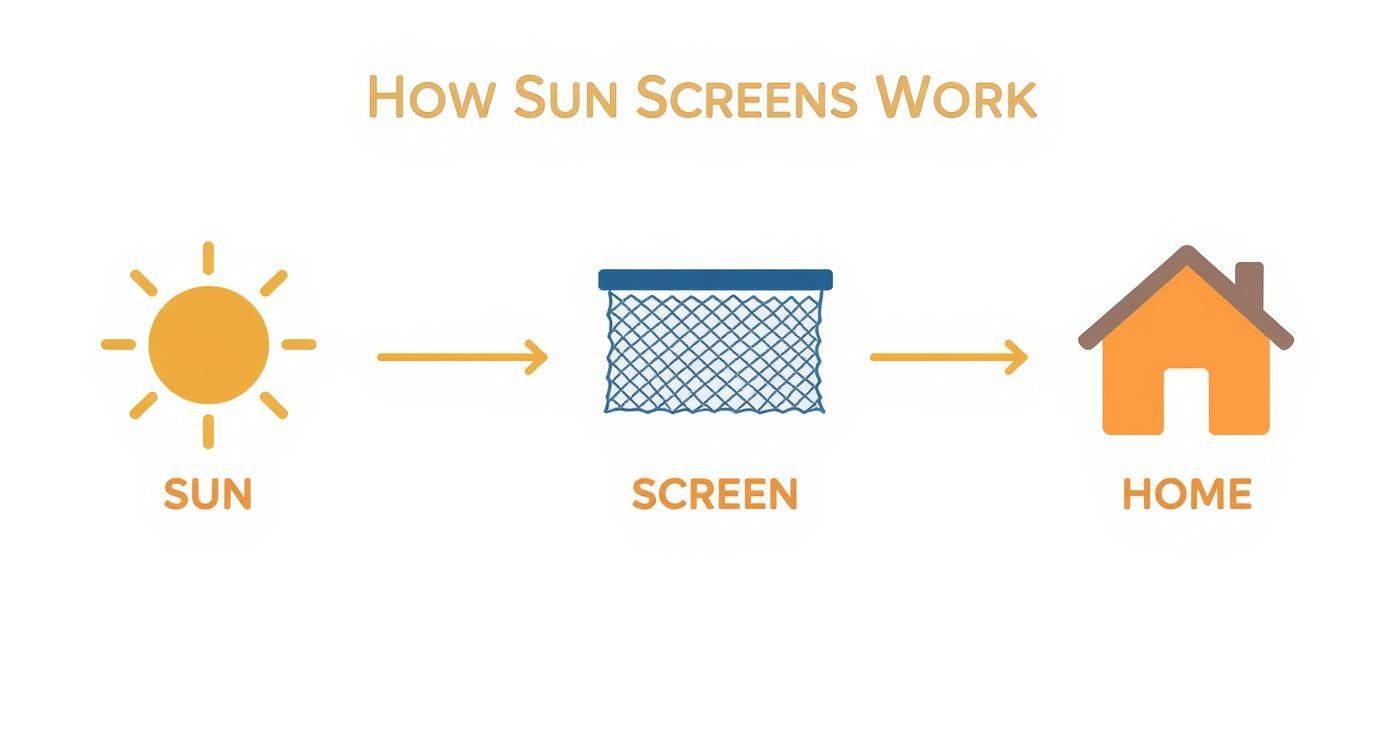
As you can see, the screen absorbs and reflects the sun's radiation, letting only a small fraction of the light and heat pass through to the window itself.
How to Choose the Right Density for You
Picking the right density is all about finding your personal sweet spot between blocking heat and maintaining your view. There's no single "best" choice—it all depends on the needs of each specific window and what you use that room for.
Key Takeaway: A lower openness percentage (like 90% or 95%) gives you more heat and glare control but slightly less natural light and a more muted view. A higher percentage (like 80%) puts the priority on a clearer view while still delivering impressive energy savings.
Here are a few common scenarios to help you decide what fits best:
- For a Sun-Drenched Living Room with a View: An 80% screen is usually the perfect fit here. It dramatically cuts the heat and glare that can make a room feel unusable, but it won't rob you of that beautiful backyard view. You get comfort without feeling closed in.
- For a Home Office or TV Room: A 90% screen is a fantastic problem-solver. It offers much better glare reduction, making it easier to see your computer or television screen without squinting. It also gives you a nice bump in daytime privacy.
- For a West-Facing Bedroom: Those windows that get hammered by the intense afternoon sun are the ideal candidates for 90% or 95% screens. This is where you want maximum heat blockage to keep the room cool and give your AC a much-needed break during the hottest part of the day.
What These Screens Actually Do for Your Home and Wallet
It’s one thing to understand the mechanics of exterior sun screens for windows, but it's another to see how they genuinely make your life better. This isn't just another home improvement project; think of it as a practical investment that pays you back in comfort, real savings, and a little more peace of mind. The benefits reach far beyond just creating shade, transforming your home in some pretty significant ways.
Right off the bat, you'll notice the difference in your bank account. By blocking the sun's heat before it ever touches your window panes, sun screens take a massive thermal load off your house. Your air conditioner no longer has to wage an all-out war against the afternoon sun.
That means your AC runs less often and for shorter cycles, which directly cuts down your energy use. This isn't just a tiny adjustment—it's a serious reduction in strain on one of your home's hardest-working appliances, and it shows up as real savings on your monthly power bill.
Take Back Your Living Space
Aside from the money, the change in your home’s atmosphere is huge. We’ve all dealt with those "hot spots"—the rooms with sun-blasted windows that become practically unusable by 3 PM. You end up drawing the blinds, shutting out the light, or just avoiding your favorite armchair altogether.
Exterior sun screens completely solve that problem, evening out the temperature and making your entire home feel more balanced and comfortable. The blinding glare that makes it impossible to see your TV or computer screen is softened into a gentle, usable daylight. All of a sudden, every room in your house is a place you actually want to be, all day long.
The efficiency gains here are no joke. The U.S. Department of Energy has found that high-performance technologies like exterior sun screens can contribute to a potential 50% reduction in residential energy use. That figure really drives home how effective these are at managing heat. You can learn more about these energy efficiency findings and what they mean for modern homes.
Protect Your Furniture and Floors from Sun Damage
The sun’s ultraviolet (UV) rays are incredibly destructive over time. They're the reason your vibrant area rug fades, your hardwood floors start to look washed out, and your family photos lose their color. It happens so slowly you barely notice, but the damage is permanent.
Think of exterior sun screens as a powerful layer of SPF for your home's interior. By blocking up to 95% of those damaging UV rays, they act as a constant shield, preserving the color and life of your furniture, artwork, and flooring for years to come.
This is a benefit people often forget about, but it’s crucial for protecting the valuable things you’ve chosen to fill your home with.
Boost Your Privacy and Curb Appeal
Finally, these screens deliver a fantastic one-two punch of practicality and style that improves your home from the inside out and the outside in.
- Daytime Privacy: From the outside, the screen mesh is tough to see through during the day. But from the inside, your view is perfectly clear. You get to enjoy all the natural light without feeling like you're living in a fishbowl.
- A Clean, Modern Look: Modern sun screens aren’t clunky or ugly. They add a sleek, uniform appearance to your home's exterior, hiding any mismatched blinds or curtains from the street and giving your house a sharp, contemporary look that seriously enhances its curb appeal.
By rolling energy savings, superior comfort, UV protection, and a visual upgrade into one package, exterior sun screens for windows are one of the smartest, most functional improvements you can make. They start delivering value the moment they're installed.
Installation: Should You DIY or Call a Pro?
So, you’ve picked out the perfect solar screen material and the right density to cool down your home. Now for the moment of truth: getting them installed. This is where the rubber meets the road, and the decision you make here will make or break the final look and effectiveness of your new screens. You really have two options: roll up your sleeves and do it yourself, or bring in a professional. The best choice for you boils down to your comfort level with tools, how much time you have, and the specific quirks of your house.
The DIY path definitely has its appeal, especially if you're the type who enjoys weekend projects and wants to keep a close eye on the budget. It gives you total control over the schedule and, let's be honest, there's a certain satisfaction in doing it yourself. But there's a catch, and it's a big one: precision.
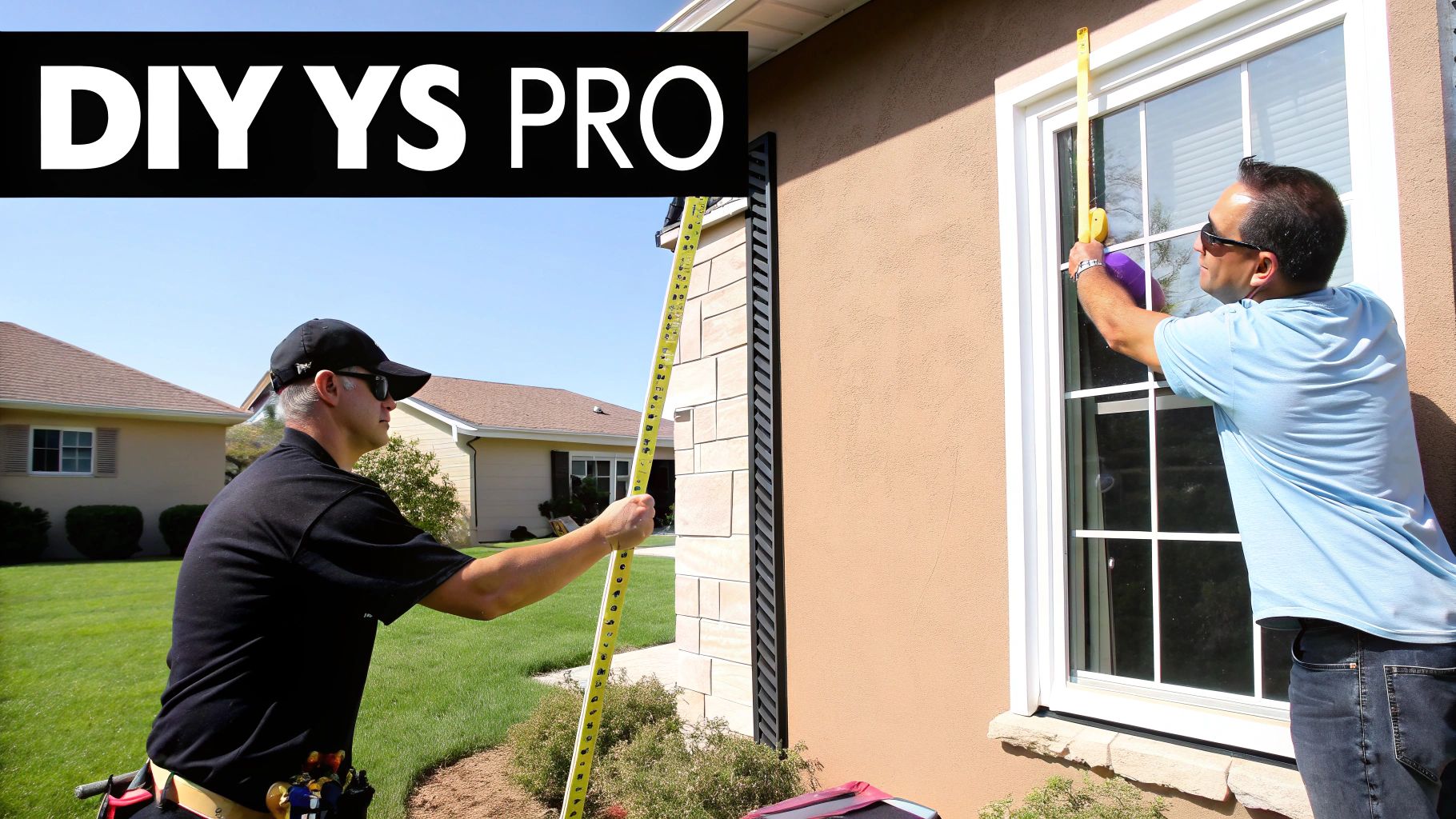
This is not a project where "good enough" works. Being off by even a quarter of an inch can mean the difference between a snug, professional-looking screen and one that leaves gaps or puts too much pressure on the frame. A poorly fitted screen can rattle in the wind, look sloppy, and might even fail completely down the road.
The Hurdles of a DIY Approach
Before you start pulling out your tools, it’s worth thinking about what the job really involves. It’s more than just a tape measure and a drill; a proper installation requires careful planning and the right gear to do it safely and securely.
Here are a few common challenges you might run into:
- Awkward Window Shapes: A standard rectangular window is fairly straightforward. But what about that beautiful arched window over the door? Or an octagon window in the bathroom? Those custom shapes require special techniques and tools to get the fit just right.
- Working at Heights: If you have a two-story home, you’ll be spending a lot of time on a ladder. That brings a whole new level of safety risks. Professionals come equipped with the right safety gear and are used to working high off the ground.
- Tricky Siding: Attaching screens to a home with brick, stucco, or vinyl siding is very different from drilling into a simple wood frame. Each material needs a specific type of hardware and technique to avoid damaging your home's exterior.
A professional installer does more than just screw a frame to your house. They’re trained to read the unique story of each window—the frame material, the sun exposure, the architectural style—to ensure the installation is perfect and built to last. That expertise is what elevates a good product into a great home improvement.
The Case for Professional Installation
Choosing a professional service like Sparkle Tech Screen Service turns a potentially frustrating weekend project into a completely hands-off experience. The biggest benefit? You're guaranteed a perfect, custom fit every single time. Pros use tools like laser measures to capture incredibly precise dimensions, meaning each screen is built to the exact specs of its window.
This completely takes the risk of measurement errors off the table, giving you a clean, gap-free look that maximizes both the cooling performance and your home’s curb appeal.
Beyond just the fit, professional installers bring a ton of practical experience to the job. They’ve seen it all and know how to handle tricky situations, like those high second-story windows or tough mounting surfaces, safely and efficiently. They also have access to a wider variety of commercial-grade hardware, ensuring they use the most secure and durable mounting method for your home’s specific needs.
Maybe the most important thing, though, is the peace of mind. A professional installation is an investment that’s almost always backed by a warranty on both the screens and the labor. If something isn't right, you have an expert to call. For anyone living in the Phoenix area, that local expertise is invaluable—it means your screens will be installed correctly to handle the brutal Arizona sun for years to come.
Understanding Sun Screen Costs and Long-Term Value
One of the first questions homeowners ask about exterior sun screens is, "What's this going to cost me?" It’s a smart question. The answer isn't a simple number, though—it's a blend of a few key factors that shape the final price. Knowing what goes into the cost helps you set a realistic budget and see why this is one of the best long-term investments you can make for your home.
The biggest factor, as you might guess, is the size of your windows. A small bathroom window just won't need the same amount of material as a huge living room picture window. The bigger the window, the more screen fabric and framing material are needed, which naturally nudges the price up.
But it’s not just about size. The quality of the materials is a huge piece of the puzzle. You can find basic options, but premium, vinyl-coated polyester screens mounted in a heavy-duty frame will have a higher upfront cost. The trade-off? They're built to withstand a decade or more of intense sun without falling apart. The screen's density—its "openness"—also plays a part. Tighter weaves like 90% or 95% screens usually cost a bit more than the standard 80% mesh.
Breaking Down the Numbers
So, what do those factors translate to in real dollars? Think of these as ballpark figures, since every project is unique and local pricing can vary.
If you’re handy and comfortable with a tape measure, the DIY route can definitely save you some money upfront.
- DIY Materials: For the screen fabric, frame components, and hardware, you can expect to spend somewhere between $30 and $100 per window.
- Professional Installation: Hiring a pro for a complete, hassle-free installation typically runs from $75 to $300 per window.
That price gap covers a lot more than just labor. It’s about getting a perfect, guaranteed result without any of the headaches.
To make this clearer, here’s a table that breaks down how different factors influence the cost for both DIY projects and professional installations.
Cost Estimation for Exterior Sun Screens
| Cost Factor | Typical DIY Cost Range | Typical Professional Installation Cost Range |
|---|---|---|
| Window Size | $30 – $70+ (Small to large) | $75 – $200+ (Small to large, includes fabrication) |
| Material Quality | $10 – $30+ (Standard vs. premium fabric/frame) | $15 – $50+ (Reflects higher-grade, warrantied materials) |
| Project Complexity | $0 – $20 (Arched/odd shapes may need special tools) | $25 – $100+ (Expertise for custom shapes & 2nd story) |
| Tools & Supplies | $20 – $50+ (One-time purchase of spline roller, etc.) | $0 (Included in service) |
| Labor | $0 (Your own time and effort) | $40 – $100+ (Per window, covers measurement & install) |
As you can see, a professional service bundles expertise, precision fabrication, and installation into a single price, while a DIY project requires you to source and manage each component yourself.
The True Value of Professional Service
While the lower DIY cost is appealing, going with a professional installer brings a level of value that's hard to measure in dollars alone. When you hire an expert team like Sparkle Tech Screen Service, you aren't just buying screens; you're buying a perfect fit and total peace of mind.
The real value of a professional installer lies in guaranteed precision and peace of mind. They eliminate the risk of costly measurement errors, ensure each custom-fabricated screen fits flawlessly, and use the correct hardware for a secure, long-lasting installation.
Here’s what that professional process actually looks like:
- Expert Measurement: A pro shows up with the right tools to get exact dimensions, which is crucial for non-standard windows like arches or custom shapes. One wrong measurement can mean starting over.
- Custom Fabrication: Each screen is then built from scratch to those precise measurements. This guarantees a tight, gap-free seal that maximizes the screen’s energy-blocking performance.
- Secure Installation: Professionals know how to safely handle ladders for second-story windows and how to properly anchor frames to different exteriors—brick, stucco, or siding—without causing damage.
- Warranty and Support: A reputable company stands behind their work. Your investment is protected by a warranty covering both the screens and the installation itself.
Ultimately, the price you pay for exterior sun screens is just the start of the story. The real return on your investment comes from the tangible savings on your cooling bills, the added comfort in your home, and the protection your furniture gets from fading. Whether you tackle it yourself or call in the pros, it’s an upgrade that keeps paying you back.
Simple Maintenance for Lasting Performance
You’ve invested in high-quality exterior sun screens, and the good news is, protecting that investment is incredibly straightforward. With just a little bit of routine care, you can keep your screens looking and performing their best for a decade or even longer. It’s a lot like washing your car—a simple cleaning removes the dirt and grime that naturally builds up, restoring its function and appearance.
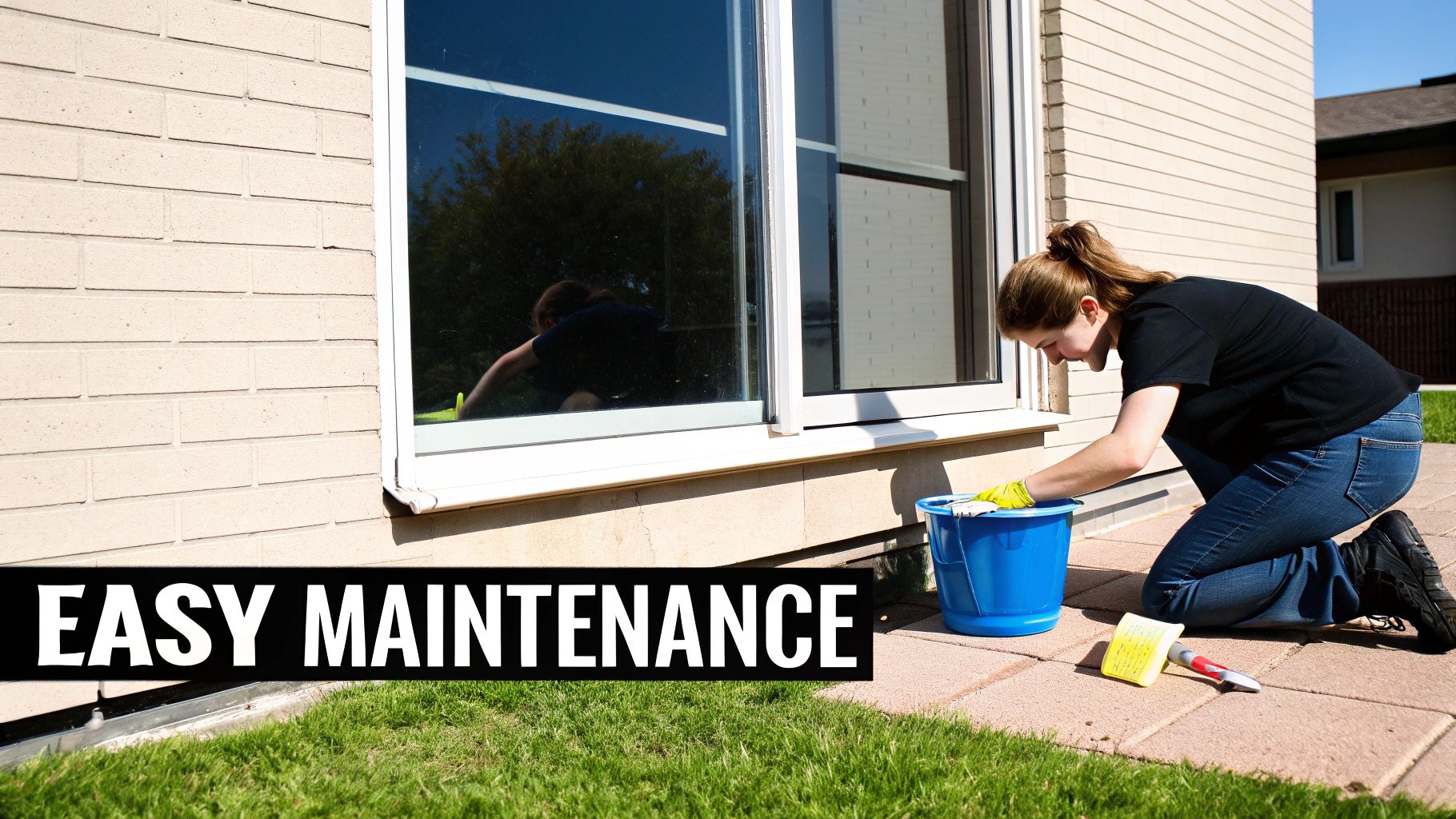
The best part? No harsh chemicals or fancy equipment needed. All it takes is a bucket of lukewarm water with a bit of mild dish soap. This gentle solution is perfect for cutting through layers of dust, pollen, and dirt without harming the screen's durable fabric.
Your Simple Cleaning Routine
Keeping your screens in top shape is a process you can easily handle once or twice a year. We find that a seasonal cleaning in the spring and again in the fall is usually all it takes to keep them looking brand new.
Here’s our go-to, step-by-step method:
- Gentle Rinse: Start by lightly spraying the screens with a garden hose. This knocks off the loose, surface-level dust and debris. Just be sure to avoid a high-pressure nozzle, which can be too aggressive for the mesh.
- Soft Wash: Grab a soft-bristled brush or a microfiber cloth and dip it into your soapy water. Gently scrub both sides of the screen to lift away any stuck-on grime.
- Final Rinse: Give the screen a thorough rinse with clean water from your hose, ensuring you wash away all the soap residue.
- Air Dry: Let them air dry completely. That's it—no special drying techniques are required.
Proactive Inspections to Prevent Problems
Beyond cleaning, it’s smart to do a quick visual check-up every so often, especially after a big storm with high winds or hail. Taking a few minutes to look things over can help you catch small issues before they turn into bigger headaches.
A proactive mindset is key. Spending just a few minutes on a visual inspection ensures your screens continue to deliver maximum energy savings and comfort, season after season.
During your inspection, look for a couple of key things. First, check that all the mounting hardware is still tight and secure against the window frame. Next, examine the screen fabric itself for any small tears or punctures. Catching minor damage early makes the fix much simpler and more affordable.
If you spot anything that needs attention, a professional like Sparkle Tech Screen Service can handle the repairs expertly, making sure your screens remain a valuable asset for your home for years to come.
Got Questions About Exterior Sun Screens? We've Got Answers.
When homeowners start looking into exterior sun screens, a few questions always pop up. It's a smart investment, and you want to be sure it’s the right one for your home. Let's tackle some of the most common concerns right off the bat.
The number one question is almost always, "Will they make my house dark inside?" It's a great question, but the answer is a pleasant surprise. Modern solar screens are engineered to cut the intense glare and heat from the sun, not the light itself. Think of them more like sunglasses for your windows. An 80% screen, for instance, blocks a huge amount of solar heat while still letting in plenty of soft, natural light. Your rooms will feel comfortable, not cavernous.
Built to Last and Easy to Live With
So, how do they hold up to the weather? These aren't your average, flimsy window screens. Quality exterior sun screens for windows are made from a super-durable, vinyl-coated polyester mesh designed to resist punctures and tearing. The frames are mounted solidly to your home, so they can easily handle years of sun, wind, and rain.
We often hear: "Can I still open my windows?" Absolutely. The screens are installed on the outside of the window frame, so they don't get in the way of the window's normal operation. You can open and close your windows for fresh air whenever you like.
Here’s a bonus a lot of people don’t think about: these screens are also fantastic bug screens. They keep insects out far more effectively than standard mesh, all while they’re busy blocking heat. It’s a two-for-one deal that boosts your home’s comfort and your energy savings.
Ready to discover how much cooler and more comfortable your home can be? For a fast, professional quote on custom-fit exterior sun screens, contact the experts at Sparkle Tech Screen Service. Get your project started today by visiting https://sparkletechscreenservice.com.


