


If you've ever thought about enclosing your patio, you already know it's a fantastic way to add usable living space without the massive cost of a full room addition. It’s one of those home improvements that genuinely changes how you live, turning a space you might only use occasionally into an all-season outdoor living room.
The Best Upgrade for Arizona Outdoor Living
Picture this: stepping out onto your patio, coffee in hand, without a single mosquito to swat. Or enjoying a beautiful Arizona sunset without being baked by the last of the day's intense heat. That's what a screened-in patio does—it’s less of a construction project and more of a lifestyle upgrade.
This isn't just a local trend, either. People everywhere are investing more in functional outdoor spaces. In fact, the screen enclosure market is expected to be worth around $1.5 billion in 2025 and is projected to hit $2.3 billion by 2033. It's clear homeowners see the value in upgrading their own backyards. You can read more about these market insights on screen enclosure growth to see just how popular this is becoming.
It's More Than Just a Bug Screen
For those of us here in Arizona, a screen enclosure offers a whole different level of benefits tailored to our unique desert climate. The perks go way beyond just looking nice; they directly improve your day-to-day comfort.
Here’s what you really gain:
- Total Bug-Free Living: At last, you can enjoy an evening outside without being on the menu for mosquitoes, flies, and other pests that love our climate.
- A Cooler, Shadier Retreat: A good screen enclosure provides serious shade, which can drop the temperature on your patio significantly. This can even help take some of the load off your AC unit.
- A Safe Zone for the Whole Family: It creates a secure, contained area for kids and pets to play safely, shielded from the direct sun and without any chance of wandering off.
- Monsoon Season Sanctuary: You can finally sit back and watch a monsoon roll in, enjoying the storm without having all the dust and debris blasted across your patio furniture.
When you screen in your patio, you're not just putting up a barrier; you're reclaiming your backyard. It quickly becomes the go-to spot for everything from morning coffee to family dinners, all while being completely protected. It's a simple project that dramatically expands how you use your home.
Choosing the Best Screen for Arizona Sun and Pests
Picking the right screen for your patio is a bigger deal than most people think, especially out here in Arizona. The relentless sun and an army of pests mean your average, off-the-shelf fiberglass screen just isn't going to last. You're looking for that sweet spot between toughness, clear views, and solid protection.
Think of your screen as more than just a bug barrier. The right material actively makes your home more comfortable. It’s what turns a patio from a "nice-to-have" space you only use a few months a year into a true outdoor living room you can enjoy year-round.
This is all about adding a protected, multi-use space to your home.
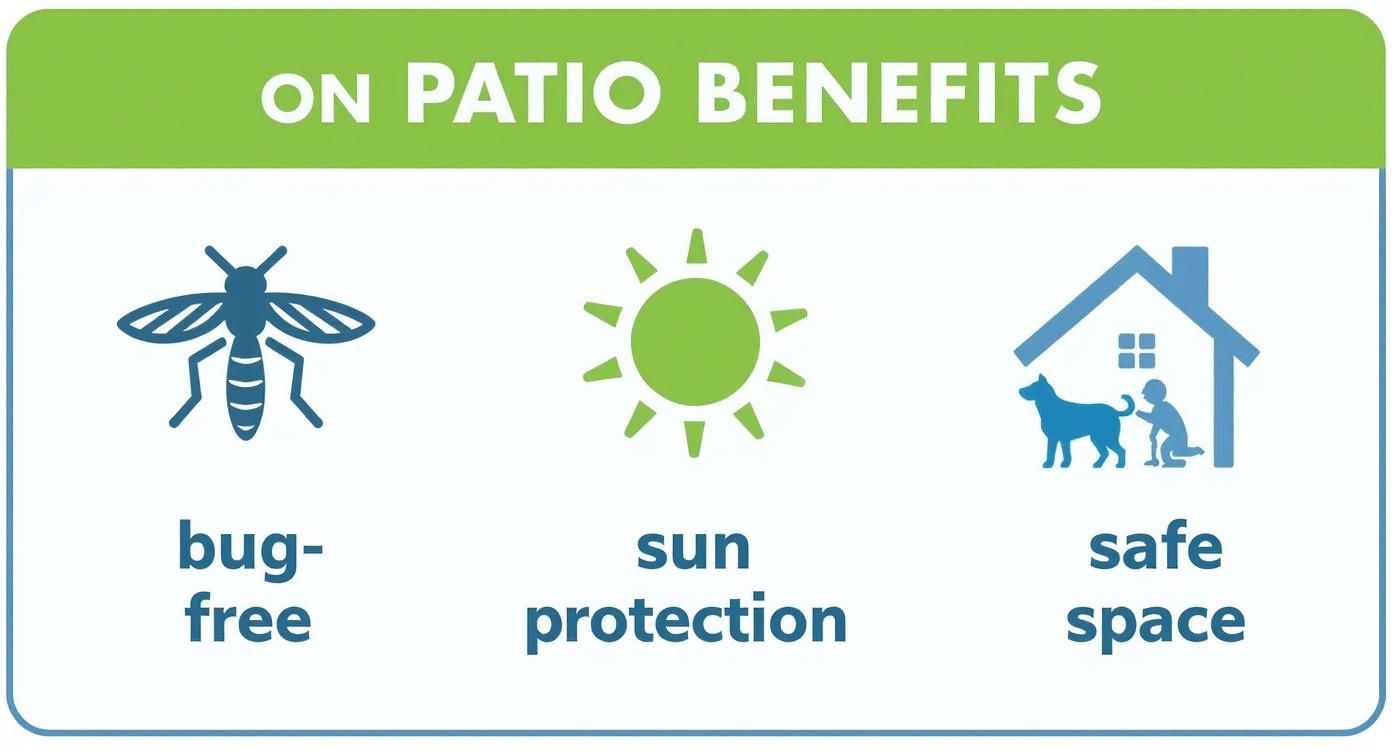
As you can see, the real wins are creating a bug-free zone, getting some much-needed shade, and having a safe, contained area for kids and pets to play.
Solar Screens Versus Standard Insect Screens
Your first major decision comes down to standard insect screens vs. high-performance solar screens. While both will keep the mosquitos away, that's where the similarities end. Standard screens are built for one job: pest control. They offer very little in the way of shade or UV protection.
Solar screens, however, are a completely different beast. They're made from a much thicker, specially coated material engineered to absorb and deflect a huge chunk of the sun's heat and damaging UV rays before they ever hit your patio—or your windows.
So, what does that actually mean for your home?
- Serious Heat Reduction: A good solar screen can block anywhere from 65% to 90% of solar heat. This makes a massive difference in the temperature on your patio and even cools down the adjacent indoor rooms.
- Fade Protection: They stop that same percentage of UV radiation, which is what causes your beautiful patio furniture, rugs, and décor to fade and break down over time.
- Real Energy Savings: By cutting down on the heat pouring into your home, solar screens give your air conditioner a break. That translates to lower energy bills, especially during those brutal summer months.
Finding the Right Material for Your Needs
Even after deciding between standard and solar, you've still got material choices to consider. For example, if you've got a big dog who likes to lean on the screen or kids who treat the backyard like a soccer pitch, flimsy fiberglass will tear in a heartbeat. In that situation, a pet-resistant screen made from tough, vinyl-coated polyester is a no-brainer. It's built to take a beating.
For a sharp, modern look and maximum durability, aluminum screens are another fantastic choice. They don't sag over time and stand up great to the elements, though a hard enough impact can leave a dent.
When it comes to picking the perfect screen for our harsh desert climate, it's all about matching the material to your specific needs. The table below breaks down the most common options we see here in Arizona.
Screen Material Comparison for Arizona Patios
| Screen Type | Primary Benefit | Durability | Sun/UV Blocking | Best For |
|---|---|---|---|---|
| Fiberglass | Cost-Effective | Low | Minimal | Shaded, low-traffic areas where budget is the main concern. |
| Aluminum | Crisp Views & Strength | Medium | Low | Homeowners wanting a classic look that won't sag over time. |
| Pet Screen | Tear-Resistant | High | Moderate | Households with active pets or small children. |
| Solar Screen | Heat & UV Blocking | High | High (up to 90%) | Patios with direct sun exposure; anyone looking to lower energy costs. |
Ultimately, the best screen is the one that solves your biggest problem.
The goal is to match the screen's primary benefit to your patio's biggest challenge. For a west-facing patio that gets blasted by the afternoon sun, a high-performance solar screen is non-negotiable. For a shaded, north-facing patio where pets are the main concern, a tough pet screen might be all you need.
The technology is always improving, too. We're seeing new products like combination screened-sunshades and specialized privacy screens hit the market. In fact, the demand for these custom privacy screens is expected to create a $300 million market by 2028. It’s clear that homeowners want tailored solutions, and you can explore more about outdoor structure market trends to see how things are changing.
Taking the time to make the right choice now ensures your new screened-in patio won't just look great, but will be perfectly suited for your Arizona lifestyle for years to come.
DIY Project vs. Hiring a Professional Installer
So, you're at a crossroads: should you build this screened-in patio yourself or call in the pros? It's a big decision. Going the DIY route can be incredibly satisfying and will definitely save you a chunk of change on labor costs. But let's be honest—this isn't your average weekend project. It demands real skill and the right tools.
When you decide to build it yourself, you're wearing all the hats: project manager, carpenter, and quality control. This is a game of precision from the get-go, and one small slip-up can snowball into a major headache.
The Demands of a DIY Screen Enclosure
To pull off a professional-looking screen enclosure, you need more than just a can-do attitude. A solid foundation of hands-on experience is what separates a beautiful, functional space from a wobbly, sagging mess.
Here’s a look at what you’re really signing up for:
- Precision Measuring: That old saying, "measure twice, cut once," is the golden rule here. Being off by even a quarter-inch can mean wasted aluminum and frames that just won't fit.
- Accurate Cutting: You'll need to be comfortable with a miter saw to get those clean, perfect angles for the frame corners. This is what makes the whole structure square, stable, and strong.
- Screen Stretching and Splining: Here's where the real artistry comes in. You’ll be using a spline roller to carefully push the screen and spline into the frame's channel. The goal is a drum-tight, wrinkle-free finish, which is a lot harder to achieve than it looks on video.
The most common pitfall for DIYers is getting the screen tension wrong. If it's too loose, it will flap around in the Arizona wind and look sloppy. But if you pull it too tight, you can bow the frame or even tear the screen, forcing you to buy a whole new panel and start over.
A professional brings experience from hundreds of jobs to the table. They know how to handle an uneven patio slab or a tricky roofline. They have the specialized tools to get every single panel perfectly taut, and they can usually get it all done in a fraction of the time it would take most homeowners.
When to Call a Professional Installer
Hiring a professional isn't just about saving yourself the hassle; it's about paying for a guaranteed, high-quality result. They bring efficiency, specialized gear, and the know-how to solve problems you didn't even know you had.
Think about what your own time is worth. Plus, there’s the peace of mind that comes with a warranty. If a screen installed by a pro starts to sag a year later, it’s on them to fix it. If your DIY screen sags, you’re the one heading back to the hardware store.
When you start searching for an installer, you're looking for a trustworthy local business. Understanding what sets the great ones apart can be helpful. A little insight into proven local business marketing strategies can even give you clues about a company's professionalism and reputation.
In the end, it boils down to a realistic self-assessment. If you already have the tools, feel confident in your precision carpentry skills, and have plenty of time to dedicate to the project, DIY could be a great fit. For everyone else, calling an expert like Sparkle Tech Screen Service ensures your investment is sound and the job is done right the first time.
Navigating Arizona Permits and Your Project Budget
Before you get too far into dreaming about your new bug-free oasis, we need to tackle two of the biggest hurdles: local permits and the actual cost. Getting these two things squared away first can save you from major headaches, unexpected fines, and a budget that gets completely out of hand. A lot of Arizona homeowners are caught off guard when they find out a seemingly simple patio screen job might need a stamp of approval from the city.
The big question is usually whether your project involves permanent structural changes. If you’re tying the new enclosure into your home’s existing roofline or pouring fresh concrete footings, you can bet you'll need a permit. In places like Phoenix, Scottsdale, or Tucson, any work that changes your home's original structure or footprint is going to require a plan review and an official go-ahead.
On the other hand, if you're just installing a straightforward, pre-fab screen kit onto an existing covered patio, you might be in the clear. But here’s the thing: the rules are different everywhere. Your very first move should be to hop on your local city or county building department's website. Seriously, a five-minute phone call can prevent a world of pain down the road.
Breaking Down the Real Cost of Your Screened-In Patio
Once you've sorted out the permit situation, it's time to talk money. What you'll ultimately spend comes down to three main things: how big your patio is, the quality of materials you pick, and whether you're a DIY warrior or hiring a pro.
Let's look at some ballpark figures for a typical 10×20 foot patio:
- DIY Material Costs: If you're tackling this yourself, you can expect to spend somewhere between $1,500 and $3,000 for good-quality materials. This covers the framing, screen, a door, and all the hardware you'll need.
- Professional Installation Costs: To have a pro handle that same 10×20 space, the price usually lands between $3,500 and $7,000. That figure includes all labor and materials, plus the confidence that comes with professional work and a warranty.
The materials you choose play a huge role here. Swapping a standard fiberglass screen for a high-performance solar screen will bump up your initial cost, but you'll feel the difference in lower energy bills. Same goes for the frame—a heavy-duty aluminum frame costs more than a basic one, but it’s built to withstand the intense Arizona sun for years to come.
Whether you go it alone or hire out, the goal is to manage your money well. Getting a handle on creating a detailed project budget is the best way to make sure your dream patio doesn't turn into a financial nightmare.
A quick word of advice: the cheapest quote is rarely the best deal. Paying a little more for a professional installation often means you're getting better materials, a sturdier build, and a warranty that protects your investment.
Investing in outdoor living is a huge trend right now. The market for structures like screen enclosures hit a value of $2.35 billion in 2024 and is expected to climb to $3.66 billion by 2033, with North America driving that demand. People are clearly seeing the value in creating comfortable, usable outdoor spaces. A well-planned budget just ensures your project is a wise investment, not just a purchase.
Your Guide to a Flawless Screen Enclosure Installation
So, you’re ready to enclose your patio. Whether you're a seasoned DIYer gearing up for a weekend project or you’re hiring a pro and just want to know what to expect, understanding how it all comes together is crucial.
Putting up a screen enclosure is a game of precision. From laying out the frame to hanging the door, every step builds on the last. Think of this as your project roadmap—it’ll give you the confidence to either tackle the job yourself or have a smart conversation with your installer so there are no surprises.
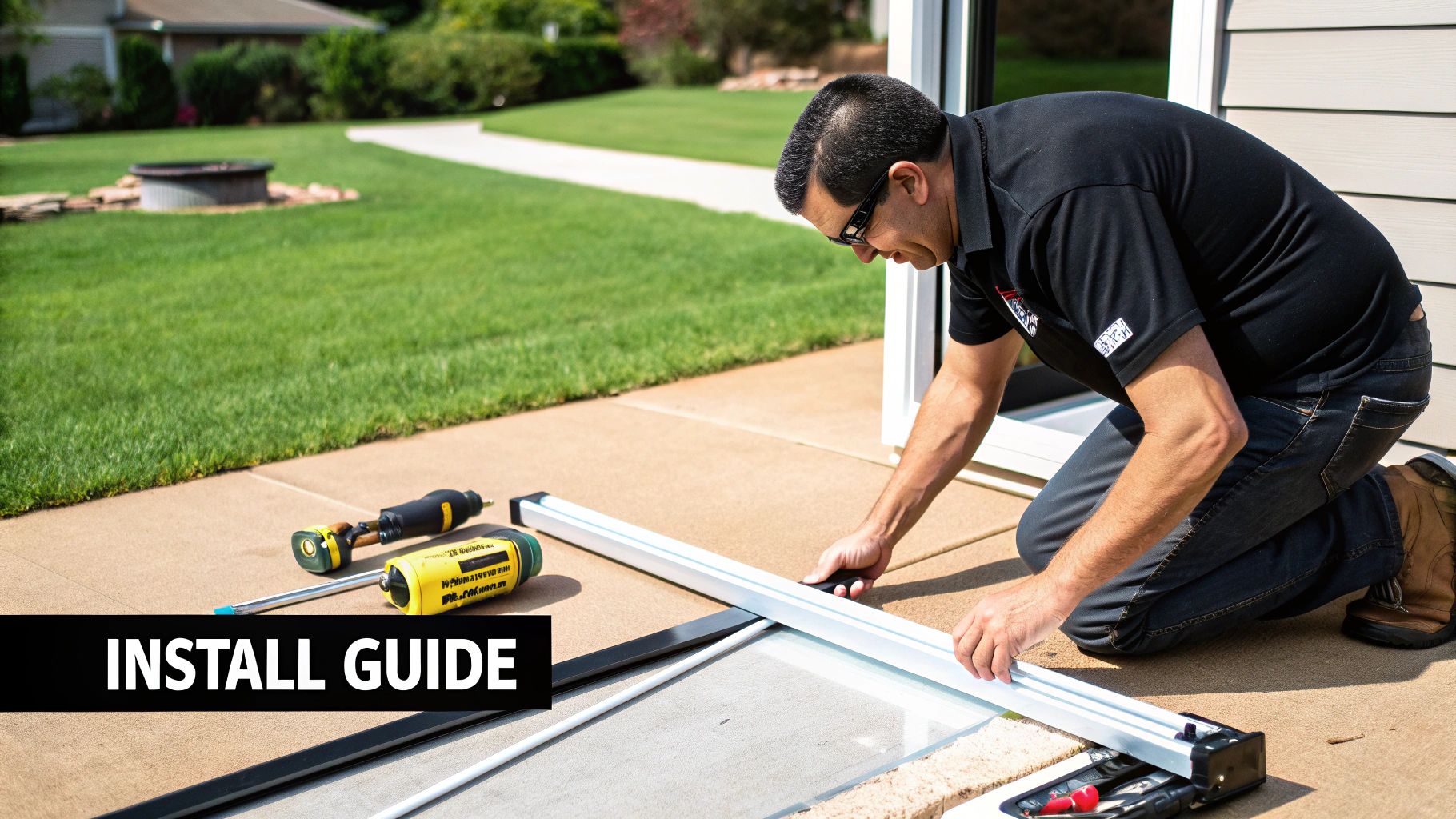
Meticulous Planning and Measuring
Every solid screen room begins long before the first saw blade spins. The old carpenter’s rule—"measure twice, cut once"—is the absolute law here. This is the stage where you’ll map out the entire structure, figuring out the exact placement for every post and beam.
You have to think about a few things most people miss:
- Patio Slope: Almost every concrete patio is sloped for water drainage. Your frame, however, needs to be perfectly level and plumb, which means you have to compensate for that slant.
- Attachment Points: You need to find solid places to anchor the frame to your house, fascia, and the concrete itself. These connections are what keep the whole thing standing during a fierce Arizona monsoon.
- Obstructions: Take note of any light fixtures, outlets, or hose spigots. It’s a lot easier to plan around them now than to try and move them later.
Building and Securing the Frame
Once your measurements are triple-checked, it's time to build the skeleton. This aluminum framework is the backbone of the entire project. Vertical posts get cut to length and bolted securely to the concrete, while horizontal beams connect everything and tie the structure back to the house.
Here’s a pro tip that’s non-negotiable: always pre-drill your holes for screws and fasteners. Forcing a screw into aluminum can cause it to crack or split, weakening the connection. Pre-drilling ensures a strong, clean joint every time. This is also where quality materials really shine—a well-engineered frame won't sag or bend, giving you a structure that lasts for decades.
Securing the frame isn't just about driving screws. It's about creating a rigid box that can handle high winds and daily use. A professional knows exactly which fasteners to use for different surfaces—stucco, wood, or concrete—to guarantee a rock-solid build.
Installing the Screen Panels
This is the magic moment when your enclosure starts to look like a real room. It’s also where technique is everything. Installing a big panel of screen is a surprisingly delicate dance that requires patience and the right tool: a spline roller.
The screen material is laid over the frame opening, gently pulled taut, and then locked into place by rolling a vinyl cord (the spline) into a channel on the frame. The goal is a perfectly smooth, drum-tight finish with zero wrinkles.
From experience, the best way to do this is to work in a star pattern, kind of like tightening the lug nuts on a car tire. Start by splining a few inches in the middle of each of the four sides. This helps spread the tension evenly across the mesh. If you just start at one corner and work your way around, you’ll almost always pull the screen too tight on one side, which can bow the frame or even tear the screen.
Applying the Final Touches
The last lap is all about function and finish. This means hanging the screen door, adjusting it to swing perfectly, and making sure the latch catches securely. You’ll also install the handle and any door closers.
Finally, we run a bead of caulk where the frame meets the house to create a weatherproof, bug-proof seal. It’s these little details that separate a decent job from a truly professional one, leaving you with a beautiful new space that’s ready to enjoy.
Keeping Your New Screened-In Patio in Top Shape
You've made a great addition to your home, and now it's all about keeping it that way. Here in Arizona, a little bit of regular upkeep on your screened-in patio makes a massive difference. Think of it as protecting your investment from our intense sun and wild monsoon storms. A few minutes of care a couple of times a year is all it takes to keep things looking and working great.
Dust is just a fact of life here, and it loves to cling to screens, blocking your view and the breeze. The number one rule for cleaning? No high pressure. A power washer is your screen's worst enemy—it can stretch, warp, or even tear the mesh in a heartbeat.
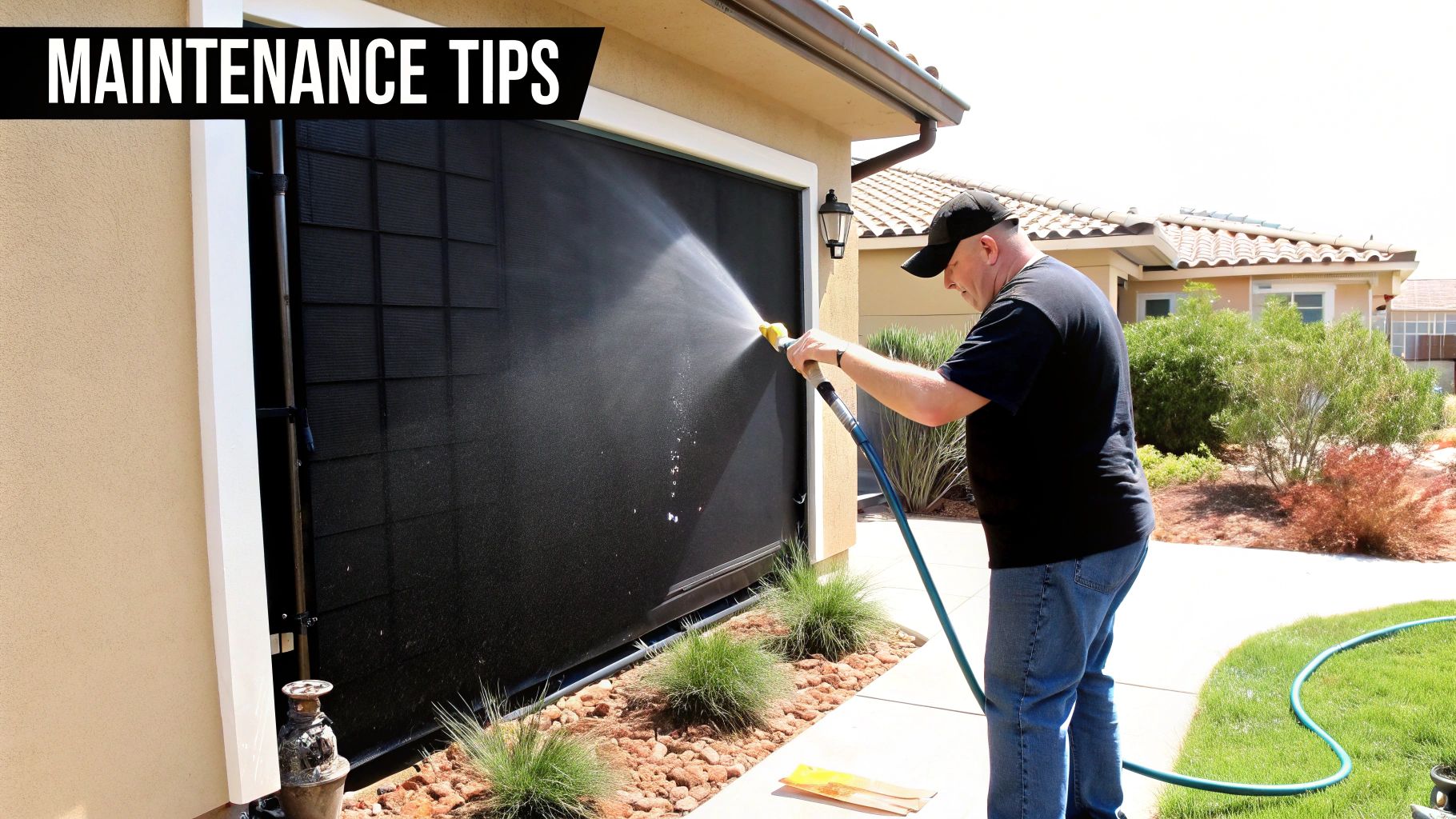
The best tool for the job is a simple garden hose with a gentle spray nozzle. That's all the pressure you need to rinse away the dirt. If you've got some stubborn grime that won't budge, a soft-bristle brush dipped in a bucket of mild, soapy water will do the trick without causing any damage.
Your Quick Maintenance Checklist
I always tell homeowners to do a quick walk-around a few times a year, especially right after monsoon season wraps up. Catching small issues early saves you a ton of hassle and money down the road.
Here's what to look for:
- Rinse Away the Dust: Give the screens a gentle spray with the hose. This is crucial after a big dust storm to keep the air flowing and your view clear.
- Look for Rips and Tears: Walk the perimeter and inspect each panel for small holes or tears. Pay special attention to the lower sections, as they tend to see the most wear.
- Check for Sagging: Eyeball each screen panel. Is the mesh still tight and flat? Proper tension is what gives your enclosure its strength and clean look.
- Inspect the Frame: Give the aluminum posts a little wiggle. Check the screws and fasteners where the frame attaches to your house and the concrete slab to make sure everything is still solid and secure.
Pro Tip: Found a small tear? You don't necessarily need a whole new screen panel. Most hardware stores sell screen patch kits. They're basically small, adhesive-backed pieces of screen that offer a quick, effective fix for minor damage. It keeps the bugs out and stops the tear from spreading.
Following this simple routine will easily add years to the life of your screened-in patio, ensuring it stays a clean, safe, and relaxing spot for your family.
If you come across damage that's more than a small patch can handle, or if your screens are starting to look saggy and tired, it's time to call in a pro. Sparkle Tech Screen Service handles everything from simple repairs to complete rescreening projects. We’ll get your outdoor living space back into perfect condition in no time. Get a quick quote for your screen needs today!


