


What's the best screen for a porch? The honest answer is: it depends entirely on what you need it to do. For most people, standard fiberglass is a fantastic, budget-friendly choice. But if your porch bakes in the afternoon sun, a solar screen is going to be your best friend. And if you've got a furry friend who loves to climb or scratch, a durable pet-resistant screen is less of a feature and more of a necessity.
Finding the Right Screen for Your Porch
Choosing the perfect screen for your porch is really a balancing act between durability, how clear you want your view to be, and how much protection you need from the elements. Here in Arizona, our intense sun and dry heat are the biggest factors. A screen that's perfectly fine in a milder, shadier climate just won't last long against our relentless UV rays.
A good screen does more than just keep the bugs out. It can completely change your outdoor living space by adding shade, a bit of privacy, and letting the breeze through. It's no wonder people are investing more in these spaces. The global market for outdoor privacy screens was valued at a whopping USD 2.98 billion in 2024, and it's only expected to grow as more people look to upgrade their homes. You can dig into more of the market trends for outdoor screening at businessresearchinsights.com.
Think of your porch screen as more than just a bug barrier. It’s a crucial part of your home’s comfort and even its energy efficiency, especially in a sun-drenched place like ours.
To help you get started, let's look at the most common options and what they're really good for. Each material is designed for a specific job, whether it's giving you the clearest view or dramatically cooling down your patio.
Porch Screen Options at a Glance
Here’s a quick-glance table to help summarize the top contenders. Think of this as your cheat sheet for figuring out which material aligns with your goals for your outdoor space.
| Screen Type | Primary Benefit | Best For | Average Lifespan |
|---|---|---|---|
| Fiberglass | Excellent visibility & affordability | Standard bug protection, great airflow | 10-15 years |
| Aluminum | Superior durability & rigidity | High-wind areas, long-term use | 20-30 years |
| Solar Screen | Blocks UV rays & reduces heat | Arizona patios, sun-facing porches | 10-15 years |
This table gives you a great starting point. As we dive into each option in more detail, keep your main priority in mind. Are you trying to block that harsh afternoon sun, make sure your dog doesn't tear through the screen, or just enjoy a bug-free breeze? Knowing your "why" will point you directly to the best screen for your porch.
A Detailed Comparison of Porch Screen Materials
When you’re trying to pick the best screen for your porch, you’re really balancing a few key things: cost, how long it'll last, how well you can see through it, and what specific problems you're trying to solve. Standard fiberglass is where most people start, but in a place like Arizona, how it holds up is a world away from the specialized options designed for our intense sun and unique environment.
Let's break down which material actually makes sense for your home and lifestyle.
The best way to start is by figuring out what your biggest headache is. Are your pets tearing up your current screens? Is the afternoon sun turning your patio into an oven? Or are you just trying to keep the bugs out?
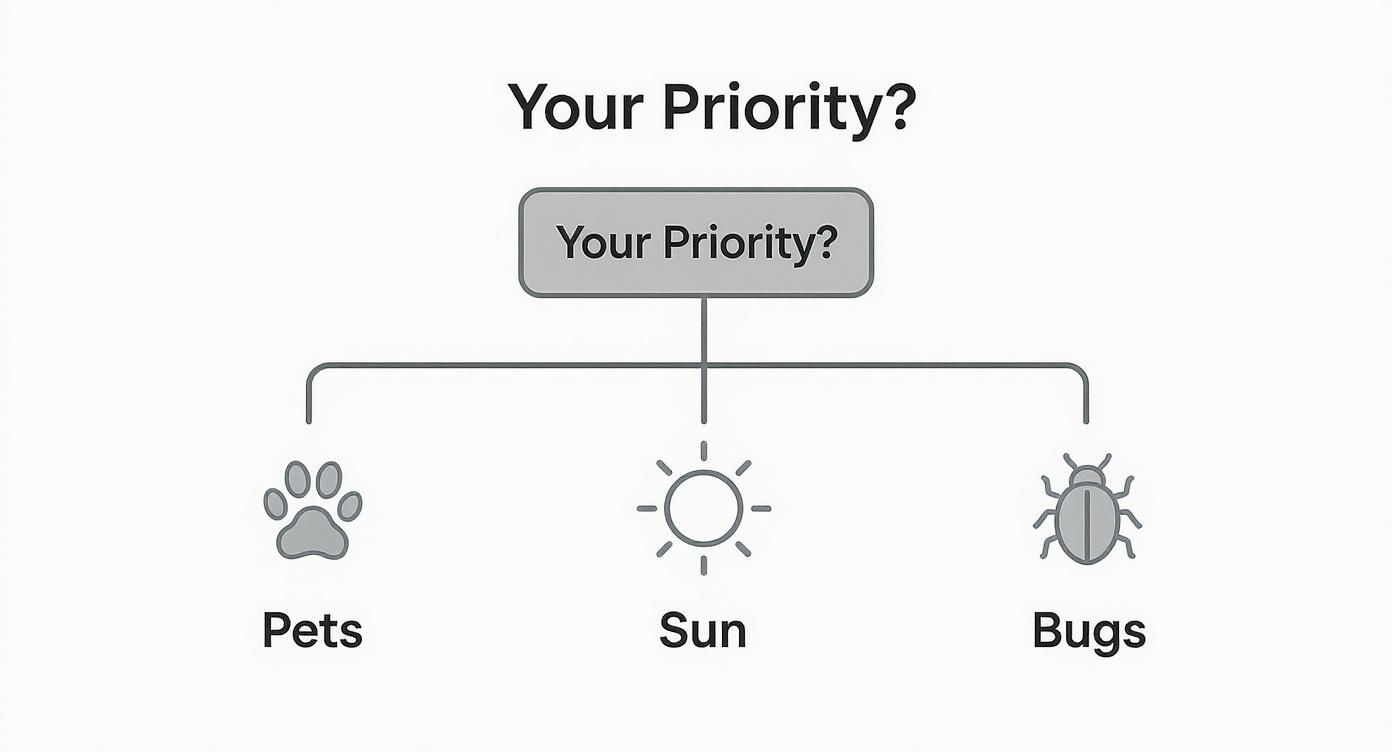
As you can see, once you lock in your main goal, the right material becomes much clearer.
Fiberglass: The All-Around Standard
There's a good reason standard fiberglass screen is the most common choice out there. It's affordable, a breeze to install, and gives you great visibility and airflow. It's made from vinyl-coated, woven fiberglass threads that do a solid job of keeping insects out without making your porch feel like a cave.
But that flexibility is both a blessing and a curse. While it won't get a permanent dent like aluminum, it can definitely stretch or tear over time, especially if you've got kids or pets pushing against it. Under the intense Arizona sun, that vinyl coating can also get brittle and break down much faster than other materials, usually giving you about 10-15 years of life before it’s time for a replacement.
Key Takeaway: Fiberglass hits the sweet spot between clear views and low cost for everyday use. Its main downside is that it just doesn't have the staying power of metal or other specialty screens.
Aluminum: For a Crisp, Long-Lasting Look
If you're looking for something more durable, aluminum screening is a major step up. Its rigid metal structure means it won't sag or stretch out, giving you a clean, sharp look that holds up for years. This makes it a fantastic pick for larger screen panels where fiberglass might start to droop.
The main catch is that aluminum can dent if something hits it, and it can crease during installation if you aren't careful. While it's built to resist rust, the finish can corrode in salty air, though that's not a huge worry for most of Arizona. For anyone wanting a durable, low-maintenance screen that keeps its shape, aluminum is a much better bet.
Solar Screens: Your Best Defense Against the Sun
Let's be honest—for any porch in Arizona that gets direct sun, a solar screen is less of a luxury and more of a necessity. These screens are specifically built to block a huge chunk of the sun's heat and UV rays, with options that provide anywhere from 80% to 95% blockage. This does more than just cool down your porch; it protects your outdoor furniture from fading and can even help lower your home's air conditioning bills.
So what's the trade-off? You'll sacrifice a bit of visibility and airflow. The tighter weave needed to block all that sun makes the screen darker and can cut down on the breeze. But for most people, the incredible comfort of a cooler, glare-free space is well worth it, making this the best screening for porch areas that get blasted by the sun.
- 80% Solar Screen: This is a great middle-ground, cutting down a ton of heat while still letting you see out pretty clearly.
- 90% Solar Screen: For west-facing porches that take a beating from the afternoon sun, this provides the maximum heat and glare reduction you can get.
Pet-Resistant Screens: Built for Claws and Paws
If you have a dog that scratches at the door or a cat that loves to climb, pet-resistant screen is a lifesaver. Made from a tough, vinyl-coated polyester, this stuff is about seven times stronger than standard fiberglass. It’s literally designed to take a beating from claws and paws without ripping to shreds.
While it's incredibly tough, pet screen is thicker and more noticeable than standard fiberglass, which will darken your porch a bit and reduce some airflow. It also costs more upfront. But for any home with active pets, that initial investment pays for itself by ending the frustrating cycle of constantly repairing and replacing torn screens.
Premium Options: Stainless Steel and Bronze
When you want the absolute best in longevity with a classic, high-end look, stainless steel and bronze screens are in a league of their own. Stainless steel gives you incredible strength, is highly resistant to corrosion, and still offers fantastic visibility. It's a premium product that will stand up to just about anything without sagging or tearing.
Bronze screen, made from a copper alloy, has a gorgeous, timeless look that weathers into a beautiful dark bronze patina. It's extremely durable but also carries the highest price tag. Both of these are for homeowners who are looking for maximum performance and a sophisticated finish for their porch.
Understanding Mesh Count and Sun Protection
Picking the right screen material is only half the battle. If you really want the best screening for your porch, you need to get familiar with two key specs that make all the difference in your daily comfort: mesh count and shading percentage. These numbers dictate everything from whether tiny gnats can crash your party to how much heat you'll feel on a blazing Arizona afternoon.
It's clear more and more homeowners are paying attention to these details as they invest in their outdoor spaces. The screen enclosure market, valued at around $1.5 billion in 2025, is expected to swell to $2.3 billion by 2033. People want functional, comfortable patios, and that means choosing the right screen has become more important than ever.
This trend really highlights why homeowners need to look past the basic material and dig into the specifics that determine how a screen actually performs in the real world.
Decoding Mesh Count
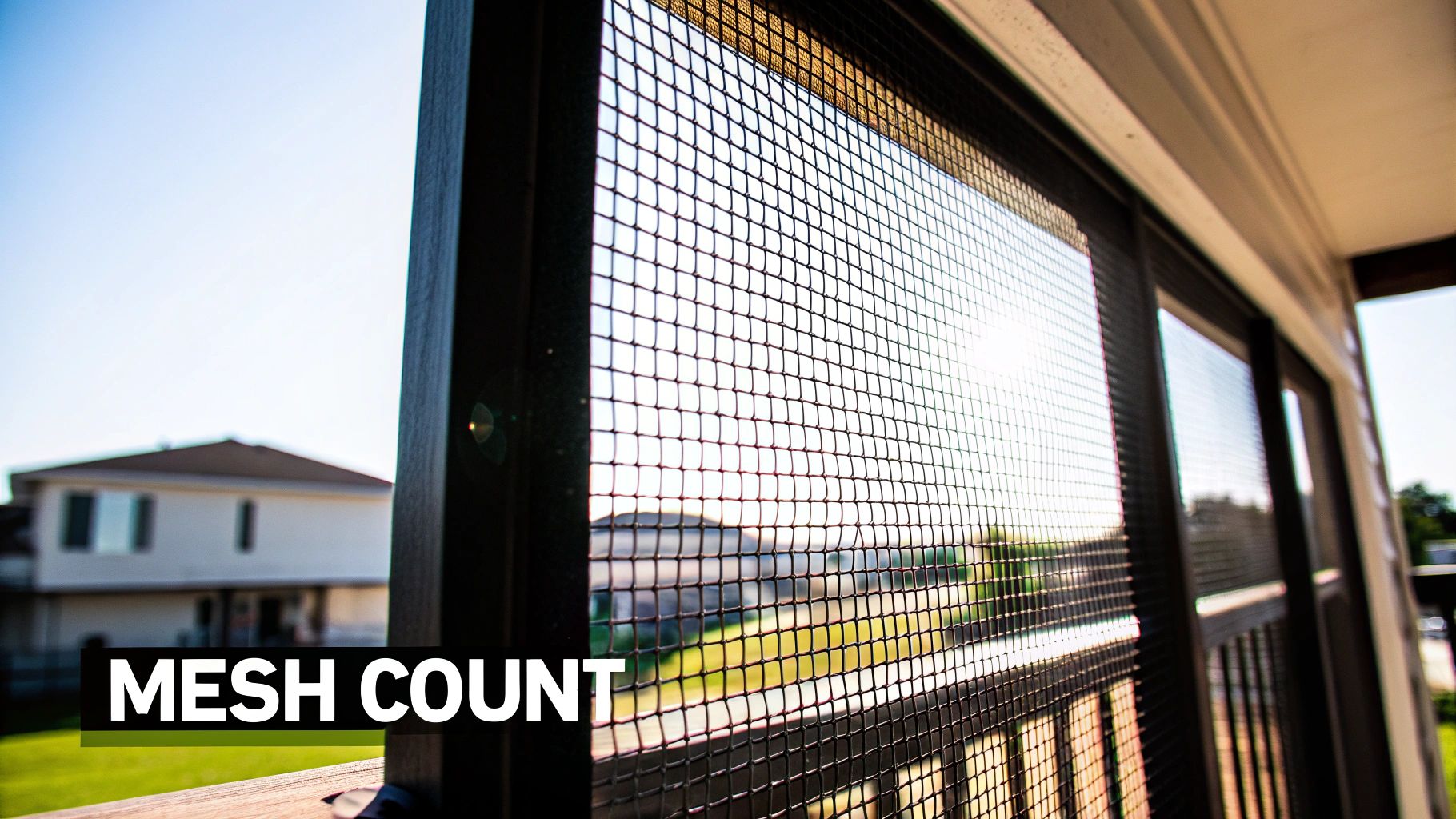
Simply put, mesh count is the number of strands in a one-inch square of screen. You’ll see it written as two numbers, like 18×14 or 20×20, which represent the vertical and horizontal strands. The denser the weave, the smaller the holes.
Your standard fiberglass or aluminum screen usually has an 18×14 mesh count. This is a fantastic all-rounder. It does a great job stopping bigger bugs like flies and mosquitoes while still letting a nice breeze through and keeping your view clear. For most general-purpose screening, it’s the go-to choice.
But what if you live near a wash or have those pesky little no-see-ums? That's when you need a tighter weave. A 20×20 mesh has much smaller openings that keep those tiny insects out. The trade-off is slightly less airflow and a bit more obscurity in your view, but it's a worthwhile compromise if it means you can finally relax outside without being eaten alive. The structure of windproof, micro-perforated mesh materials shows just how much performance is tied to these fine details.
Practical Tip: Ask yourself what your biggest frustration is. If it’s the constant drone of gnats, upgrading to a 20×20 mesh is a no-brainer. If you’re all about catching every bit of breeze, stick with the 18×14.
Shading Percentage: Your Shield Against the Sun
For anyone living in Arizona, a screen’s shading percentage might be its most important feature. This number tells you exactly how much of the sun's heat and light the screen will block. Solar screens are engineered specifically for this job, with high shading percentages designed to take on our intense sun.
A screen with an 80% shading percentage is an incredibly popular choice here. It cuts down on heat significantly, making your patio usable even in the middle of the day, all while keeping a pretty decent view of your yard.
For those west-facing patios that get absolutely hammered by the afternoon sun, stepping up to a 90% or even 95% sun-blocking screen can be a total game-changer. The difference is night and day.
- Less Glare: You can actually read a book or use your tablet without squinting.
- Cooler Temps: It creates a genuinely comfortable, inviting outdoor room.
- UV Protection: Your patio furniture, rugs, and decking are shielded from fading and sun damage.
Yes, these higher-percentage screens will darken your view a bit more than a standard screen, but the comfort they provide is almost always worth it. By pairing the right mesh count with the right shading percentage, you can dial in the perfect combination of bug protection, cooling shade, and airflow for your home.
Creative and Practical Porch Screening Use Cases
When you think about screening in a porch, you might just picture a traditional front porch with a couple of rocking chairs. But the screen materials we have today can do so much more. They can completely transform overlooked parts of your property into living spaces that are comfortable, functional, and finally free from bugs.
It's all about looking at a space—a patio, a garage, even a horse stall—and seeing its potential. With the right screen, you can solve unique problems and get a whole lot more usable square footage out of your home.
The Fully Enclosed Patio Room
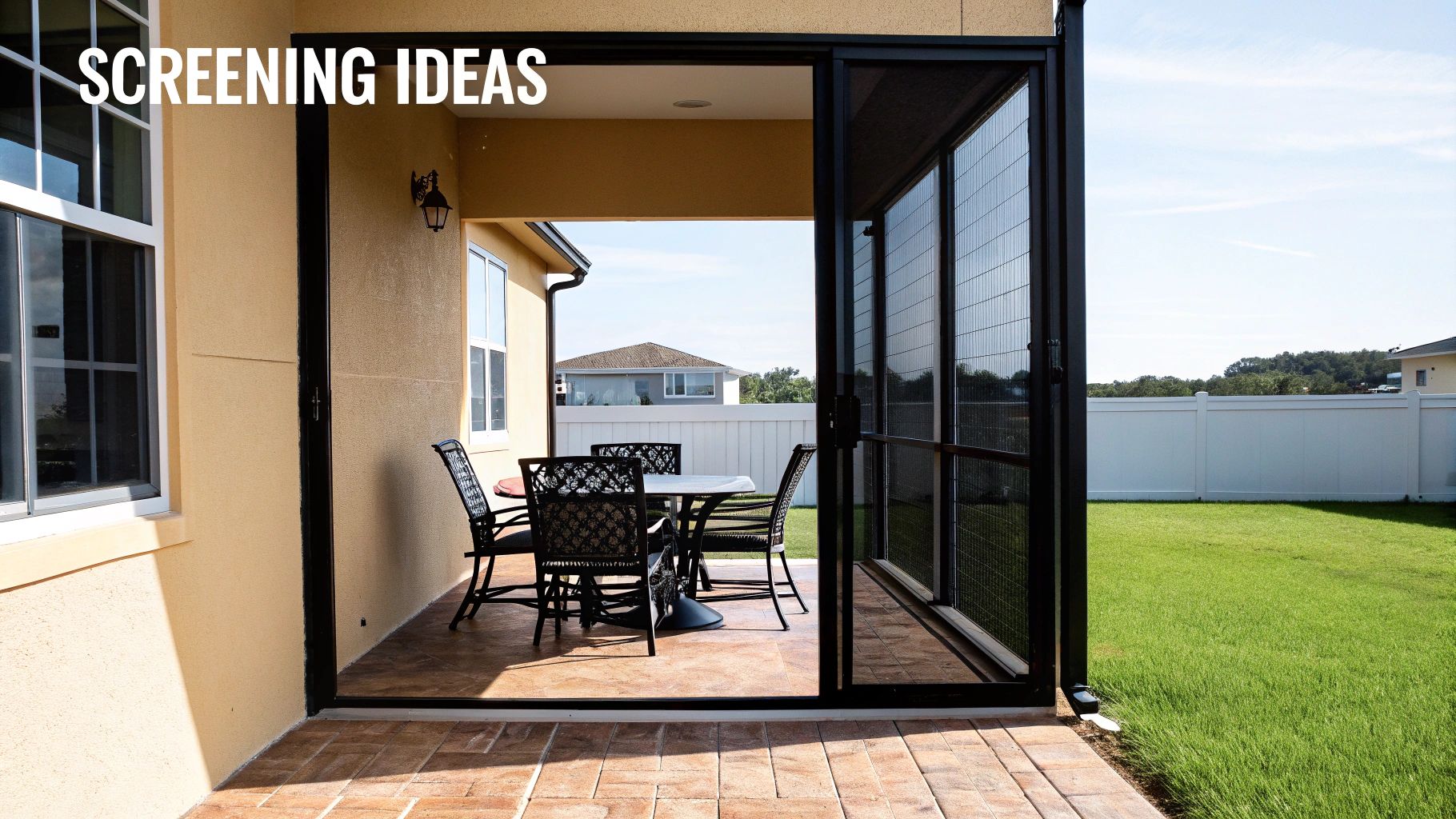
One of the best and most popular projects we see is turning an open patio or lanai into a true screen room. This isn't just about blocking bugs; it's about creating a whole new living area you can enjoy nearly year-round. Think about hosting a dinner party or watching a movie outside without having to battle mosquitoes.
For these larger enclosures, aluminum screen is usually the way to go. It’s rigid and doesn't sag over wide spans like fiberglass sometimes can, which keeps everything looking sharp. If that patio gets hammered by the afternoon sun, you'll definitely want to upgrade to an 80% or 90% solar screen to keep the space from feeling like an oven.
An enclosed patio does more than just add a room. It seamlessly blends your indoor and outdoor living areas, offering a protected space to dine, relax, or entertain without being at the mercy of insects or intense sun.
High-Traffic Sliding Screen Doors
Let’s be honest, the screen on a sliding glass door takes a beating. It’s a major walkway in most homes, and standard fiberglass just doesn't hold up to kids pushing on it, pets scratching at it, or the general wear and tear of being opened and closed a dozen times a day.
This is exactly where a pet-resistant screen shines. Made from a vinyl-coated polyester that's about seven times stronger than standard fiberglass, it’s built to handle claws, paws, and clumsy moments. Yes, it costs a bit more upfront, but it saves you the headache and expense of constant rescreening. It's a smart investment for any busy home.
The Ventilated Garage Workspace
A garage can be the perfect spot for a workshop, home gym, or hobby room. The problem? It gets incredibly stuffy, especially during an Arizona summer. Screening in the main garage door opening is a brilliant fix. You get all the fresh air you need circulating through, without inviting in every bug and leaf from the neighborhood.
Durability is everything here. You'll want a heavy-duty material like aluminum or a specialized tough mesh that can handle the occasional bump from a tool or a piece of equipment. You end up with a comfortable, usable workspace you can enjoy all year long without having to leave the main door wide open.
Unique Solutions for Arizona Living
Beyond the usual spots, screens offer some really clever solutions for our specific lifestyle here in Arizona.
- Screened-In Pool Enclosures: A must-have for keeping leaves, debris, and pests out of the water. These large structures rely on the strength of aluminum framing and screening. Putting solar screens on the roof panels is also a great trick to help reduce water evaporation.
- Horse Stall Sun Protection: For our local equestrian communities, installing 90% solar screens on the west-facing side of horse stalls is a game-changer. It provides critical shade, keeping the horses cooler and protecting them from dangerous heat stress.
- Balcony and Second-Story Patios: On an elevated patio, a sturdy screen adds an important layer of safety, especially for families with pets or small children. In these cases, standard fiberglass is often a great choice because it preserves the view.
New Installation vs. Rescreening: What’s Right for Your Porch?
So, your screen is looking a little worse for wear. Now you’re at a crossroads: do you need a completely new installation, or can you get away with just rescreening the existing frame? This is a question we get all the time. The answer really boils down to the health of your current framework, your budget, and what you want out of your space long-term.
It’s no surprise this is a hot topic. Outdoor living is huge right now. In 2023, a whopping 67.7% of new single-family homes were built with porches. That's a big jump, and it tells you just how much people value these spaces. With more porches being built, there’s naturally more need for both brand-new screens and, eventually, repairs. You can see the full breakdown of this housing trend at eyeonhousing.org.
Let's break down which path makes the most sense for you.
When a Full Installation is a Must
A brand-new installation is the only way to go when you're starting from scratch. If you have an open patio you want to enclose, you'll need the whole setup—frames, channels, screen, doors, the works. This gives you a blank slate to design the perfect outdoor room from the ground up.
But a new install isn't just for new spaces. It’s also the right call when your existing framework is shot. New mesh on a bad frame is like putting lipstick on a pig—it won't fix the underlying problem.
Here are the red flags to look for:
- Bent or Warped Frames: If your aluminum frames are dented, bent, or pulling away from the structure, they’ve lost their integrity. They won't be able to hold a new screen taut, and you’ll end up with a saggy, unprofessional look.
- Corrosion and Rust: Once rust takes hold on steel or aluminum frames, it’s a losing battle. The metal becomes weak and brittle. For wood frames, look for soft spots or rot.
- Damaged Spline Grooves: The spline is the rubber cord that holds the screen in the frame's channel. If that groove is stripped, broken, or warped, you simply can't secure a new screen properly. It will pop out sooner rather than later.
A new installation is more than just a repair; it’s an investment in your home's structure. You're building a solid, lasting enclosure, not just slapping a band-aid on an old issue.
When Rescreening is the Smart Move
Now, if the "bones" of your screen enclosure are still strong, rescreening is your best friend. This is a much faster and more affordable option because we’re only replacing the fabric itself. It’s the perfect way to breathe new life into your porch without the cost of a full overhaul.
Rescreening is the ideal solution for these common issues:
- Small Rips, Tears, or Holes: A stray golf ball, a pet's claws, or a fallen branch can easily cause minor damage. We can simply replace the mesh in that specific panel.
- Faded and Brittle Screens: The Arizona sun is relentless. Over time, it will bake the life right out of your screens, leaving them discolored and brittle to the touch. A quick rescreen makes everything look brand new again.
- Time for an Upgrade: Maybe your standard fiberglass screen just isn't cutting it anymore. As long as your frames are in good condition, we can easily swap it out for a high-performance material like a solar screen to block heat or a tough pet screen to stand up to your furry friends.
New Installation vs Rescreening Cost and Considerations
To make the decision even clearer, here’s a look at how the two options stack up against each other.
| Factor | New Screen Installation | Rescreening Existing Frame |
|---|---|---|
| Material Costs | High (Includes aluminum frames, fasteners, doors, etc.) | Low (Only includes screen mesh and spline) |
| Labor Costs | High (Involves construction, cutting, and assembly) | Moderate (Involves removal of old screen and installation of new) |
| Project Timeline | Longer (Can take a day or more, depending on size) | Shorter (Often completed within a few hours) |
| Ideal Situation | New construction or frames are bent, rusted, or structurally unsound. | Existing frames are in good, solid condition. |
| Customization | Full control over layout, design, and materials. | Limited to the existing frame structure. |
| Typical Cost | $10 – $25 per square foot | $4 – $7 per square foot |
Ultimately, taking a moment to inspect your frames will tell you everything you need to know. If they're solid, you can save a lot of money with a simple rescreen. If they look weak or damaged, investing in a new installation will save you headaches down the road.
Your Porch Screen Questions Answered
When you're ready to screen in your porch, a few final questions usually pop up. It's smart to think about everything from durability to cost before you commit. We've heard them all, so we've put together some straightforward answers to the most common ones.
Getting these details sorted is the last step before you can truly enjoy your new outdoor space.
What Is the Most Durable Type of Porch Screen?
That’s a great question, but the honest answer is: it depends on what you mean by "durable." Are you worried about your dog's claws, the Arizona sun, or just getting the longest possible lifespan?
For Impact and Scratches: If you've got a playful dog with sharp claws or kids who treat the porch like a playground, nothing beats a pet-resistant screen. It’s made from a super-tough, vinyl-coated polyester designed to handle punctures and tears that would shred a normal screen.
For Longevity Against the Elements: When you want a screen that will stand up to decades of sun, wind, and rain without breaking a sweat, you have to look at premium metals. Stainless steel and bronze screens are the champions here, easily outlasting fiberglass and aluminum by resisting corrosion and holding their shape year after year.
How Much Does It Cost to Screen in a Porch in Arizona?
There’s no single price tag for screening a porch in Arizona—the final cost depends entirely on your project. The biggest factors are the materials you pick, the size of your space, and whether we're building a new structure or just replacing old, worn-out mesh.
It really breaks down into two key areas:
Project Scope: A straightforward rescreening of your existing frames is always the most affordable route. If you need a new installation where we have to build the frame from the ground up, the cost will naturally be higher due to the extra labor and materials.
Material Choice: Standard fiberglass is your most budget-friendly option. As you move up the ladder to stronger aluminum, high-performance solar screens, or tough pet-resistant mesh, the price per square foot goes up.
A small rescreening job with standard fiberglass might only cost a few hundred dollars. In contrast, a brand-new, large enclosure with 90% solar screens is a multi-thousand-dollar project, but it’s an investment that pays you back in comfort and lower energy bills.
Can I Install My Own Porch Screens?
While it might seem like a manageable DIY project, especially for a small rescreening job, it’s much trickier than it looks. The real challenge is getting that perfectly smooth, drum-tight finish without any sags or wrinkles. It takes a special tool called a spline roller and a whole lot of practice.
Honestly, for anything more than a single, simple panel, I always recommend calling in a professional. Technicians have the experience to stretch large panels correctly, especially with tougher materials like solar or pet screens. A pro job ensures your screen not only looks flawless but also performs perfectly for years to come.
Ready to transform your porch? The team at Sparkle Tech Screen Service can give you expert advice and handle the entire installation. We even offer same-week service. Get a quick quote and start enjoying your bug-free, comfortable outdoor space sooner than you think. Visit us online at sparkletechscreenservice.com or call 800-370-3998 to get started.


