


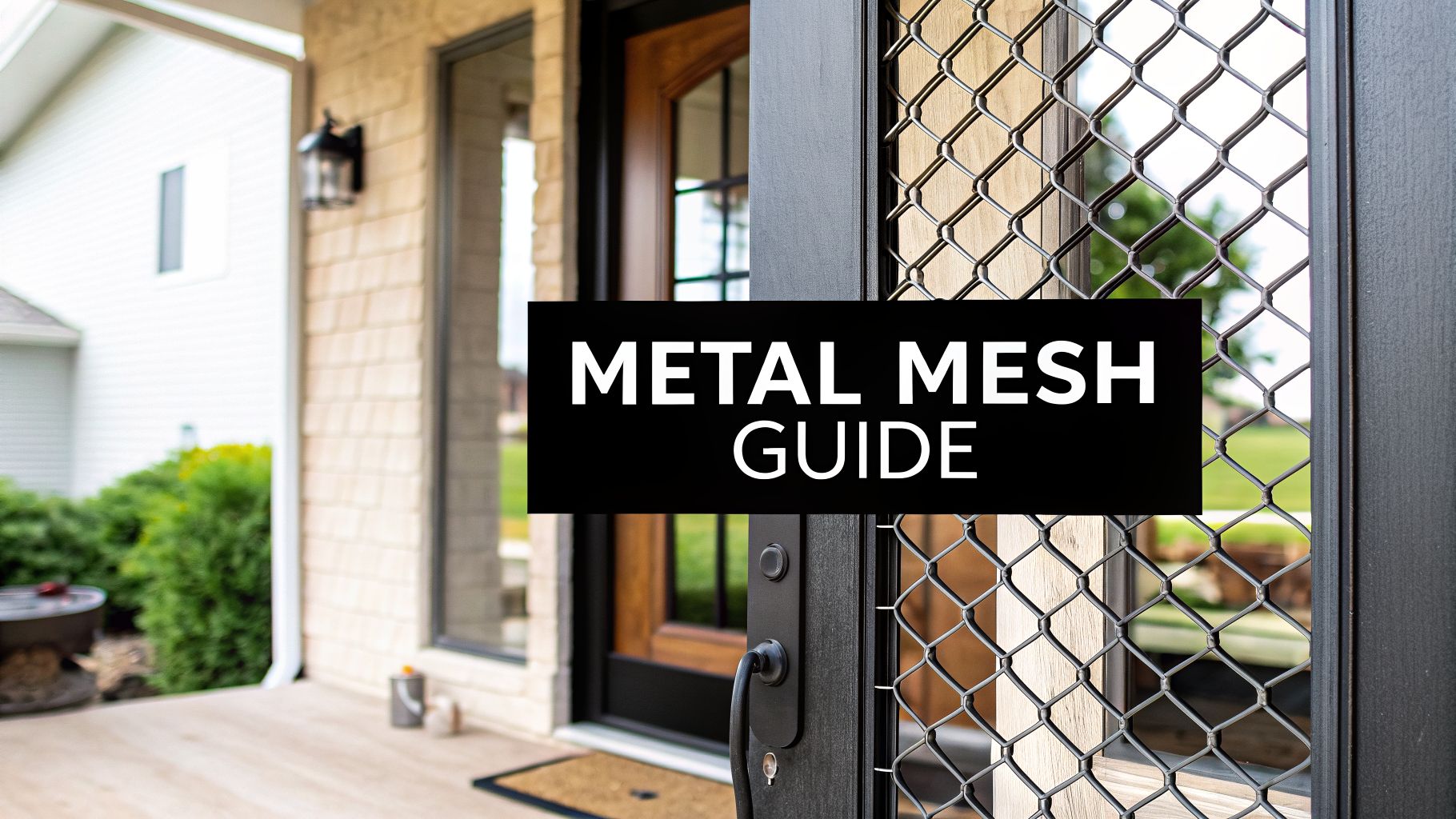

At its core, a metal mesh door screen is exactly what it sounds like: a tough barrier made from woven metal strands, fitted into your door frame. Think of it as a breathable shield—it lets the fresh air flow through your home while keeping insects, pests, and other debris out.
Why Choose a Metal Mesh Door Screen
It’s easy to think all screen doors are basically the same, but that’s where many homeowners go wrong. A metal mesh screen isn’t just a slight upgrade from the standard flimsy stuff; it’s a completely different class of home improvement that blends strength, visibility, and serious longevity.
Most of us have dealt with standard fiberglass screens that seem to tear if you just look at them wrong. A curious pet, an accidental bump, or even a strong gust of wind can lead to rips and holes. A metal mesh door screen, on the other hand, is built to last. It’s a resilient solution that stands up to daily life, which is why it's become the go-to choice in demanding climates, from the scorching sun of Phoenix to salty coastal air.
A Breathable Shield for Your Home
The real genius of a metal mesh door screen is how it handles two jobs at once. It has to be strong enough to protect your home but open enough to let it breathe. This is where the "breathable shield" idea really shines. On one side, it’s your first line of defense against things you want to keep out.
- Pest Control: The weave is tight enough to stop mosquitoes and flies, but also the tiny gnats that seem to get through everything else.
- Debris Blocking: It's great at keeping windblown leaves, dust, and grass clippings from ending up in your entryway.
- Enhanced Security: While not a security door, a sturdy metal screen is a far more convincing deterrent to a potential intruder than a soft fiberglass one.
At the same time, it’s a gateway for all the good stuff. You can let in that cool evening breeze, create cross-ventilation to cut down on AC costs, and fill your home with natural light. It’s this perfect balance of protection and openness that makes it such a practical, year-round solution.
A good metal screen means you don’t have to choose between fresh air and a pest-free home. You get both, without compromise, and it genuinely improves your day-to-day life.
An Investment in Comfort and Durability
Switching to a metal mesh door screen is more than just a cosmetic fix—it’s a smart investment that saves you headaches down the road. While the upfront cost is higher than a basic fiberglass screen, you’ll quickly make it back by not having to repair or replace torn screens every other season.
Here in Arizona, for example, we see how relentless sun exposure turns standard screen materials brittle and weak in just a couple of years. A quality metal mesh, however, isn’t bothered by UV rays and will keep its strength for a long, long time. It's one of those low-maintenance upgrades that just makes your home work better, adding to its value and your peace of mind.
Choosing The Right Metal For Your Screen
Picking the right material for your metal mesh door screen isn't a one-size-fits-all deal. Think of it like this: you wouldn't wear a light jacket in a blizzard. The metal you choose needs to stand up to your local climate, your home's traffic, and your lifestyle. This decision really shapes your screen's durability, how it looks, and what it costs in the long run.
Don't let that overwhelm you, though. The choice often comes down to a few simple questions.

As you can see, if you're looking to let that fresh breeze in while keeping bugs out, a metal mesh screen is almost always the answer. Now, let’s get into the nitty-gritty of which metal is the right shield for your home.
Aluminum: The Lightweight Guardian
Walk through just about any neighborhood, and you'll find that most screen doors use aluminum mesh. There’s a good reason for its popularity. It’s the lightweight guardian of the screen world—affordable, effective, and naturally resistant to rust and corrosion. That makes it a fantastic all-around choice for most climates, especially the dry, sunny conditions we see here in Arizona.
An aluminum screen gives you a crisp, clear view outside and lets plenty of air through. While it’s certainly strong enough to block pests and handle everyday wear and tear, it is a softer metal. That means it can dent if it takes a hard hit from a stray soccer ball or a particularly excited dog. For most homes, though, its balance of performance and price is tough to beat.
Stainless Steel: The Heavy-Duty Protector
If aluminum is the guardian, then stainless steel is the heavy-duty protector. This is where you level up in durability. A stainless steel screen is dramatically stronger, holding up far better against tears, punctures, and hard impacts. That extra strength also adds a bit of security, presenting a much tougher obstacle than aluminum or fiberglass.
We typically recommend stainless steel in a few key situations:
- High-Traffic Doors: Perfect for front doors or busy patio sliders that get opened and closed all day.
- Homes with Pets or Kids: It can take the scratches, pushes, and bumps that come with a lively household.
- Coastal Environments: Its superior corrosion resistance is a must for homes near salt air, which can eat away at other metals.
While stainless steel does cost more upfront, its incredible lifespan often makes it the smarter long-term investment. You're paying for durability and the peace of mind that comes with it.
To lay it all out, let's compare these materials head-to-head. The best pick for you will come down to balancing your budget today with what you expect in terms of strength and maintenance down the road.
Of course, for those wanting a truly unique look, other options are on the table. If you're thinking about something with a bit more character, it’s worth checking out what’s possible with our custom screen installation services.
Bronze and Specialty Metals
For homeowners looking for a truly distinctive aesthetic, bronze mesh is a beautiful alternative. It starts with a brilliant coppery-gold color that, over time, weathers into a deep, stately dark patina. This elegant aging process makes it a go-to for historic homes or anyone wanting a classic, high-end look.
Bronze isn't just about looks, either. It’s extremely durable and resists corrosion just as well as stainless steel, performing beautifully in salty coastal areas. As you might expect, this combination of premium appearance and performance comes with a higher price tag, placing it firmly in the luxury category.
Metal Screen Material Comparison
This table breaks down the key differences to help you zero in on the perfect material for your door screen.
| Material | Primary Advantage | Ideal Environment | Durability Level | Cost |
|---|---|---|---|---|
| Aluminum | Lightweight & Rust-Resistant | Most general climates, including dry and arid areas | Good | $ |
| Stainless Steel | Superior Strength & Security | High-traffic, coastal, or any area needing high durability | Excellent | $$ |
| Bronze | Unique Aesthetic & Durable | Coastal regions and historic or high-end homes | Excellent | $$$ |
Each material has its place, and the best one for you really depends on what you value most—be it budget, strength, or style.
Understanding Mesh Weave and Strength
Picking the right metal for your screen is a great start, but it's the construction—the actual weave of the mesh—that really defines how it performs day-to-day. The way those individual strands are woven together determines everything from whether gnats can sneak through to how well the screen holds up against a rambunctious dog or an errant soccer ball. It's the difference between a standard screen and one that’s truly built for your home's needs.
Think of the metal as the raw ingredient and the weave as the recipe. The recipe dictates the screen's final texture, its rigidity, and just how tough it will be.

Decoding Mesh Count
When you're shopping for screens, you’ll see numbers like 18×16. This isn't a random part number; it’s the mesh count, and it tells you exactly how tight the weave is. It works a lot like thread count in bedsheets—the higher the numbers, the more strands are packed into a small area.
Those two numbers simply represent the number of vertical and horizontal strands per square inch. So, an 18×16 mesh means you have 18 strands running one way and 16 running the other within a single one-inch square.
This number has a direct impact on what the screen can and can't do:
- Standard Mesh (18×16): This is the industry go-to for a reason. It’s perfect for general use, blocking common pests like flies and mosquitoes while still letting in plenty of fresh air and keeping your view clear.
- Fine Mesh (20×20 or higher): If you're constantly battling tiny insects like gnats or no-see-ums (especially common near lakes or in humid climates), you need a finer mesh. The smaller gaps in a 20×20 weave create a barrier these pests just can't get through.
A higher mesh count offers better protection from tiny bugs, but it can slightly reduce airflow and how clearly you see through the screen. It's all about finding the right balance for your home.
Getting the mesh count right is half the battle. If you've ever been annoyed by gnats buzzing around your living room, upgrading to a tighter weave can be a total game-changer.
The Importance of Weave Pattern and Strength
It’s not just about how many strands there are, but how they’re put together. The specific weave pattern is what gives the screen its muscle. A simple plain weave, with each wire crossing over and under the next, works great for most situations. But for homes that need something more robust, a specialized weave can make all the difference.
This is never truer than in a house with pets. A standard screen doesn't stand a chance against a cat who loves to climb or a dog who scratches at the door. That's precisely why pet-resistant screens exist.
These heavy-duty screens aren't just made of tougher material; they're woven to withstand abuse. Instead of thin metal, they often use a thick, vinyl-coated polyester that resists tearing and punctures. While nothing is truly indestructible, these screens are often up to 7 times stronger than their standard fiberglass counterparts. For anyone with a four-legged family member, it's an investment that pays for itself by preventing constant repairs and replacements. This added durability also helps the screen stand up to everyday bumps and dings, keeping it looking taut and new for years to come.
The Pros and Cons of Metal Mesh Screens
So, you're considering a metal mesh screen for your door. It's a fantastic upgrade for many homes, but like any decision, it’s not completely one-sided. It's really about understanding what you gain versus what you give up. Let’s walk through the real-world upsides and the potential trade-offs so you can feel confident you're making the right call.
The biggest reason people switch to metal is simple: durability. If you've ever dealt with a fiberglass screen that's been shredded by a pet's claws or torn by an accidental bump, you know the frustration. Metal mesh is just in a different league. It's built to handle the rough-and-tumble of daily life, meaning you won't be spending your weekends patching holes or replacing the whole thing.
That toughness naturally adds a bit more security, too. A sturdy metal screen is a much more convincing barrier than its flimsy fiberglass counterpart, giving you an extra layer of protection and peace of mind.
What You'll Love About Metal Mesh
Upgrading to a metal screen isn't just about keeping bugs out; it's about investing in something that works better and looks sharper for years to come. Time and again, homeowners tell us how much they appreciate the long-term performance.
Here’s what really stands out:
- Tough as Nails: Metal mesh resists the punctures, tears, and sagging that plague other materials. It’s the perfect choice for busy doorways, homes with energetic kids and pets, or any spot that takes a beating from the weather.
- A Solid Step-Up in Security: While it's not a substitute for a true security door, the inherent strength of metal mesh is a clear deterrent. It offers far more resistance to would-be intruders than a standard screen ever could.
- A Sharper Look: Let's be honest—looks matter. Metal screens have a clean, crisp appearance that boosts your home's curb appeal. That taut, professional finish gives your entryway a high-end feel that synthetic screens just can't match.
A Few Things to Keep in Mind
Of course, the benefits do come with a couple of practical considerations. The most obvious one for most homeowners is the higher initial cost. A quality metal mesh screen is an investment, and you'll see the difference on the price tag when compared to a basic fiberglass roll.
You also have to think about the specific metal you choose. Softer options like aluminum are great because they're rust-resistant and more affordable, but they can dent if hit hard. If a perfectly smooth surface is important to you, you might lean toward a stronger material like stainless steel, though that will nudge the cost up again.
The key is to match the right metal to your environment. Choosing the wrong material, such as a less corrosion-resistant steel in a salty coastal area, can lead to premature degradation, undermining the very durability you paid for.
The shift toward tougher home products is a real trend. The global market for advanced screen doors was valued at USD 1.65 billion in 2024 and is expected to keep climbing as people look for lasting quality. With the residential sector accounting for 68% of this market, it’s clear that homeowners are voting with their wallets for better, more durable solutions. Discover more insights on the screen door market's expansion and what it means for your home.
How to Maintain and Repair Your Screen Door
You’ve invested in a durable metal mesh door screen, which is great! The good news is, a little bit of routine care is all it takes to keep it working perfectly and looking sharp for years to come. Proper maintenance stops small annoyances from turning into big, expensive problems. This is especially true here in Arizona, where our fine dust and seasonal pollen can build up in a hurry.

Think of it like washing your car. You do it regularly to protect the paint and keep it looking its best. Your screen door needs that same simple, consistent attention.
Simple Steps for Regular Cleaning
Keeping your metal mesh looking good is a surprisingly simple job that doesn’t call for any harsh chemicals. A quick, gentle cleaning every month or two is usually all you need to keep your view clear and the door's mechanics moving smoothly.
Here’s a simple process that works every time:
- Dry Brush First: Before you get it wet, take a soft-bristled brush and gently sweep away all the loose dust, cobwebs, and pollen. This little step prevents you from turning all that dry debris into a muddy mess.
- Mix Up Soapy Water: Grab a bucket of warm water and add just a few drops of mild dish soap. Steer clear of any abrasive cleaners or harsh chemicals, as they can easily damage the screen’s protective finish.
- Wipe It Down: Dip a soft cloth or sponge into your soapy water, wring it out well, and gently wipe down both sides of the mesh. It’s always best to work from the top down.
- Rinse and Dry: Follow up with a clean, damp cloth to wipe away any leftover soap. To finish, you can let the screen air dry or pat it with a clean towel for a streak-free view.
For a deeper clean without the elbow grease, you can always bring in some help. Regular professional residential screen cleaning is a fantastic way to keep your screens in pristine condition year-round.
Handling Minor DIY Repairs
Even the toughest metal screens can take a few dings over the years. Luckily, many of the small issues are things you can probably fix yourself. If you have a small dent in an aluminum screen, for instance, you can often gently push it back out from the other side using the smooth, rounded handle of a screwdriver.
Is the screen mesh a little loose in the frame? You might be able to fix that, too. The mesh is held in place by a flexible vinyl cord called a spline. With a cheap screen rolling tool from the hardware store, you can carefully push that spline back into its groove, pulling the mesh tight again as you go.
That said, it’s important to know when to throw in the towel. While a few minor touch-ups are perfectly fine for a DIY project, bigger damage really calls for a professional touch.
When to Call in the Professionals
Trying to tackle a major repair without the right experience or tools can actually make things worse. You can end up with a saggy, poorly tensioned screen or even damage the door frame itself. It’s definitely time to call an expert for issues like these:
- Large Rips or Tears: Patching a big hole in a metal screen is tricky, and the final result rarely looks good.
- Significant Dents or Warping: Deep dings or a bent frame can stop the door from closing properly, ruining its seal and security.
- Complete Rescreening: Replacing the entire sheet of mesh is a job for the pros. They have the equipment to get that perfectly taut, factory-fresh fit.
When the damage is more than just a quick fix, getting professional help is your best bet. If you're dealing with anything from major tears to a completely worn-out screen, our team specializes in screen door repair and replacement. We'll get your door back into perfect shape, guaranteeing a flawless result without the headache of a DIY project gone wrong.
Your Local Phoenix Screen Experts
Making the right call for your home is a big deal. Now that you've got a handle on what a quality metal mesh door screen can do, the next step is finding a local installer you can trust. For homeowners all over Phoenix and the Valley, Sparkle Tech Screen Service is that go-to team for professional, reliable screen solutions. We don't just work here—we live here. We know exactly what an Arizona home needs to stay cool, comfortable, and free of pests.
From Scottsdale to Mesa to Chandler, our crew is ready to help you make an upgrade. We don't just sell you a screen; we deliver a complete solution that fits your home and your needs perfectly.
Services Built For Arizona Homeowners
We handle every part of your screen project with a sharp focus on quality and getting the job done right. Our main services are designed to solve whatever issue you're facing, whether it's an old, torn screen or a brand-new installation to boost your home's curb appeal and airflow.
Here's what we specialize in:
- New Screen Installation: We provide a flawless, professional installation of a brand-new metal mesh door screen, ensuring a perfect fit for your entryway.
- Expert Rescreening: If your door frame is in good shape but the mesh is looking worn out, our rescreening service is a fantastic, budget-friendly option to make it look new again.
- Professional Repairs: From sticky rollers to bent frames, we can fix all sorts of screen problems to get your doors operating smoothly and securely.
We’re all about making this process easy on you. That’s why we offer quick quotes—often with just a simple phone call or text—and aim for efficient, same-week service that works with your busy schedule.
Your Trusted Partner In Home Improvement
Choosing any contractor requires a little homework, and it's something we encourage. Before you hire anyone, it’s always a good idea to understand how to verify a contractor's license. This simple check ensures you’re working with a legitimate, insured, and bonded company like Sparkle Tech and gives you invaluable peace of mind.
We take a lot of pride in being the trusted experts for homeowners across the Phoenix metro. Whether you're in the quiet neighborhoods of Sun City or the growing communities out in Queen Creek, we bring the same level of craftsmanship to every single job. To see if we work in your area, check out our full list of Phoenix-area service locations.
Ready to finally solve your screen problems for good? Contact Sparkle Tech today at 800-370-3998 for your fast, no-hassle quote.
Frequently Asked Questions
When you're thinking about a metal mesh door screen, you're bound to have some questions. It's a significant upgrade, and you want to make sure you're making the right call. We get it. Let's walk through some of the most common things homeowners ask us so you can feel confident in your decision.
You've read about the benefits and the different materials available, but a few specific questions might still be on your mind. Here are the straight answers.
How Much More Expensive Is A Metal Screen Than Fiberglass?
This is usually the first question people ask, and it's a fair one. Yes, the upfront cost for a metal screen is higher, but it's helpful to see it as a long-term investment in your home's durability, not just another expense.
On average, you can expect aluminum mesh to run 20-30% more than a standard fiberglass screen. If you're looking at a super-durable stainless steel option, that price jump can be anywhere from 50-100% more. But that initial sticker price doesn't tell the whole story.
We've seen a single, well-cared-for metal screen easily outlast three, four, or even more fiberglass screens. When you factor in the money you save by not having to repair or replace torn, brittle fiberglass every few years, the metal screen often ends up being the smarter financial choice down the road.
Will A Metal Screen Rust Over Time?
That's an excellent question, and the answer really comes down to one thing: choosing the right material for your local climate. The great news is that modern metal screens are specifically engineered to fight off corrosion.
- Aluminum: This is a popular go-to because it's naturally rust-resistant. Aluminum creates its own protective oxide layer that stops rust in its tracks, making it a fantastic, reliable choice for most areas, including the dry heat we get here in Arizona.
- Stainless Steel: For top-tier protection, you can't beat high-quality stainless steel. If your home is near the coast where salty air is a constant, we always recommend a marine-grade option like 316 stainless steel. It’s built to handle those harsh conditions.
- Bronze: This premium material won't rust and is incredibly resistant to corrosion. Over the years, it develops a classic, dark patina that many people find very appealing.
It all boils down to proper material selection. Match the metal to your environment, and you can count on your screen staying rust-free for years to come.
Can I Install A Metal Mesh Door Screen Myself?
While you might be tempted to make this a weekend DIY project, getting a metal screen installed perfectly is trickier than it seems. It's possible if you're handy and have the right tools, but getting that professional, clean look is tough.
The biggest hurdle is getting the tension just right. If the mesh is too loose, it will sag, look sloppy, and won't keep bugs out effectively. But if you pull it too tight, you could warp the door frame or even tear the screen before you're even finished. It’s a very delicate balance.
For a flawless, drum-tight fit that looks fantastic and lasts for years, letting a professional handle it is always your best bet. An expert has the specialized tools and the experience to get the tension perfect, ensuring your screen not only looks great but performs as it should.
Ready to enhance your home with a durable, high-quality metal mesh door screen? The experts at Sparkle Tech Screen Service are here to help. We offer professional installation, repair, and rescreening services throughout the Phoenix area. Get your quick, no-hassle quote today by visiting https://sparkletechscreenservice.com or calling us at 800-370-3998.


